Japanese Raising Voices Against Nuclear Reactors' Restart
TOKYO — For the third consecutive Friday evening, thousands of Japanese took to the streets of their capital to vent frustration with the government's move to restart idled nuclear power plants. Earlier this week, for the first time since the meltdown of three reactors at a coastal plant hit by the March 11th, 2011, earthquake and tsunami, Japan resumed nuclear power generation.
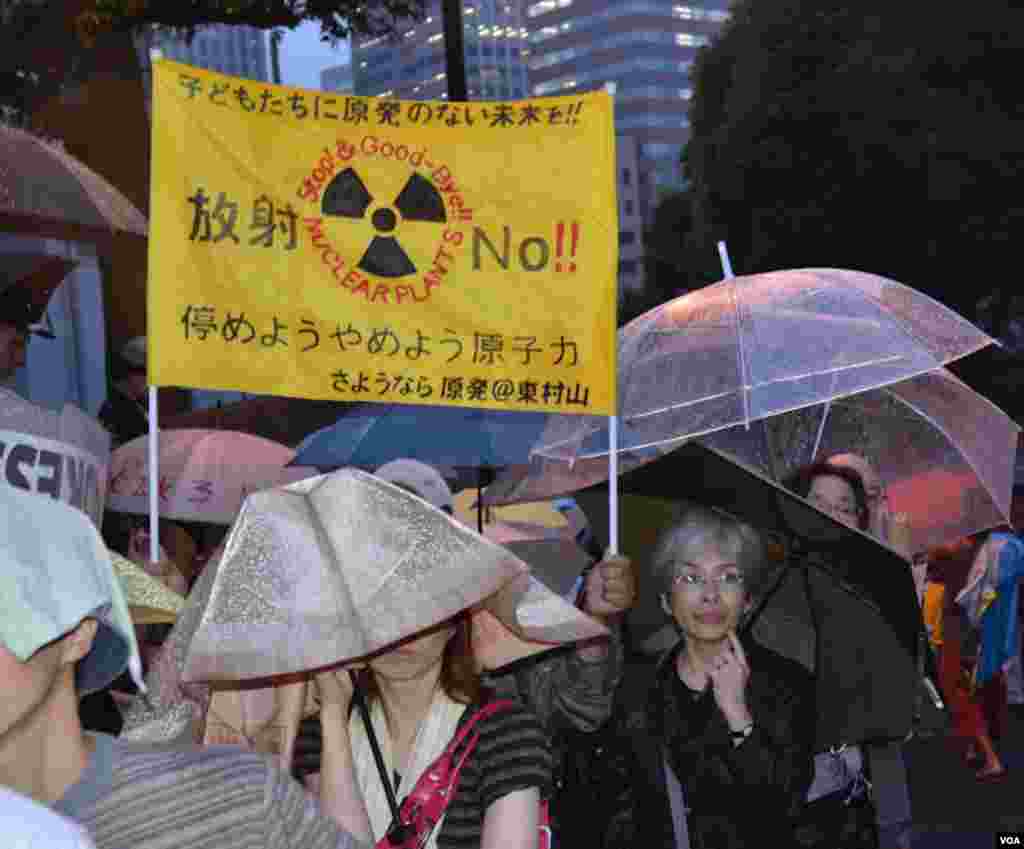
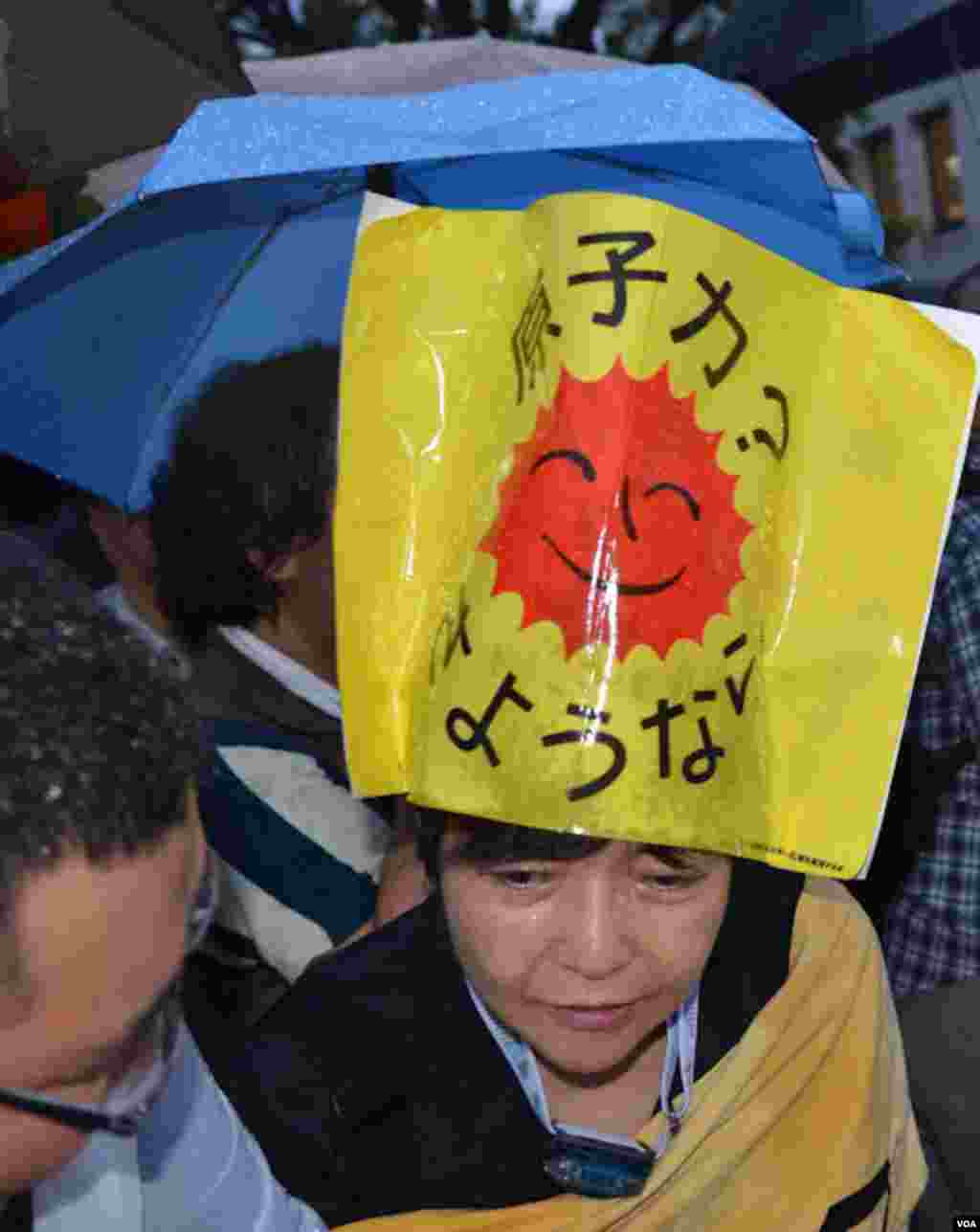
A steadily increasing drizzle did not dampen the spirits of protestors in central Tokyo.
Well-mannered demonstrators, most holding umbrellas for two hours chanted “Saikado Hantai” in opposition to the restart of nuclear reactors.
One reactor at the Oi nuclear plant, which supplies electricity to the Osaka metropolitan area, reached criticality earlier in the week.
Japanese Protest Restarting Nuclear Plants
1/6Rain-soaked protesters, Tokyo, Japan, July 6, 2012. (S.L. Herman/VOA)
Japanese took to the streets for a third week to protest the restart of idled nuclear plants.
Show moreShow less
2/6Crowds of protesters behind police tape, Toyko, Japan, July 6, 2012. (S.L. Herman/VOA)
Japanese took to the streets for a third week to protest the restart of idled nuclear plants.
Show moreShow less
3/6A rain-soaked protester carries an anti-nuclear sign, Tokyo, Japan, July 6, 2012. (S.L. Herman/VOA)
Japanese took to the streets for a third week to protest the restart of idled nuclear plants.
Show moreShow less
4/6A Japanese police office keeps order at the protest against restarting nuclear power plants, Tokyo, Japan, July, 6, 2012. (S.L. Herman/VOA)
Japanese took to the streets for a third week to protest the restart of idled nuclear plants.
Show moreShow less
5/6Protesters carry anti-nuclear banners and umbrellas, Tokyo, Japan, July 6, 2012. (S.L. Herman/VOA)
Japanese took to the streets for a third week to protest the restart of idled nuclear plants.
Show moreShow less
6/6A rain-soaked protester, Tokyo, Japan, July 6, 2012. (S.L. Herman/VOA)
Japanese took to the streets for a third week to protest the restart of idled nuclear plants.
Show moreShow less
Previous slide
Next slide
That marked the resumption of nuclear power generation in Japan for the first time since the disaster at the Fukushima No. 1 plant more than 15 months ago.
The government of resource-poor Japan and the utility companies contend nuclear reactors must come back online after thorough safety checks to avoid possible rolling blackouts this summer and excessive reliance on imports of liquid natural gas, coal and other expensive fuels for conventional power plants.
Many citizens and even some national lawmakers are expressing skepticism, saying concerns about profits and the economy are outweighing safety considerations.
Tokyo housewife Setsuko Naoe says she felt compelled to join the protests because officials have not learned any lessons from the Fukushima meltdowns.
Naoe laments the Japanese media, especially the national quasi-official NHK broadcaster, do not really report on the protests but she says that will not discourage those who share her stance.
Despite Friday's rally being one of the biggest Tokyo has seen in decades, NHK gave the protests only a 20-second mention 40 minutes into its main 9 p.m. television newscast.
For Mitsukazu Asakawa, the event reminds him of the protests he took part in against the U.S.-Japan Security Treaty more than 50 years ago.
Asakawa says since the 1960s, Japan has not seen such large street demonstrations, which also took place in the same location. But these rallies are different he points out - as they are not composed of radical, young people but are rather part of a diverse grassroots movement.
A parliamentary report issued Thursday and based on more than 900 hours of hearings and interviews with nearly 1,200 people concluded the Fukushima disaster was a preventable accident. It blames both regulators and the Tokyo Electric Power Company, saying there is too much collusion between government and industry.