


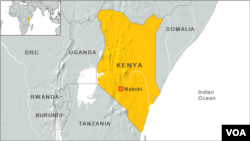
A lot of people were displaced in Kenya in 2012. A year-end report says hundreds of thousands remained or were newly displaced by many causes.
The Internal Displacement Monitoring Center says displacement is not new to Kenya. Since independence in 1963, it says the country has been caught in a “quagmire of armed conflict, localized violence, sudden and slow onset disasters, political factors and development projects.” This includes violence triggered by ethnicity, land and water resources, cattle and drought.
Clare Spurrell, the center’s chief spokesperson, called it a “toxic cocktail” of conditions within Kenya.
“The situation in 2012 is complicated. Obviously, the situation in Kenya with regards to displacement has been complicated for many years. At the beginning of 2012 it was estimated that some 300,000 people remained displaced within the country. And by the end of November it was estimated that about 118,000 had been newly displaced,” she said.
However, she said, those figures don’t tell the whole story.
“What’s important, I think, to recognize with these figures is that they tend to be a gross underestimation. And the reason for that is that there’s a real distinct lack of formal processes within Kenya by their national authorities to really identify and understand IDPs – where they are, who they are and what they need,” she said.
Spurrell said that Kenya has lacked an adequate profiling system. But a new policy has just taken effect to better help the internally displaced. However, she’s concerned about its implementation. Something else that may help the displaced is the Kampala Convention, which took effect in Africa late last year.
“The Kampala Convention is the first continental treaty, which aims to protect internally displaced people throughout the whole continent of Africa. And Kenya is yet to adopt it. But the advantage of Kenya adopting it – and we hope it will do in the future – is that there will be more of a regional policing mechanism. So, we hope that the countries, that have signed up and that have adopted it, will be able to work together to really support people, who have been forced to flee their homes and remain trapped within their countries,” she said.
Currently, many of those officially listed as internally displaced became so following the 2007/2008 election violence. But Spurrell said there’s one segment of the Kenyan population that is often displaced and not recognized as such.
“Eighty percent of the land in Kenya is considered arid or semi-arid land. There’s been increasing drought over the years, particularly affecting pastoralist communities in the north. And this group tend not to be considered as internally displaced when they are forced to flee because they’re considered nomadic. So, we know that the increasing drought has increased tension within these communities; and they’re becoming increasingly dependent on aid. And they’re increasingly fighting over resources,” she said.
The center’s latest assessment indicates many displaced people are facing deteriorating conditions.
“Particularly those who were displaced in the last round of election violence. A large majority of them remain living in camp conditions. Shelter is a particular concern. They’re still living under UNHCR tents or tarpaulins that were provided five years ago. We know that women are [at] particular risk of rape and sexual abuse. And obviously the children are not being educated. This is particularly affecting secondary schools – slightly older generation of children. These are the future of Kenya,” she said.
The Internal Displacement Monitoring Center adds that while violence and the threat of violence increase in Kenya, donor funding for peace and reconciliation programs is drying up. It says funding tends to focus on humanitarian assistance during the beginning of an emergency, but not so much once the situation is stabilized. It says it’s essential that inter-communal tensions and land and property disputes are addressed as soon as possible – especially as the March elections draw near.

The Internal Displacement Monitoring Center says displacement is not new to Kenya. Since independence in 1963, it says the country has been caught in a “quagmire of armed conflict, localized violence, sudden and slow onset disasters, political factors and development projects.” This includes violence triggered by ethnicity, land and water resources, cattle and drought.
Clare Spurrell, the center’s chief spokesperson, called it a “toxic cocktail” of conditions within Kenya.
“The situation in 2012 is complicated. Obviously, the situation in Kenya with regards to displacement has been complicated for many years. At the beginning of 2012 it was estimated that some 300,000 people remained displaced within the country. And by the end of November it was estimated that about 118,000 had been newly displaced,” she said.
However, she said, those figures don’t tell the whole story.
“What’s important, I think, to recognize with these figures is that they tend to be a gross underestimation. And the reason for that is that there’s a real distinct lack of formal processes within Kenya by their national authorities to really identify and understand IDPs – where they are, who they are and what they need,” she said.
Spurrell said that Kenya has lacked an adequate profiling system. But a new policy has just taken effect to better help the internally displaced. However, she’s concerned about its implementation. Something else that may help the displaced is the Kampala Convention, which took effect in Africa late last year.
“The Kampala Convention is the first continental treaty, which aims to protect internally displaced people throughout the whole continent of Africa. And Kenya is yet to adopt it. But the advantage of Kenya adopting it – and we hope it will do in the future – is that there will be more of a regional policing mechanism. So, we hope that the countries, that have signed up and that have adopted it, will be able to work together to really support people, who have been forced to flee their homes and remain trapped within their countries,” she said.
Currently, many of those officially listed as internally displaced became so following the 2007/2008 election violence. But Spurrell said there’s one segment of the Kenyan population that is often displaced and not recognized as such.
“Eighty percent of the land in Kenya is considered arid or semi-arid land. There’s been increasing drought over the years, particularly affecting pastoralist communities in the north. And this group tend not to be considered as internally displaced when they are forced to flee because they’re considered nomadic. So, we know that the increasing drought has increased tension within these communities; and they’re becoming increasingly dependent on aid. And they’re increasingly fighting over resources,” she said.
The center’s latest assessment indicates many displaced people are facing deteriorating conditions.
“Particularly those who were displaced in the last round of election violence. A large majority of them remain living in camp conditions. Shelter is a particular concern. They’re still living under UNHCR tents or tarpaulins that were provided five years ago. We know that women are [at] particular risk of rape and sexual abuse. And obviously the children are not being educated. This is particularly affecting secondary schools – slightly older generation of children. These are the future of Kenya,” she said.
The Internal Displacement Monitoring Center adds that while violence and the threat of violence increase in Kenya, donor funding for peace and reconciliation programs is drying up. It says funding tends to focus on humanitarian assistance during the beginning of an emergency, but not so much once the situation is stabilized. It says it’s essential that inter-communal tensions and land and property disputes are addressed as soon as possible – especially as the March elections draw near.