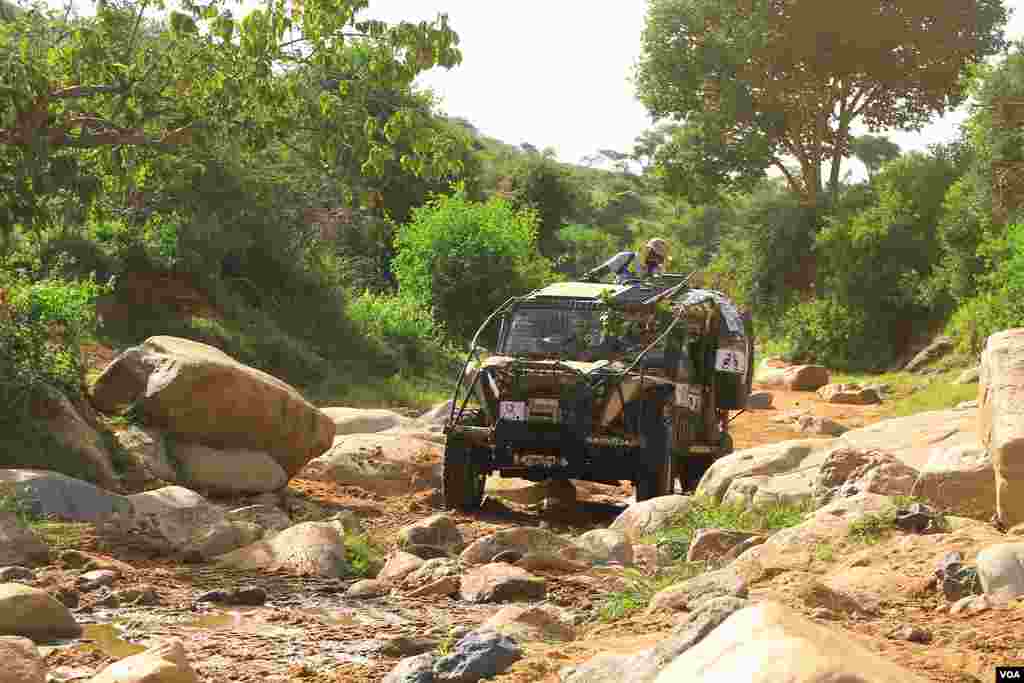
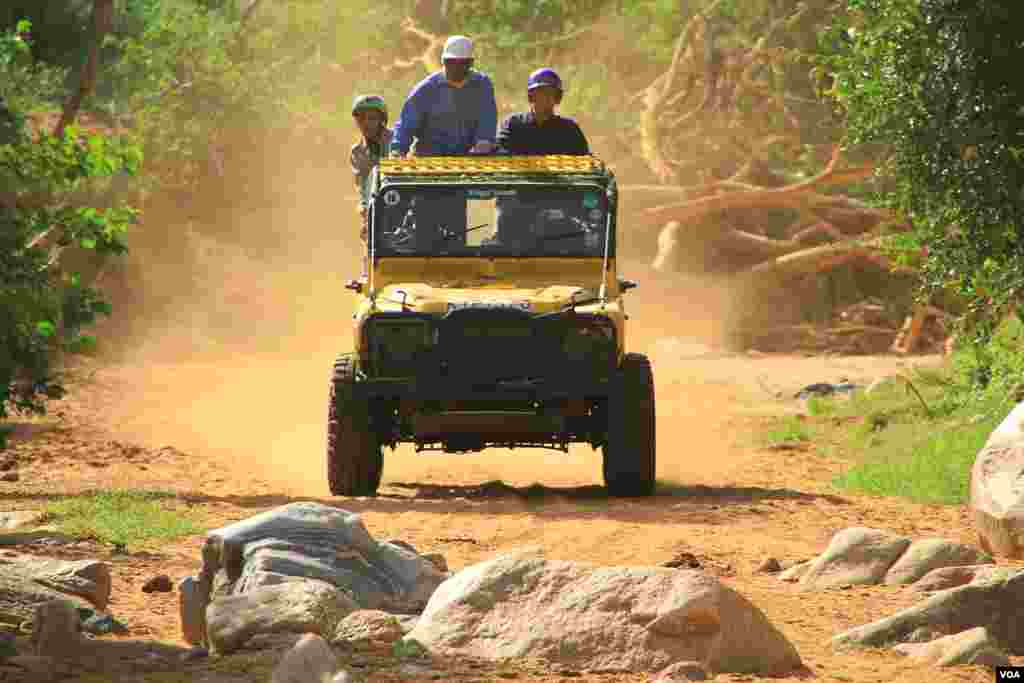
Il NGWESI, LAIKIPIA, KENYA - Sixty-two cars participated this month in Kenya’s Rhino Charge, an annual off-road vehicle competition to raise money for environmental conservation in Kenya.
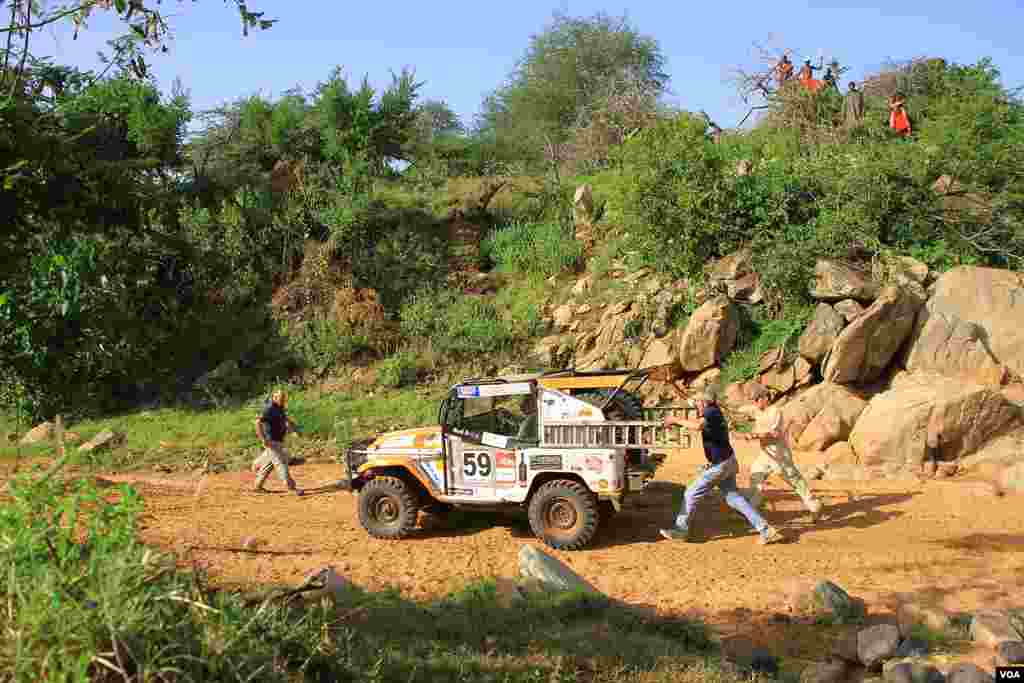
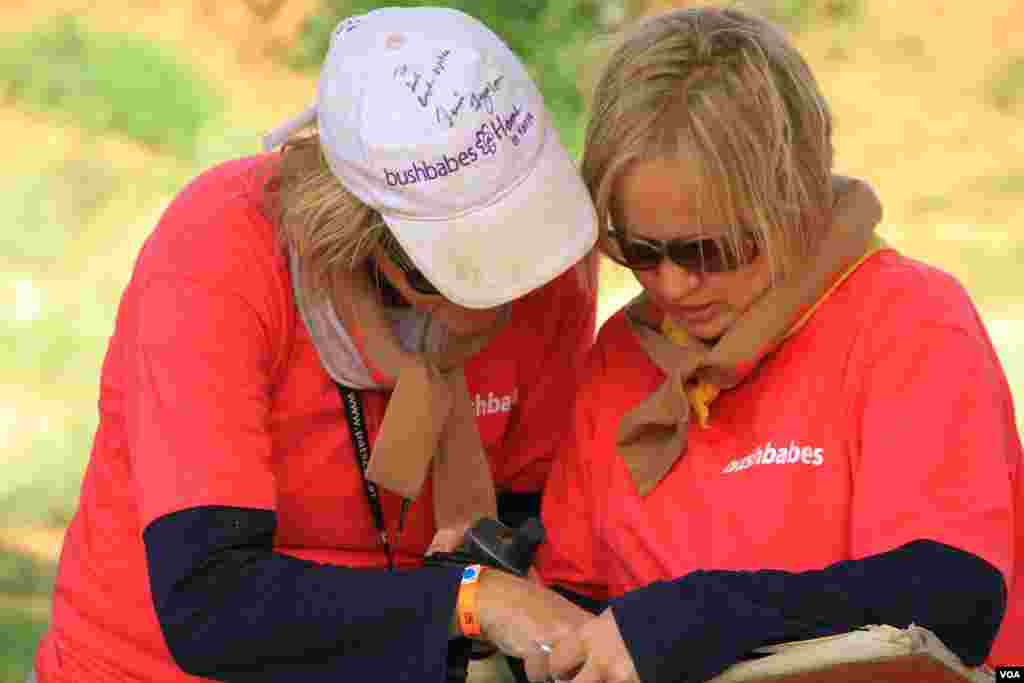
Each team consists of one off-road vehicle, a driver, a navigator, and four runners who dash ahead of the car to remove obstacles and show the drive how to reach the next checkpoint. There are 13 checkpoints in all; teams have 10 hours to reach all of them, located within about 100 square kilometers of rough terrain. The goal is to visit the most checkpoints with the lowest number of kilometers.
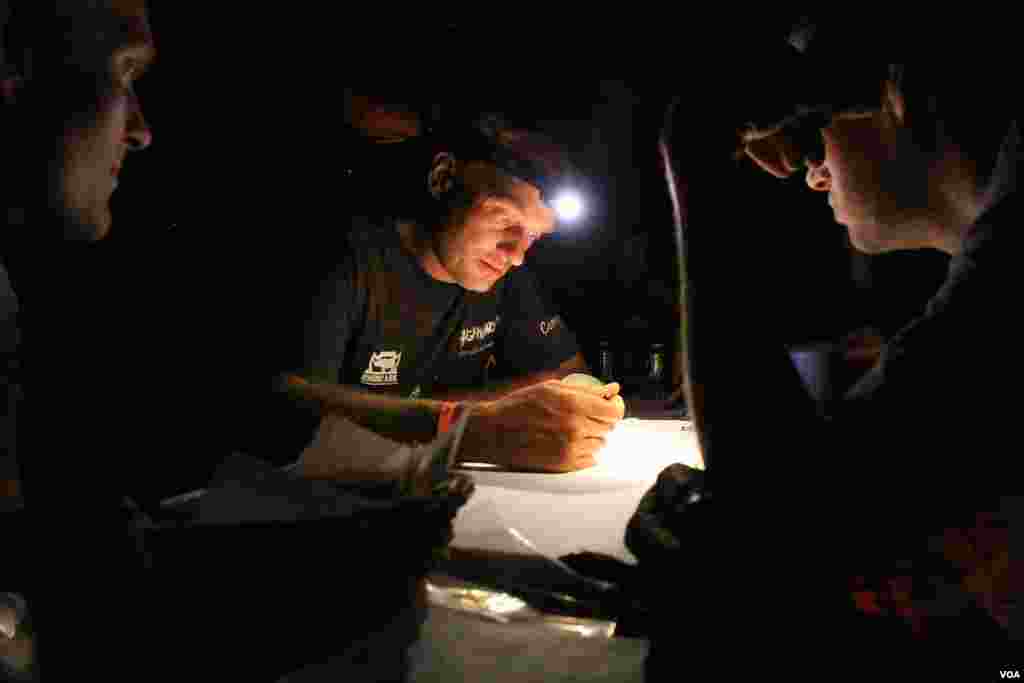
1/14Henrik Rasmussen and other members of Car 54, the Danish team, plot the next day's Rhino Charge by the light of a head lamp and bonfire, June 1, 2012. (VOA/Jill Craig)
Sixty-two cars participated in the annual competition considered by some to be the toughest off-road vehicle challenge in Africa
Show moreShow less
2/14Rally car pulls into a checkpoint, June 2, 2012. (VOA/Jill Craig)
Sixty-two cars participated in the annual competition considered by some to be the toughest off-road vehicle challenge in Africa
Show moreShow less
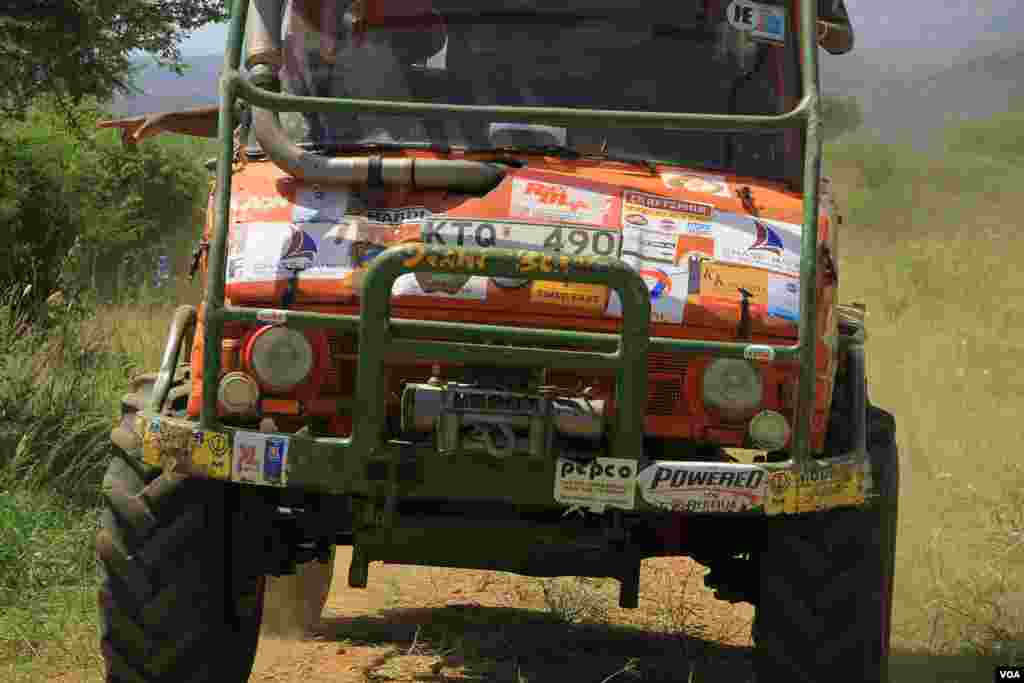
3/14Car 20, the Ranger Team, negotiates a hill, June 2, 2012. (VOA/Jill Craig)
Sixty-two cars participated in the annual competition considered by some to be the toughest off-road vehicle challenge in Africa
Show moreShow less
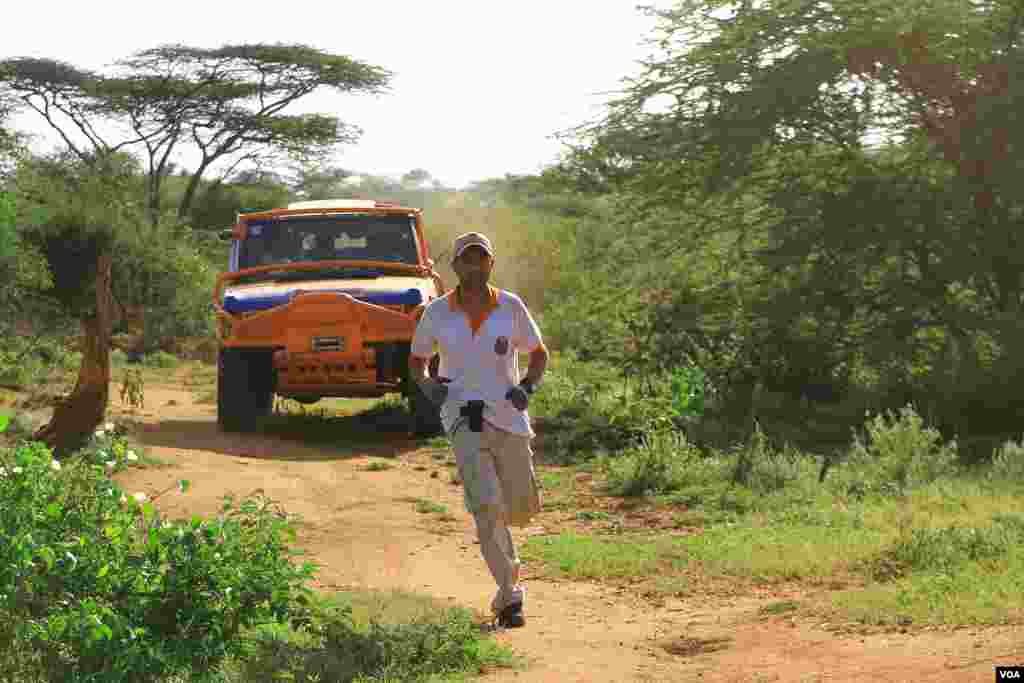
4/14A runner for Car 11, the Frying Squad, shows his driver how to find the next checkpoint, June 2, 2012. (VOA/Jill Craig)
Sixty-two cars participated in the annual competition considered by some to be the toughest off-road vehicle challenge in Africa
Show moreShow less
5/14В ніч 14-го лютого поліцейські знайшли Реву Стенкамп мертвою у будинку Пісторіуса.
Sixty-two cars participated in the annual competition considered by some to be the toughest off-road vehicle challenge in Africa
Show moreShow less
6/14Members of Car 64, Team Garmin, attempt to navigate the terrain, June 2, 2012. (VOA/Jill Craig)
Sixty-two cars participated in the annual competition considered by some to be the toughest off-road vehicle challenge in Africa
Show moreShow less
7/14Car 7 finds its way to the next checkpoint, June 2, 2012. (VOA/Jill Craig)
Sixty-two cars participated in the annual competition considered by some to be the toughest off-road vehicle challenge in Africa
Show moreShow less
8/14Берлін, Німеччина.
Sixty-two cars participated in the annual competition considered by some to be the toughest off-road vehicle challenge in Africa
Show moreShow less
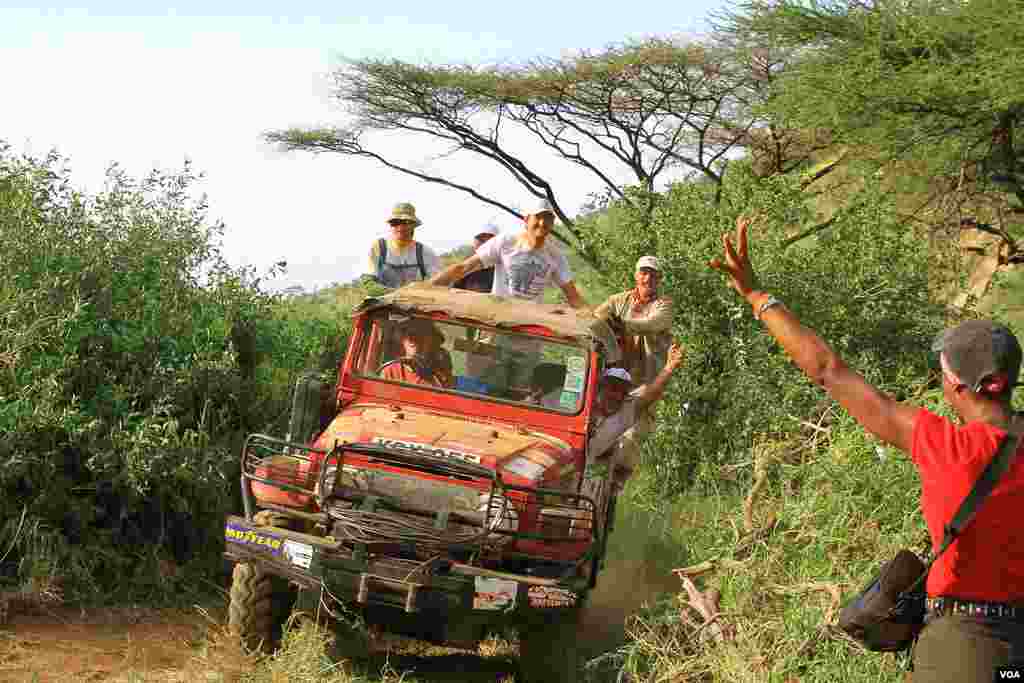
9/14Competitors from Car 54, the Danish team, make a triumphant entry into a checkpoint as fans welcome them, June 2, 2012. (VOA/Jill Craig)
Sixty-two cars participated in the annual competition considered by some to be the toughest off-road vehicle challenge in Africa
Show moreShow less
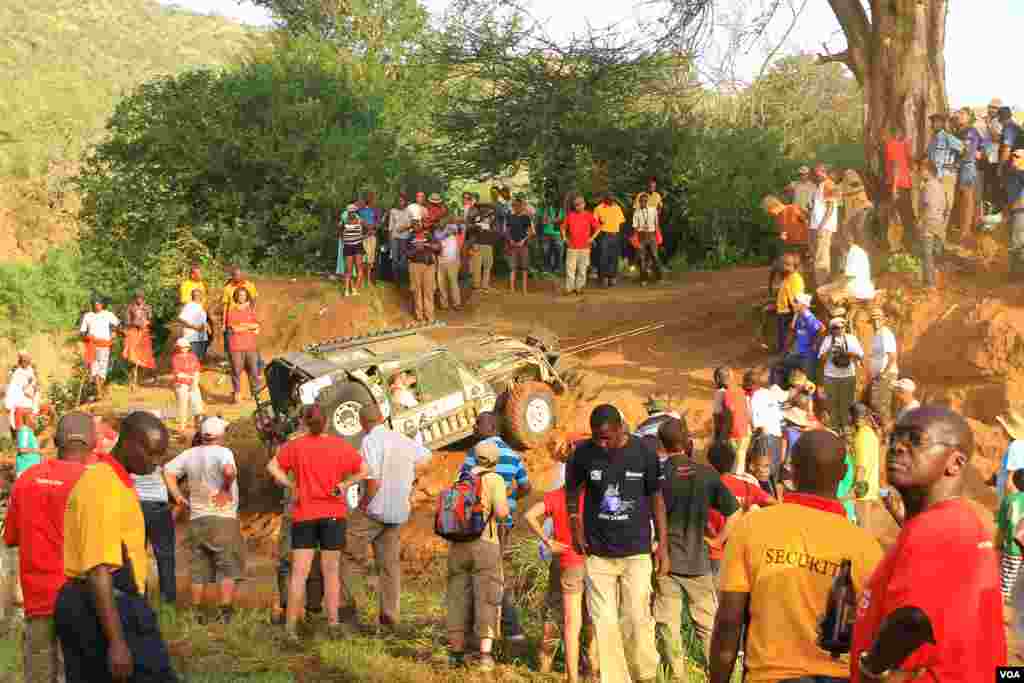
10/14Car 15, the Benchwarmers, attempts the "Gauntlet," one of the most difficult sections of Rhino Charge, June 2, 2012. The majority of spectators come to the Gauntlet to watch this difficult maneuvering. (VOA/Jill Craig)
Sixty-two cars participated in the annual competition considered by some to be the toughest off-road vehicle challenge in Africa
Show moreShow less
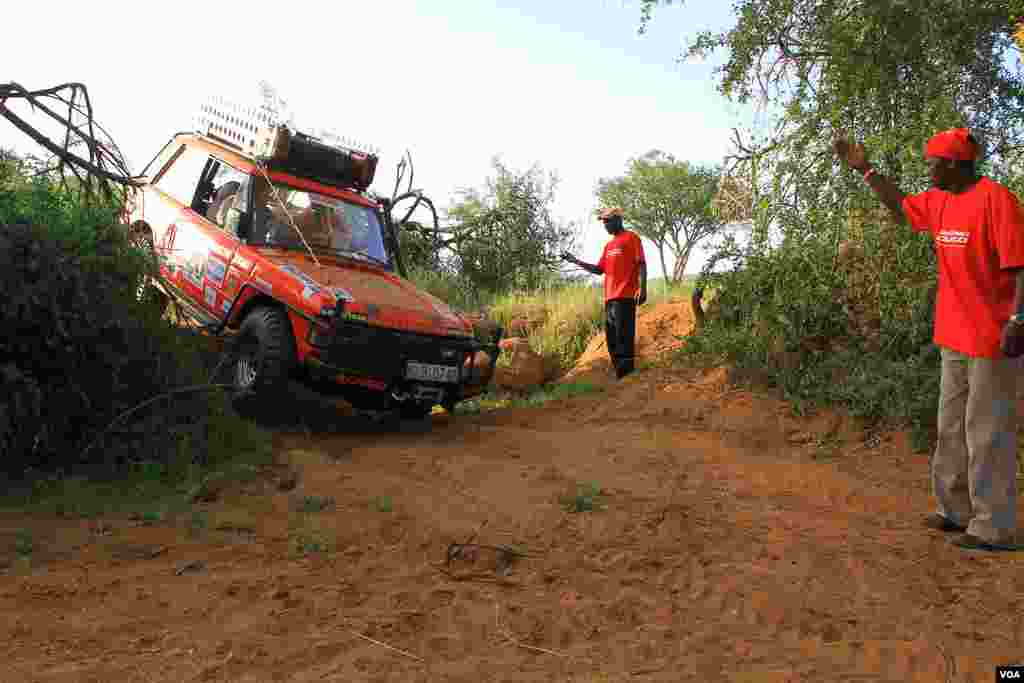
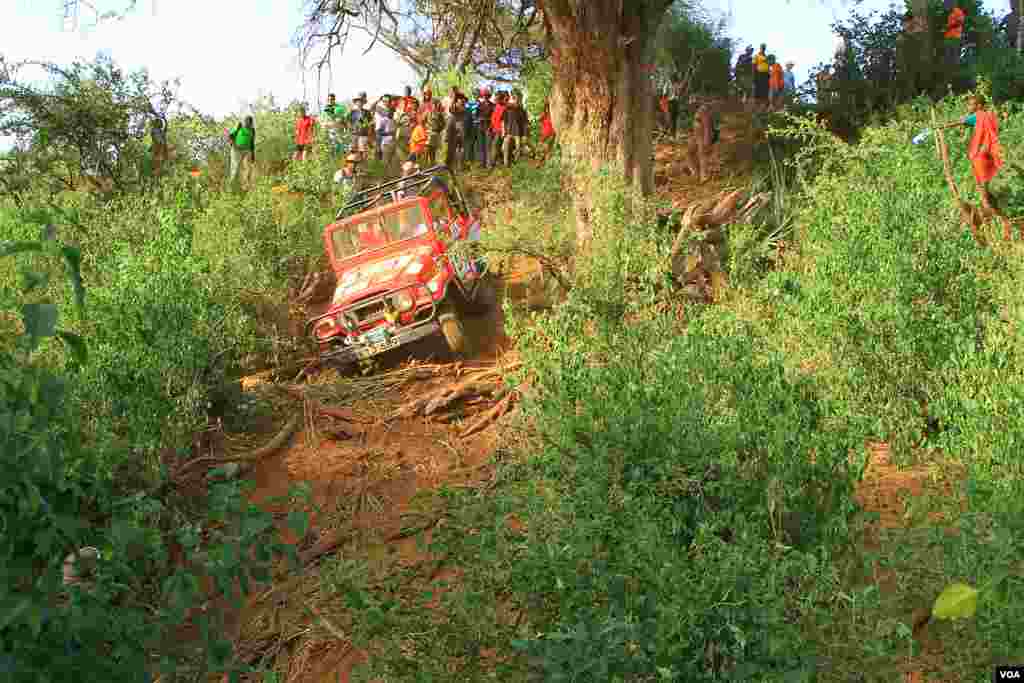
11/14Car 54, operated by the Danish Team, stuck uphill, after the completion of Rhino Charge, June 2, 2012. (VOA/Jill Craig)
Sixty-two cars participated in the annual competition considered by some to be the toughest off-road vehicle challenge in Africa
Show moreShow less
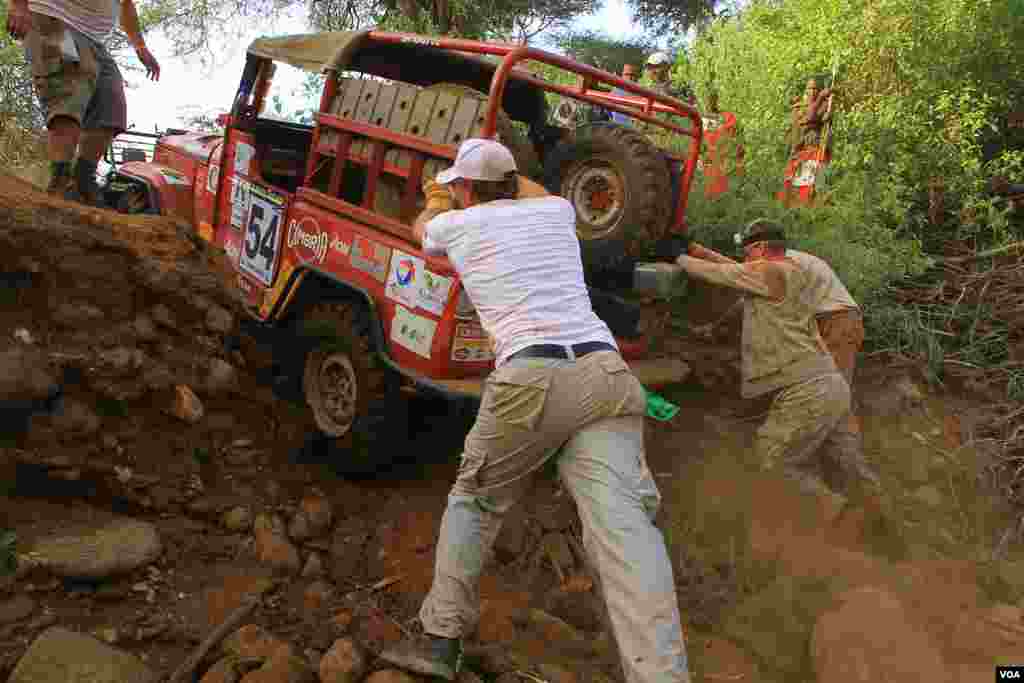
12/14Members of the Danish team, Car 54, pushing their car out of the "Gauntlet", June 2, 2012. (VOA/Jill Craig)
Sixty-two cars participated in the annual competition considered by some to be the toughest off-road vehicle challenge in Africa
Show moreShow less
13/14Spectators at Rhino Charge watch as members of Team Garmin, Car 64, winch their car out of the "Gauntlet," June 2, 2012. (VOA/Jill Craig)
Sixty-two cars participated in the annual competition considered by some to be the toughest off-road vehicle challenge in Africa
Show moreShow less
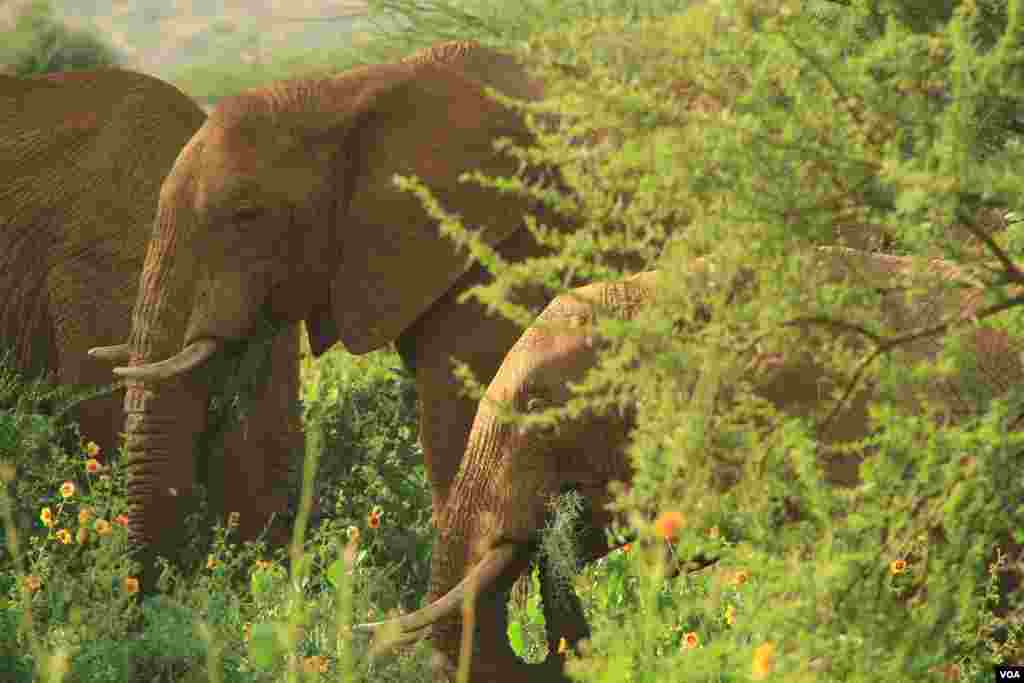
14/14Elephants - some of the many "obstacles" faced by competitors at the Rhino Charge held in Il Ngwesi, Laikipia, Kenya, June 2, 2012. (VOA/Jill Craig)
Sixty-two cars participated in the annual competition considered by some to be the toughest off-road vehicle challenge in Africa
Show moreShow less
Previous slide
Next slide
Many consider the event to be the toughest off-road challenge in Africa. Of the 62 entrants in this year’s race, only 15 made it to all the checkpoints.
The location changes every year and although they know the approximate area, participants do not know the exact coordinates until the evening before the event.
The Rhino Charge got its name because when a rhino charges, it goes straight ahead, regardless of what may be in its way.
The event was started in 1989 by the Rhino Ark Charitable Trust. Teams in this year’s race raised a record amount of 84 million Kenyan shillings - about $1 million - to support the conservation of Mt. Kenya and Mt. Eburu.