



U.S. President Barack Obama and his Republican challenger, Mitt Romney, are crisscrossing America ahead of Tuesday’s election, which polls show is a virtual tie in key battleground states.
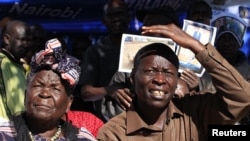
In the western Kenyan village of Kogelo, where Obama’s step-grandmother lives, journalist Daniel Otieno, bureau chief for the Nation Media Group said Tuesday’s election is more than American politics; it is about economics and social status.
In the western Kenyan town of Khayega, there was a bullfight over the weekend between a 400-kilogram black bull named Obama and a black and white 450-kilogram bull named Mitt Romney. Otieno said the Obama bull won the fight.
“[A] Bullfight is usually a pastime for the people in that area. It’s one of the entertainments that the people in that region usually have when there are festivals. This time around, the two bulls were fighting. One was named Obama, one was named Romney and, eventually, Obama won the fight,” he said.
Most Kenyans consider Obama, the son of a white American mother and a black Kenyan father, as one of their own.
Otieno said the Obama victory was a genuine one because bulls are nonpolitical.
“It is very difficult to say that it was a fair fight or a true victory. Usually, the bulls come from different villages and they usually name them according to festivities or the politics of the day. I think, because they are animals, the fight was a fair fight,” Otieno said.
He said, like in 2008, Kenyans are following the 2012 U.S. presidential election campaign with interest because they consider Obama their son.
“They [Kenyans] are following the campaign, especially in Obama’s mother’s village because, since Obama became president, the village has become a kind of a pilgrimage, not only to Americans, but to foreigners visiting the country. As a result, there’s been development. So, it is more than the American politics to them. For instance, it’s an economy and social status,” Otieno said.
Otieno said, in 2008, the village of Kogelo did not have electricity and running water, but now it has the necessary infrastructure to accommodate the many visitors.
He said Kenyans will most likely be watching the election returns early Wednesday on giant television screens.
In the western Kenyan village of Kogelo, where Obama’s step-grandmother lives, journalist Daniel Otieno, bureau chief for the Nation Media Group said Tuesday’s election is more than American politics; it is about economics and social status.
In the western Kenyan town of Khayega, there was a bullfight over the weekend between a 400-kilogram black bull named Obama and a black and white 450-kilogram bull named Mitt Romney. Otieno said the Obama bull won the fight.
“[A] Bullfight is usually a pastime for the people in that area. It’s one of the entertainments that the people in that region usually have when there are festivals. This time around, the two bulls were fighting. One was named Obama, one was named Romney and, eventually, Obama won the fight,” he said.
Most Kenyans consider Obama, the son of a white American mother and a black Kenyan father, as one of their own.
Otieno said the Obama victory was a genuine one because bulls are nonpolitical.
“It is very difficult to say that it was a fair fight or a true victory. Usually, the bulls come from different villages and they usually name them according to festivities or the politics of the day. I think, because they are animals, the fight was a fair fight,” Otieno said.


He said, like in 2008, Kenyans are following the 2012 U.S. presidential election campaign with interest because they consider Obama their son.
“They [Kenyans] are following the campaign, especially in Obama’s mother’s village because, since Obama became president, the village has become a kind of a pilgrimage, not only to Americans, but to foreigners visiting the country. As a result, there’s been development. So, it is more than the American politics to them. For instance, it’s an economy and social status,” Otieno said.
Otieno said, in 2008, the village of Kogelo did not have electricity and running water, but now it has the necessary infrastructure to accommodate the many visitors.
He said Kenyans will most likely be watching the election returns early Wednesday on giant television screens.