






JUBA, SOUTH SUDAN —
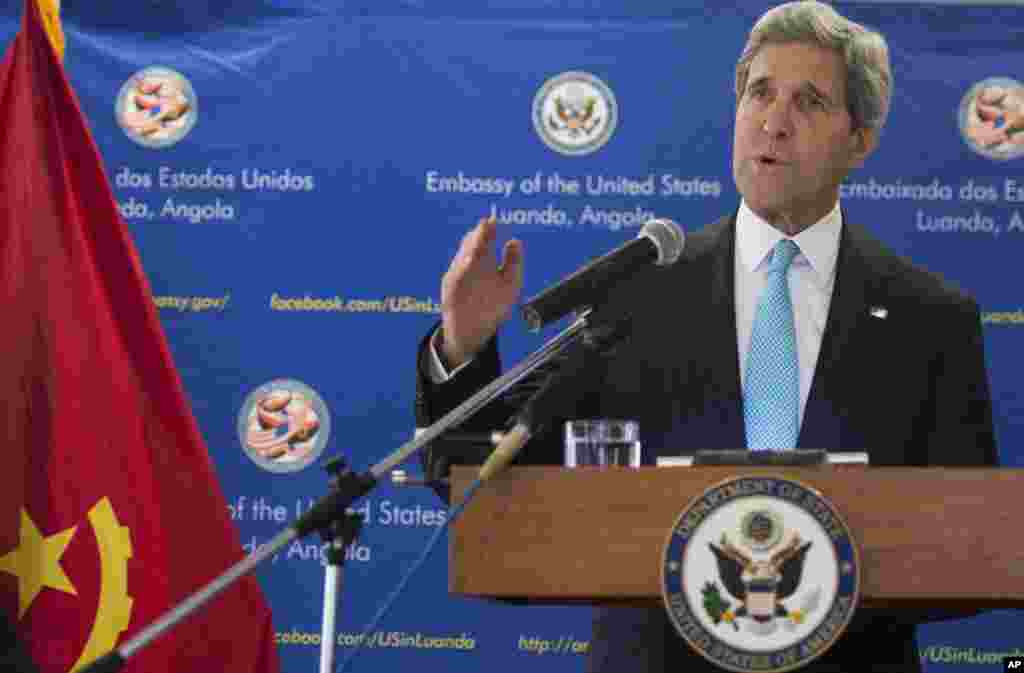
U.S. Secretary of State John Kerry traveled to South Sudan Friday to meet with President Salva Kiir in hopes of arranging talks to end four-months of violence that has displaced hundreds of thousands of civilians
The secretary visited South Sudan's capital of Juba before returning to Addis Ababa later in the day.
Kerry is trying to help end violence that has displaced hundreds of thousands of civilians and now threatens widespread famine.
He is trying to set up a meeting in the Ethiopian capital next week that would be the first face-to-face meeting between President Kiir and former vice president Machar since this fighting started.
"This meeting of Riek Machar and President Kiir is critical to the ability to be able to really engage in a serious way as to how the cessation of hostilities agreement will now once and for all really be implemented, and how that can be augmented by the discussions regarding a transition government," Kerry said.
Fighting broke out in late December, soon after the Kiir government accused Machar of trying to seize power.
Kerry said both men need to condemn attacks against civilians that he said show "disturbing leading indicators of the kind of ethnic, tribal, targeted, nationalistic killings" that "present a very serious challenge to the international community with respect to the question of genocide."
Kerry met for more than an hour with Kiir and said the South Sudanese leader agreed to talks in Addis Ababa.
Kerry telephoned Machar on his return to the Ethiopian capital to brief him on his visit to Juba and to urge him to engage in "meaningful political dialogue." It is unclear whether the rebel leader agreed to take part.
If those talks happen, Human Rights Watch deputy Washington director Sarah Margon said there must be a greater focus on protecting civilians.
"It's not going to just be a political negotiation in Addis detached from what's happening on the ground," Margoni said. "Obviously the fighting is going on. And we need to think collectively about how they fight, what the role of civilians are, which obviously should not be stuck in the middle of any fighting."
Kerry said the United States is working with regional leaders and the African Union to get as many as 2,500 African troops to South Sudan "as rapidly as possible" to separate combatants and protect civilians under a stronger United Nations mandate.
The Obama administration also has in place a mechanism for sanctions against those responsible for the violence.
But a travel ban and assets freeze would be far more effective if joined by neighboring Ethiopia, Kenya, and Uganda, which Kerry said Thursday "accepted the responsibility for also doing sanctions."
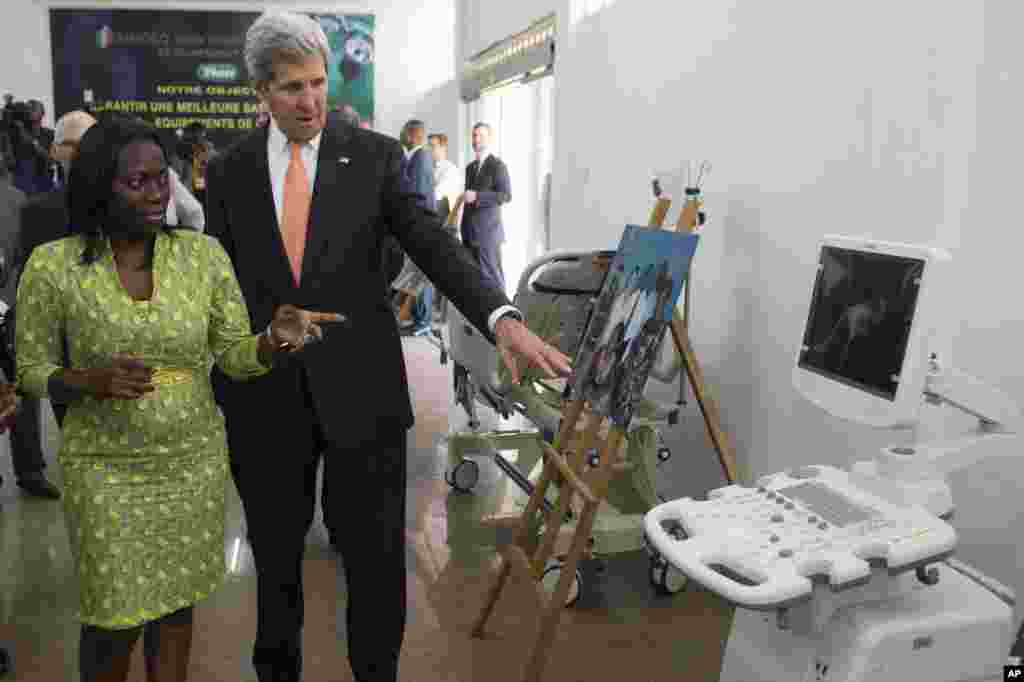
While in the South Sudanese capital, Kerry also met with civil society leaders, U.N. officials, and representatives of those displaced by the fighting.
The secretary visited South Sudan's capital of Juba before returning to Addis Ababa later in the day.
Kerry is trying to help end violence that has displaced hundreds of thousands of civilians and now threatens widespread famine.
He is trying to set up a meeting in the Ethiopian capital next week that would be the first face-to-face meeting between President Kiir and former vice president Machar since this fighting started.
"This meeting of Riek Machar and President Kiir is critical to the ability to be able to really engage in a serious way as to how the cessation of hostilities agreement will now once and for all really be implemented, and how that can be augmented by the discussions regarding a transition government," Kerry said.
Fighting broke out in late December, soon after the Kiir government accused Machar of trying to seize power.
Kerry said both men need to condemn attacks against civilians that he said show "disturbing leading indicators of the kind of ethnic, tribal, targeted, nationalistic killings" that "present a very serious challenge to the international community with respect to the question of genocide."
Kerry met for more than an hour with Kiir and said the South Sudanese leader agreed to talks in Addis Ababa.
Kerry telephoned Machar on his return to the Ethiopian capital to brief him on his visit to Juba and to urge him to engage in "meaningful political dialogue." It is unclear whether the rebel leader agreed to take part.
If those talks happen, Human Rights Watch deputy Washington director Sarah Margon said there must be a greater focus on protecting civilians.
"It's not going to just be a political negotiation in Addis detached from what's happening on the ground," Margoni said. "Obviously the fighting is going on. And we need to think collectively about how they fight, what the role of civilians are, which obviously should not be stuck in the middle of any fighting."
Kerry said the United States is working with regional leaders and the African Union to get as many as 2,500 African troops to South Sudan "as rapidly as possible" to separate combatants and protect civilians under a stronger United Nations mandate.
The Obama administration also has in place a mechanism for sanctions against those responsible for the violence.
But a travel ban and assets freeze would be far more effective if joined by neighboring Ethiopia, Kenya, and Uganda, which Kerry said Thursday "accepted the responsibility for also doing sanctions."
While in the South Sudanese capital, Kerry also met with civil society leaders, U.N. officials, and representatives of those displaced by the fighting.