



Although they deny it, many around the world are saying that the Chinese have curtailed or halted the supply of what are called "rare earth materials" to Japan, in apparent retaliation for Japan's refusal to issue an apology in its dispute with China over a detained fishing boat captain. No matter the reason, the reduction in the supply of these materials could cause major problems not only in Japan, but around the world.
Ira Mellman speaks with Jeff Green about the rare earth materials:
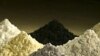
China mines 93 percent of these rare earth materials, which sell for several hundred dollars a pound. Most of the sales are to Japan. Japan then uses these materials to produce products ranging from making glass for solar panels to the motors used by hybrid cars like the Toyota Prius.
“These are things that some folks in the industry refer to as 'technology metals'," said Jeff Green, a Washington lobbyist trying to coax Congress to make it more affordable for US companies to get back into the mining of these rare earth materials. "These are things that make magnets stronger, make electronics smaller and things move faster, so they are really the next generation of high performance metals. Without these, things like your iPhone wouldn’t be as small as it is and wind turbines wouldn’t produce the power that they do.”
At one time, it was the United States that lead the world in the production of these rare earth materials. But the mines have closed.
Jeff Green says the problem was, and still is the cost of these mining operations. He says the cost of starting such a mining operation now is about half a billion dollars.
Green says there is another reason there is no movement in new mine startups. "The problem in this market is that the Chinese are so dominant that anyone who invests that type of money in the market faces the problem of what the industry saw in the nineties, and that was where a flood of the materials would be dumped on the market, driving the price down, which would upset the economics of those outside of China trying to invest in the system." So, says Green, it’s really the manipulation of this market by the Chinese that makes this a particularly difficult business to get into.
In Beijing, the government controlled China Daily newspaper reports there are 40 percent cuts in export quotas of the rare earth materials for the second half of this year from last. It quotes a rare earth material expert there as saying the reduced quotas have nothing to do with China's dispute with Japan.
The report says due to the need to keep more of the materials for its own use, the export supply has basically been exhausted, meaning China can't export any not only to Japan but to Europe or the United States either.
Lobbyist Jeff Green says the reduction or elimination of the supply of rare earth material would have a major effect, not only on Japan but on the United States as well.
“Certain defense systems may not have material available. For example, guided missiles, radar, all kinds of defense systems. Really it’s difficult to name a system that doesn’t have some kind of rare earths. We’re very concerned about the supply material to support the building and construction of those systems."
Green adds "It also could have grave economic impacts. If you look at the United States trying to go to a renewable energy standard of 20 percent by 2030, there currently isn’t the rare earth material available to build those wind turbines to help build that economy. So, unless the U.S. comes online, we really can’t ever get to a renewable energy standard set forth by the administration.”
Last week, a US House committee agreed and approved a bill that would, among other things, provide loan guarantees for US companies wishing to start up rare earth material mining. Committee Chairman Bart Gordon said it was essential for the United States to start providing its own rare earth materials.During the Committee's markup hearing, Representative Gordon (D-TN) said “I believe it would be foolish to stake our national defense and our economic security on China’s good will, or hope that it will choose to compete in a fair and open global marketplace for rare earth. The stakes are simply too high.”
The US Defense Department is compiling a report on the national security impact of US dependence on the Chinese provided materials and this week, a Senate committee will probe the issue as well.