News / Africa

Obama Set to Host US-Africa Summit

President Barack Obama speaks to participants of the Presidential Summit for the Washington Fellowship for Young African Leaders in Washington, July 28, 2014. The summit was the lead-up event to the inaugural U.S.-Africa Leaders Summit (Aug. 4-6), the largest gathering any U.S. president has held with African heads of state.
William Eagle

President Obama will be welcoming more than 50 African leaders for a three-day U.S.-Africa summit to begin August 4 in Washington, D.C.

Not invited are the presidents of four countries with a record of human rights violations: Eritrea, Zimbabwe, Sudan and Central African Republic. The leaders of Sierra Leone and Liberia have canceled their trips because of the Ebola outbreak in their countries.

At the summit, the U.S. is expected to unveil nearly $1 billion in business deals, more funding for peacekeeping, and commit billions more dollars to food and power programs in Africa.

Administration officials say it’s an opportunity to discuss the future of an economically-growing continent, and address questions about how the U.S. can become a closer partner.

Themed “Investing in the Next Generation," the summit meetings will be designed to identify shared interests that will be needed if the continent is to meet the needs of its young people: health care, education, and work place opportunities.

Story continues after related video report by VOA's Miriama Diallo:
African Leaders Head to Washington for Summiti
X
Mariama Diallo
August 02, 2014 3:09 AM
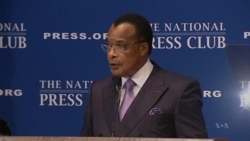
Security throughout Africa will be on the agenda of nearly 50 leaders at the US Africa Leaders Summit next week -- Tuesday and Wednesday -- in Washington. The Congolese president, speaking to an audience of Americans, diplomats and African diaspora, pointed to terrorist threats and armed violence, but argued the issue goes much deeper than military or police action. VOA's Mariama Diallo reports.


At a time when armed conflict has created a humanitarian emergencies in Central African Republic and South Sudan, and East and West African countries are fighting the spread of radical Islamists, the first goal is to ensure peace and stability needed for development.

Summit participants will discuss how to end violence and ensure both regional and domestic security.

Listen to report on US-Africa summit
Listen to report on US-Africa summiti
|| 0:00:00
...    
 
X

That effort will include reforms to national militaries, says Joseph Siegle, research director for the Africa Center for Strategic Studies at National Defense University in Washington, D.C.

"There’s  a recognition that part of the challenge is that Africa’s police and military aren’t always very professional, and this can lead to inappropriate or heavy-handed responses, especially when dealing with domestic security threats, which involve [the killings] a lot of innocent bystanders," he said. "This tends to alienate the local population and further fuel grievances."

"The challenge [for Obama and the heads of state] is how do you [separate and address] the domestic issues and then the transnational components of those threats?"

Trade, investment

On Tuesday, African leaders will meet with government officials at a business forum to address economic security. The gathering is expected to bring together 200 U.S. and African business leaders in order to find ways to strengthen financial ties by boosting trade and investment.
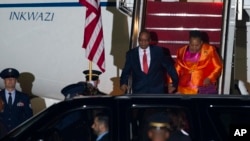
South African President Jacob Zuma and his wife Bongi Ngema arrive at Andrews Air Force Base, Md., Aug. 3, 2014 to attend the US - Africa Leaders Summit.South African President Jacob Zuma and his wife Bongi Ngema arrive at Andrews Air Force Base, Md., Aug. 3, 2014 to attend the US - Africa Leaders Summit.
x
South African President Jacob Zuma and his wife Bongi Ngema arrive at Andrews Air Force Base, Md., Aug. 3, 2014 to attend the US - Africa Leaders Summit.


An important part of U.S. trade with Africa trade is the African Growth and Opportunity Act (AGOA), U.S. legislation designed to assist economies of sub-Saharan Africa and improve economic relations.

AGOA gives African countries with a good records of economic management and human rights duty-free access to U.S. markets. Today, Africa sells about seven thousand products to the U.S., worth about $27 billion.

More than 20 countries participate in AGOA, but U.S. officials say more could take part.

Experts such as Witney Schneidman, senior international advisor for Africa at the global law firm of Washington-headquartered Covington and Burling, says AGOA should be renewed for 15 years to ensure a stable investing environment.

"Another idea being considered by government officials is to enhance USAID trade hubs in Africa," he said, explaing that the hubs, or information centers, help African businesses export their goods to the U.S. market.

Schneidman also says they should be renamed trade and investment hubs that also help U.S. companies interested in the African market.   

"Those trade hubs need to pull together," he said. "We need a  whole of government approach so that you have our ambassadors and embassies in lockstep with our commerce and agriculture officials, along with officials from [the Export-Import Bank of the United States] and the [Organization of Petroleum Exporting Countries].

"[This way] we can present one face," he said. "A one-stop shop to U.S. companies on how the U.S. government can help them be successful in Africa."

Human rights

The summit agenad also includes a session on governance, though some activists say the current meeting schedule does not pay enough attention to human rights and democratization issues.

Civil society groups have voiced displeasure at not being invited to take part in any roundtable discussions with African leaders despite a civil society forum scheduled for Monday. 

Adam Shapiro of the human rights group Front Line Defenders said U.S. emphasis on human rights and good governance is what should separate this gathering from recent Africa investment summits held by China, India, Japan and Russia.
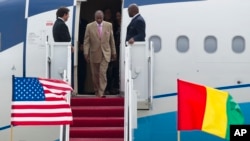
Republic of Guinea Prime Minister Mohamed Said Fofana arrives at Andrews Air Force Base, Md., Aug. 2, 2014, to attend the US - Africa Leaders Summit.Republic of Guinea Prime Minister Mohamed Said Fofana arrives at Andrews Air Force Base, Md., Aug. 2, 2014, to attend the US - Africa Leaders Summit.
x
Republic of Guinea Prime Minister Mohamed Said Fofana arrives at Andrews Air Force Base, Md., Aug. 2, 2014, to attend the US - Africa Leaders Summit.


"In those summits, there were very low expectations from Africa that any kind of issues about governance or human rights or transparency would be brought up," Shapiro said. "But when it comes to the U.S., there is an expectation that these kinds of issues would be on the table."

Shapiro, who wants civil society to be a part of all discussions — especially those on security and good governance — also wants President Obama to publicly identify leaders who’ve gained power through elections and transparency, such as those in Liberia, Ghana, Tanzania and Botswana.

He and other activists have been critical of summit invitations to leaders accused of human rights abuses, such as Teodoro Obian Nguema, long-serving president of Equatorial Guinea, and Abdel Fatah al-Sisi, president of Egypt.

Unlike China’s recent Africa summit, the U.S.-hosted summit will have no one-on-one meetings between the president and the African leaders.

Administration officials say Obama will be spending the entire day meeting with leaders on Wednesday at the heads-of-state summit. Heads of state and business leaders will be able to meet with cabinet-level officials during some of the events.

You May Like

What You Need to Know About Benghazi Hearing

House committee on Benghazi was created in May 2014 to investigate causes of and responses to attacks on two US sites More

Will Cricket Score Points with Americans?

All-star cricket teams will hold matches in US cities in an attempt to spark American interest in the sport, which enjoys enormous popularity outside the US More

What Americans Fear More Than Terrorism

Americans are more afraid of this than they are of potential terrorist attacks, according to a new fear survey More

This forum has been closed.
Comment Sorting
Comments
     
by: Immanuel from: Stockholm
August 04, 2014 6:04 AM
I would like the african leaders to hold town hall meetings with the diaspora group of their countries. The african diaspora contribute enormously to the development of the continent.I would like every african leader to a question and answer session at VOA,CNN,BBC about some of the challenges their people face and hwo they would like it to be solved. Straight Talk Africa, a Voa program can better interview some of the leaders at least one in central,west , east, southern, and north africa.Another worry is the how islamists turns africa into a conflict continent and a place to experiment jihad, suicide bombing, How can african leaders bring back term limits tosome africa constitutions they conived with a few loyalists and removed?

by: Anonymous
August 03, 2014 1:17 PM
when will the sit tight african leaders realise that they can let people choose whoever to lead them with vote rigging by ruling govenment parties

by: Anonymous
August 03, 2014 12:53 PM
Most of these african leaders represent themselves and a few tribesmen.They take country resources and do as if its theirs.

by: Benjamin Likute Bauma from: South Africa
August 03, 2014 7:54 AM
As an African I feel embarrassed by this type of gathering where African leaders are called by a non African president to attend a meeting regarding the future of Africa. That for me is the admittance by African leaders that they are unable to develop their own countries.

The problem of Africa is the present mindset of our leaders. They don't think that a solution for the African problems should come within Africa by the Africans. As long as this type of mental slavery will prevail among our leaders, Africa will never be developed. Just look back since the so called Independence of the continent, how many plans western countries brought to Africa, none of them worked. The situation in the continent is going from bad to worse.

In my humble opinion, our brother Obama should help us to free our minds instead of entertaining this illusion
In Response

by: S H from: USA
August 03, 2014 8:31 PM
I don't think you, or anyone should feel embarrassed. The President represents the most dynamic and powerful economy on Earth, and it makes perfect sense that the US organize and lead where others have yet to step.

It is we Americans who should feel embarrassed for the sins of of ancestors. Today we feel pride because the President is tending to this righteous work.

People are proud of Africa for surviving the so many abuses it has suffered.

by: mhassan from: sudan
August 02, 2014 5:26 PM
It looks like a fool's puzzle; U.S President self enhancement, humanitarian political tools and African interests; how to place the odds together; alternatively: how to drive the flock if that was acceptable

Featured Videos

Your JavaScript is turned off or you have an old version of Adobe's Flash Player. Get the latest Flash player.
Drug Kingpin El Chapo Guzman Injured During Searchi
X
Alberto Pimienta
October 19, 2015 8:34 PM
Mexican authorities are closing in on the most dangerous drug trafficker in the world, Joaquin “El Chapo” Guzman. “El Chapo” avoided being captured over the weekend but the Mexican government says he’s now injured. VOA's Alberto Pimienta reports.
Video

Video Drug Kingpin El Chapo Guzman Injured During Search

Mexican authorities are closing in on the most dangerous drug trafficker in the world, Joaquin “El Chapo” Guzman. “El Chapo” avoided being captured over the weekend but the Mexican government says he’s now injured. VOA's Alberto Pimienta reports.
Video

Video Kenyan Town Vies to Become East African Cycling Hub

The sport of cycling has steadily built a following in East Africa in recent years. It doesn’t hurt that two-time Tour de France winner Chris Froome was born in Kenya and trained by one of Africa’s best cyclists, David Kinjah. And now the town of Machakos, about 56 kilometers southeast of Nairobi, is trying to become Kenya’s, and perhaps East Africa’s, cycling hub. VOA’s Jill Craig has more from Machakos, Kenya.
Video

Video Taliban Remain Serious Threat in Provinces Around Kunduz

Even though Afghan security forces have regained control of the northern city of Kunduz from the Taliban after fierce fighting, the security situation in the region is still tenuous. VOA’s Ayesha Tanzeem traveled to Baghlan Province, neighboring Kunduz, and has this report on the situation there.
Video

Video Taiwan Finding Niche Markets in China’s Shadow

China’s economy is like a business magnet and as its influence grows its neighbors are finding it increasingly difficult to remain competitive. Like many economies in the region, Taiwan has been hit hard in recent years as China’s so-called “red-supply chain” has drained off talent and opportunities.
Video

Video Amid Congressional Leadership Crisis, Momentous US Fiscal Deadlines Loom

The U.S. Congress faces critical fiscal deadlines at a time of upheaval and uncertainty on Capitol Hill. Lawmakers are returning from a weeklong recess still wondering who will lead the House of Representatives. Michael Bowman reports.
Video

Video Egyptians Vote in Long-delayed Parliamentary Election

Voting in a long-awaited election for a new parliament opened Sunday in half of Egypt's provinces as the government works to complete a roadmap to democracy implemented following the ouster of the country's first freely elected civilian President Mohamed Morsi of the Muslim Brotherhood.
Video

Video Reparations Underway for War Victims in Ivory Coast, Many Still Awaiting

Five years after the deadly 2010 post-election violence in Ivory Coast, the country is determined to consolidate its peace. And to help in that reconciliation, President Alassane Ouattara created agencies aimed at providing reparation for war victims. The first batch of victims was compensated last August. But many are still waiting, and some are losing patience over the lagging process. Emilie Iob reports.
Video

Video Inter-Korean Family Reunions Preparations Under Way

A South Korean advance team that includes Red Cross officials is now in North Korea to prepare for next week’s reunion for families that have been separated by the Korean War. VOA’s Brian Padden reports from Seoul that this rare reunion, that just weeks ago looked unlikely to happen, will offer the 200 selected participants the first opportunity to see their families in over half a century. And it could clear the way to further inter-Korean cooperation.
Video

Video Vets: Syria Not Another Afghanistan for Russia

Russia's military strikes in Syria against enemies of President Bashar al-Assad have raised fears of a proxy war against U.S.-armed rebels. The concerns echo the Soviet Union's 1979 intervention in Afghanistan. Russian veterans of the Afghan War, however, say a similar conflict in Syria is unlikely as long as ground troops are not involved. VOA's Daniel Schearf reports from Moscow.
Video

Video Largest US Prisoner Release to Begin Oct. 30

The United States is beginning its largest prisoner release in history, now that federal sentencing guidelines have been reduced for certain drug offenders. VOA's Carolyn Presutti talks to an inmate who is counting down the days to freedom — and the people who don't think he's yet to earn it.
Video

Video Syrian Refugees in US Struggle to Start Anew

Communities across the United States are welcoming Syrian refugees who have fled their war-torn country and often spent many months, if not years, in refugee camps. But, as VOA’s Greg Flakus reports from Houston, some of their biggest challenges come as they try to adapt to life in a new country.
Video

Video Turkey: Europe’s Offer of Migrant Deal ‘Insincere’

European Union leaders have agreed on a plan to offer Turkey $3.5 billion, together with visa-free travel and renewed accession talks, in return for stopping the flow of refugees and migrants into the EU. But as Henry Ridgwell reports from London, the offer is getting a lukewarm reception in Ankara.
Video

Video Amnesty Accuses Saudi Coalition of ‘War Crimes’ in Yemen

The human rights group Amnesty International has accused the Saudi-led coalition of war crimes in airstrikes against Houthi rebels in Yemen. Henry Ridgwell reports the group says hundreds of civilians have been killed in strikes on residential areas.

VOA Blogs