Accessibility links

Breaking News

Liberia, Sierra Leone Deploy Troops to Contain Ebola

A Liberian soldier stops people at a security checkpoint set up to clamp down on people trying to travel to the capital from rural areas hard-hit by the Ebola virus, on the outskirts of Monrovia, Aug. 7, 2014.

Liberia and Sierra Leone are reporting hundreds of confirmed or suspected cases of Ebola.

With public health systems overrun, both countries have declared states of emergency and sent security forces to quarantine affected areas, setting up roadblocks and taking other measures to limit people's movements as part of the efforts to contain the spread of the deadly virus.

In Liberia, they are calling it "Operation White Shield."

Information Minister Lewis Brown says checkpoints are already being established.

Ebola Death Toll Almost 900

World Health Organization (WHO) Director-General Margaret Chan sits next to Keiji Fukuda, WHO&#39;s Assistant Director-General for health security after an emergency meeting. The WHO announced that <span class="Lbl">West Africa&#39;s epidemic of Ebola is an &quot;extraordinary event&quot; and now constitutes an international health risk, </span>in Geneva, <span class="Lbl">Aug. 8, 2014.</span>
1/10 World Health Organization (WHO) Director-General Margaret Chan sits next to Keiji Fukuda, WHO's Assistant Director-General for health security after an emergency meeting. The WHO announced that West Africa's epidemic of Ebola is an "extraordinary event" and now constitutes an international health risk, in Geneva, Aug. 8, 2014.
This undated photo made available by the Antwerp Institute of Tropical Medicine in Antwerp, Belgium, shows the Ebola virus viewed through an electron microscope. The World Health Organization on Aug. 8, 2014 declared the Ebola outbreak in West Africa to be an international public health emergency that requires an extraordinary response to stop its spread.
2/10 This undated photo made available by the Antwerp Institute of Tropical Medicine in Antwerp, Belgium, shows the Ebola virus viewed through an electron microscope. The World Health Organization on Aug. 8, 2014 declared the Ebola outbreak in West Africa to be an international public health emergency that requires an extraordinary response to stop its spread.
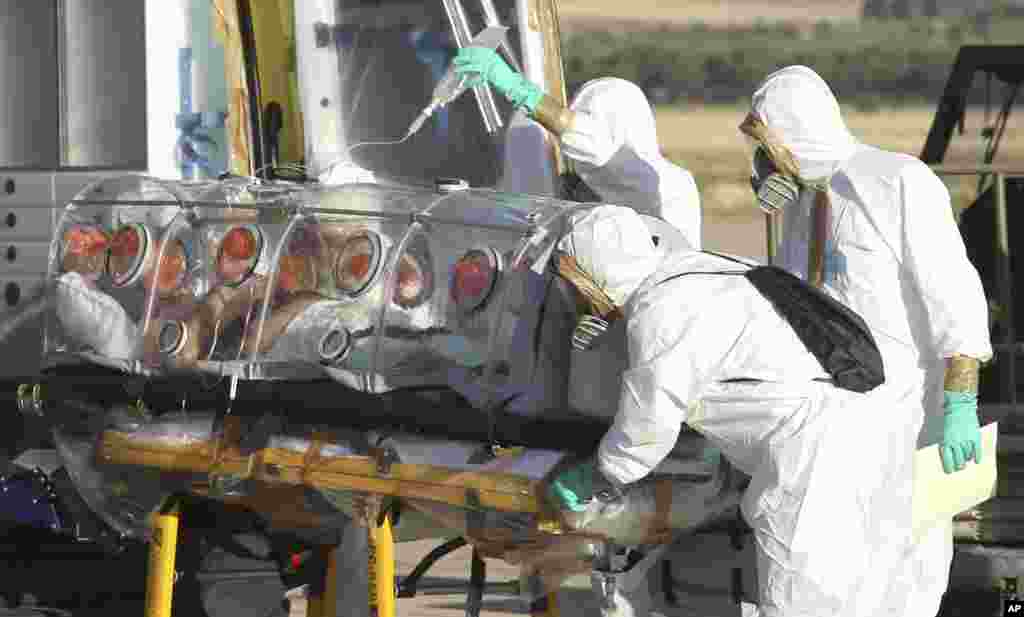
An ambulance transporting Miguel Pajares, a Spanish priest who was infected with the Ebola virus while working in Liberia, leaves the Military Air Base of Torrejon de Ardoz, near Madrid, Spain, Aug. 7, 2014.
3/10 An ambulance transporting Miguel Pajares, a Spanish priest who was infected with the Ebola virus while working in Liberia, leaves the Military Air Base of Torrejon de Ardoz, near Madrid, Spain, Aug. 7, 2014.
Aid workers and doctors transfer Miguel Pajares from a plane to an ambulance as he leaves the Torrejon de Ardoz military airbase, near Madrid, Spain, Aug. 7, 2014.
4/10 Aid workers and doctors transfer Miguel Pajares from a plane to an ambulance as he leaves the Torrejon de Ardoz military airbase, near Madrid, Spain, Aug. 7, 2014.
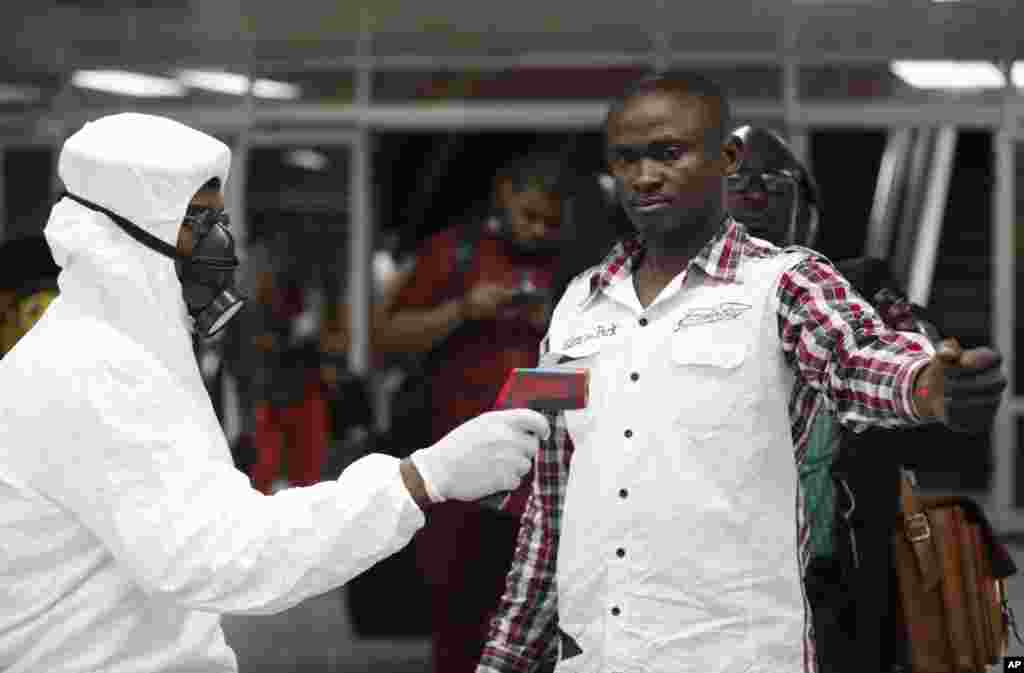
A Nigerian port health official uses a thermometer on a worker at the arrivals hall of Murtala Muhammed International Airport in Lagos, Nigeria, Aug. 6, 2014.
5/10 A Nigerian port health official uses a thermometer on a worker at the arrivals hall of Murtala Muhammed International Airport in Lagos, Nigeria, Aug. 6, 2014.
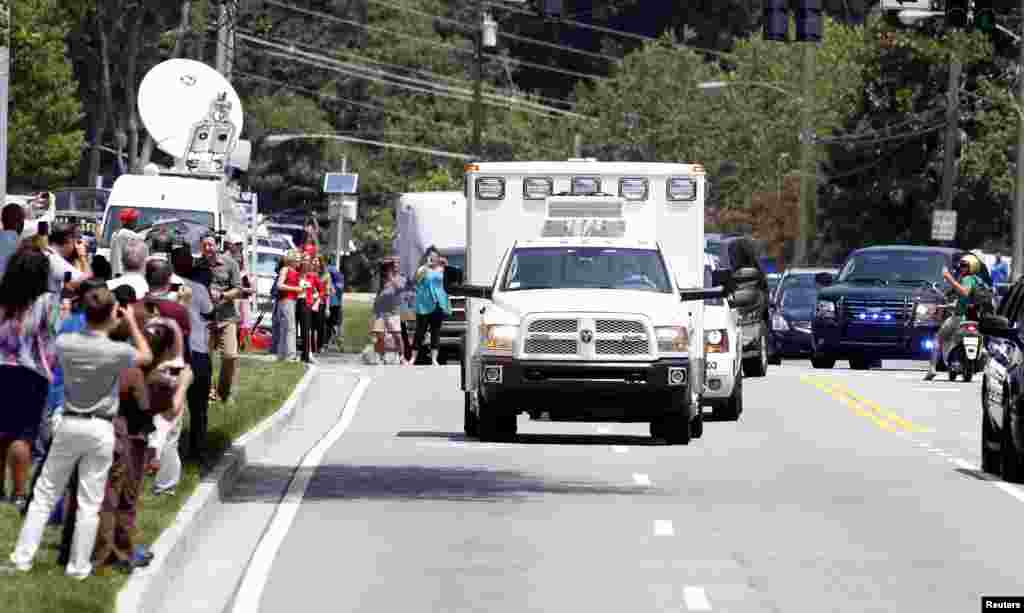
An ambulance carrying American missionary Nancy Writebol, 59, who is infected with Ebola in West Africa arrives past crowds of people taking pictures at Emory University Hospital in Atlanta, Georgia, Aug. 5, 2014.
6/10 An ambulance carrying American missionary Nancy Writebol, 59, who is infected with Ebola in West Africa arrives past crowds of people taking pictures at Emory University Hospital in Atlanta, Georgia, Aug. 5, 2014.
Nigeria health officials wait to screen passengers at the arrival hall of Murtala Muhammed International Airport in Lagos, Nigeria, Aug. 4, 2014.&nbsp;
7/10 Nigeria health officials wait to screen passengers at the arrival hall of Murtala Muhammed International Airport in Lagos, Nigeria, Aug. 4, 2014. 
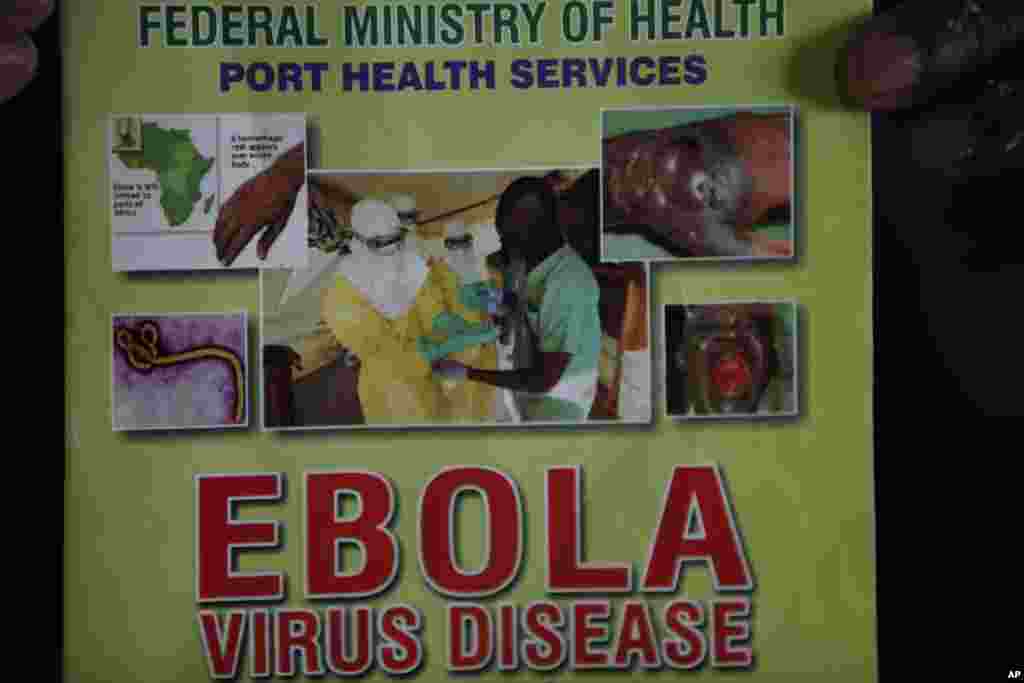
Nigeria health officials display a leaflet explaining the Ebola virus, at the arrival hall of Murtala Muhammed International Airport, in Lagos, Nigeria, Aug. 4, 2014.&nbsp;
8/10 Nigeria health officials display a leaflet explaining the Ebola virus, at the arrival hall of Murtala Muhammed International Airport, in Lagos, Nigeria, Aug. 4, 2014. 
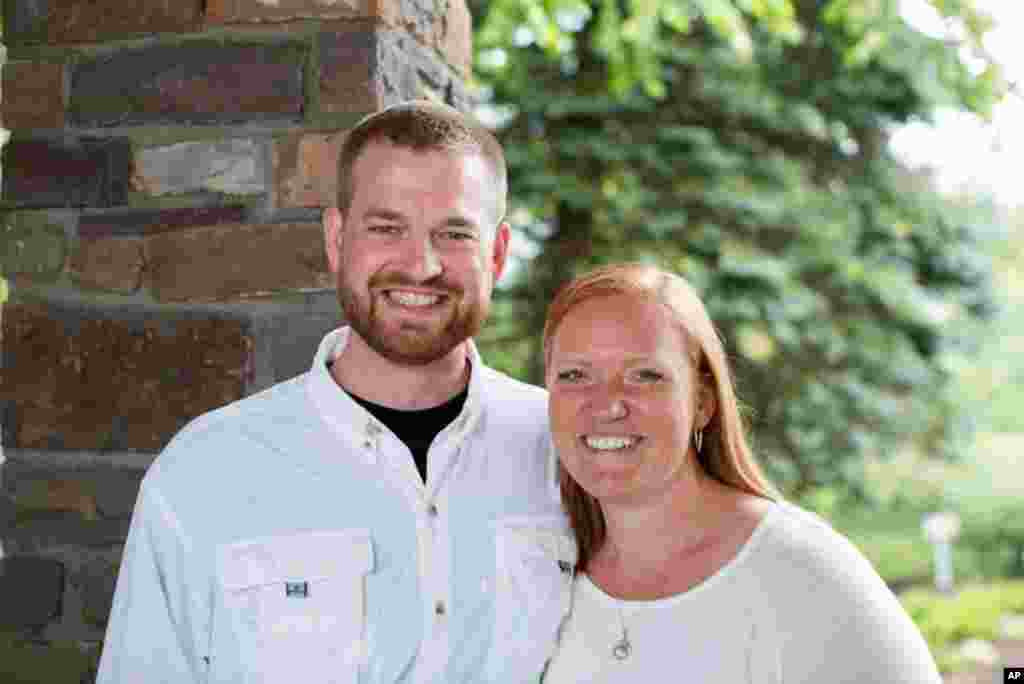
Dr. Kent Brantly and his wife, Amber, are seen in an undated photo provided by Samaritan&#39;s Purse. Brantly became the first person infected with Ebola to be brought to the United States from Africa, arriving at Emory University Hospital, in Atlanta, Aug. 2, 2014.&nbsp;
9/10 Dr. Kent Brantly and his wife, Amber, are seen in an undated photo provided by Samaritan's Purse. Brantly became the first person infected with Ebola to be brought to the United States from Africa, arriving at Emory University Hospital, in Atlanta, Aug. 2, 2014. 
People queue outside a bank as fear spreads that public buildings might be closed due to the spread of the deadly Ebola virus, Monrovia, Liberia, Aug. 4, 2014.&nbsp;
10/10 People queue outside a bank as fear spreads that public buildings might be closed due to the spread of the deadly Ebola virus, Monrovia, Liberia, Aug. 4, 2014. 
Previous slide
Next slide

​"Unless it is absolutely necessary, individuals in all affected counties are strongly advised to remain in their counties and continue to take the necessary preventive measures announced by the health experts," he added.

Border region

Click to enlarge
Click to enlarge

The goal is to seal off at least four affected counties in the north and west of the country and the borders with Guinea and Sierra Leone.

Defense Minister Brownie Samukai says the soldiers "will have positions along the border to ensure that there is no further entry of any persons who may be suspected or for whatever health reasons is determined by those on the ground not to cross the border."

Health authorities say sick people and people who may have been exposed to the Ebola virus need to stop moving around and infecting new areas.

Both Sierra Leone and Liberia have security forces guarding Ebola treatment centers and health workers.

Sierra Leone sent its army to enforce what the government says will be a complete blockade of the Kenema and Kailahun districts on the country's eastern border with Liberia and Guinea.

A VOA reporter in Kenema says security forces are blocking cars from going in and out of affected areas there. Soldiers are also expected to start foot patrols.

Between the two of them, Liberia and Sierra Leone are setting out to monitor people's movements in and out of more than 16,000 square kilometers.

No cure
Click to enlarge
Click to enlarge

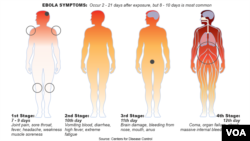
Ebola has no cure but about 40 percent of those infected in this outbreak are surviving with medical care. An infected person isn't contagious until the symptoms such as fever and vomiting begin. It can take up to three weeks for those symptoms to appear once a person catches the virus, either through bush meat or the bodily fluids of an Ebola patient.

So even if security forces succeed in sealing off the most affected zones in these two countries, the 21-day incubation period means that new cases could continue to crop up in coming weeks.

The Liberian government says security forces will extend quarantine measures to additional areas as needed.

The governments of both countries have warned citizens that things could get worse before they get better.

Prince Collins reported from Monrovia. Patrick Jakema reported from Kenema, Sierra Leone.

This item is part of
XS
SM
MD
LG