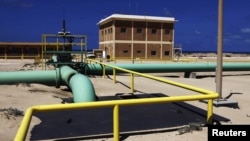
Libya's oil ministry has reached agreement with the country's army chief and defense and interior ministries to secure exporting terminals, Oil Minister Abdelbari Al-Arusi said, after several protests have caused shipping disruptions.
Oil installations have become a focal point of protests in OPEC member Libya in the wake of July polls that ushered in the North African country's first elected authorities.
The administration is still struggling to impose order on a vast and divided country awash with arms and militias after the overthrow of Moammar Gadhafi in late 2011.
"We have agreed with the defense minister, chief of staff and interior minister to secure the oil ports and the army has sent a force to the port [of Zueitina],'' Arusi told Reuters.
He said oil exports from the eastern Zueitina terminal should resume in coming days after the port was closed down because of protests that began last month.
"The technicians in Zueitina need two days to empty the pipes from the water flowing in them when the oil stopped pumping, at which time, when the government provides us with the security they have promised us, oil pumping and exports will resume,'' he said.
No oil has been shipped out of Zueitina, which normally exports around 60,000 barrels to 70,000 barrels per day, since the start of January due to local protests that began in December.
A senior Libyan oil source said protesters' threats had affected mainly the shipping of oil rather than gas, because there had been a safe shutdown of the oilfields pumping to the terminal, some 800 kilometers east of the capital Tripoli.
The source added that negotiations with the protesters were still continuing.
In December, protesters calling for jobs and other social demands forced their way into the port's management offices and ordered the port director to quit working and shut down operations.
The chairman of Zueitina Oil Company, which works alongside U.S. firm Occidental Petroleum Corp, later said the company was persuaded to leave by local officials, but did not have details on whether an actual agreement was reached.
Separately, bad weather prevented ships from entering Es Sider port on Wednesday, said a source at the Waha Oil Company which operates the eastern terminal, but normal activity was expected to resume on Thursday.
Oil installations have become a focal point of protests in OPEC member Libya in the wake of July polls that ushered in the North African country's first elected authorities.
The administration is still struggling to impose order on a vast and divided country awash with arms and militias after the overthrow of Moammar Gadhafi in late 2011.
"We have agreed with the defense minister, chief of staff and interior minister to secure the oil ports and the army has sent a force to the port [of Zueitina],'' Arusi told Reuters.
He said oil exports from the eastern Zueitina terminal should resume in coming days after the port was closed down because of protests that began last month.
"The technicians in Zueitina need two days to empty the pipes from the water flowing in them when the oil stopped pumping, at which time, when the government provides us with the security they have promised us, oil pumping and exports will resume,'' he said.
No oil has been shipped out of Zueitina, which normally exports around 60,000 barrels to 70,000 barrels per day, since the start of January due to local protests that began in December.
A senior Libyan oil source said protesters' threats had affected mainly the shipping of oil rather than gas, because there had been a safe shutdown of the oilfields pumping to the terminal, some 800 kilometers east of the capital Tripoli.
The source added that negotiations with the protesters were still continuing.
In December, protesters calling for jobs and other social demands forced their way into the port's management offices and ordered the port director to quit working and shut down operations.
The chairman of Zueitina Oil Company, which works alongside U.S. firm Occidental Petroleum Corp, later said the company was persuaded to leave by local officials, but did not have details on whether an actual agreement was reached.
Separately, bad weather prevented ships from entering Es Sider port on Wednesday, said a source at the Waha Oil Company which operates the eastern terminal, but normal activity was expected to resume on Thursday.