As protests and crackdowns in Libya intensify, international diplomats, including the head of the Arab League are calling for restraint. At the same time, top diplomats are looking for a way forward in Egypt, which has weathered its own - at-times bloody - popular uprising.
Of the various anti-government protests sweeping the Arab world, Libya's appears to be the bloodiest. Human rights groups and the United Nations are denouncing the violence and asking for investigations into the government's crackdown on protesters.
Arab League chief Amr Moussa led an emergency session Tuesday to discuss Libya. Speaking at league headquarters in Cairo, Moussa said violence against protesters must come to an end.
Moussa said it is a time of great change in the Arab world, and a violent response will not stop these changes.
Speaking alongside the Arab League chief at a news conference, Italy's Foreign Minister Franco Frattini said he is concerned that civil war could break out in Libya.
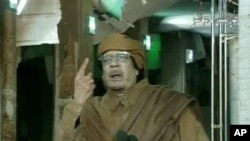
Later Tuesday, Libyan leader Moammar Gadhafi appeared on Libya's state television. Speaking for more than a hour, he said he would die on Libyan soil as a "martyr," and he called on his supporters to fight against those who challenge his more than four-decade rule.
New York-based Human Rights Watch said Tuesday that witnesses in Tripoli report Libyan forces have fired randomly at protesters in the capital during the past two days. The rights' group adds that sources from hospitals in the capital report seeing at least 62 bodies, but it is difficult to confirm that figure.
Witnesses in other cities also report more attacks by forces loyal to Mr. Gadhafi. Much of the non-government information coming out of Libya is provided by amateur video and other witness reports. The government has tried to stem the flow by shutting down the Internet and interrupting phone service.
Mr. Gadhafi has lost the support of some Libyan diplomats around the world. The nation's deputy ambassador to the United Nations, Ibrahim Dabbashi, said Monday that the international community must protect the Libyan people from what he called "the genocide it is facing now."
The European Union's foreign policy chief, Catherine Ashton, who is in Cairo, called for nations to unite in their criticism of violent crackdowns on peaceful protesters. She emphasized that leaders and demonstrators must find a way forward.
"But in the longer term, you know, as we say everywhere, it's for people in these countries to be able to feel that they have a say in their own future, a say in their own destiny, but to do that in a peaceful manner, and being here in Egypt is a very good example of how that can be done," Ashton said.
Ashton announced that officials from around the globe will meet in Brussels Wednesday to discuss additional ways to support Egypt. She said the European Investment Bank is already discussing a proposal to give Egypt an extra $1.6 billion through its funding programs.
Arab League: Violence Against Protesters Must Come to an End