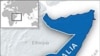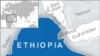



The logistics of transporting aid to famine-stricken Somalia is daunting. Meticulous planning and funding are needed for such a massive effort. Kenya is serving as a transit point for the emergency and longer-term supplies being into Somalia, with the past month seeing a stream of shipments by air, road, and sea.
It’s been a busy month for the United Nations children’s agency, UNICEF. As the number of starving people has increased in Somalia, the agency has been scrambling to collect and deliver life-saving aid.
"We try and buy locally, in Nairobi, when we can, but obviously with the crisis as large as this we are looking to bring in supplies from other parts of the world," said Shantha Bloemen, spokesperson for UNICEF Somalia, based in Kenya’s capital Nairobi. "UNICEF has its supply division in Copenhagen. So we’ve already had, in the last few weeks, four full charter flights, 747, carrying about 350 tons of supplies into Nairobi, and then they’ll go either by ship, road, or air into Somalia.”
In total, UNICEF Somalia transported 2,000 metric tons of aid into Somalia during the month of July.
Such an operation requires strategic thinking, taking into consideration travel times, transportation infrastructure, security, and needs of the people on the ground.
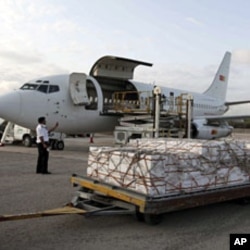
Airlifts are the most expensive option, while ships are the cheapest and can hold the most cargo. Bloemen says chartered flights are reserved primarily for therapeutic foods and other emergency supplies designed to save severely malnourished children immediately.
“If you’re shipping, for example, corn-soya blend, which is a rich, nutritious supplementary food, and it has to come from India, it’s going to take 20 days by ship and 40 days from Europe. So these are the time lags - you need to make sure that your supply pipeline is working so that you don’t run out at the feeding center," Bloeman said.
Much of the food and other aid destined for Somalia enters Kenya through airports in Nairobi or the port city of Mombasa.
|
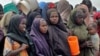
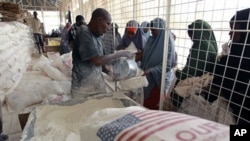
At the Dagahaley refugee camp in Dadaab, Kenya, families fleeing the famine in Somalia receive aid, but also face new challenges. VOA's Michael Onyiego visited the camp and took these pictures. |
At the end of July and the beginning of August, the World Food Program airlifted 82 tons of specialized supplementary food into the Somali capital. The food is earmarked to feed 28,000 malnourished children for one month.
The food originally came from France and was subsequently flown into Mogadishu on six flights.
“The size of the plane that would take off from France is most likely too large and there would be insurance issues in terms of being able to get it into Mogadishu because of the facilities in the airport there and the security environment in the airport, so we bring it from the origin place, wherever that is, to Nairobi," explained World Food Program spokesperson Challis McDonough, as she described why the cargo came through Kenya.
She explained that the food was re-packaged so that it would fit onto smaller planes that could land safely at the airport in Mogadishu.
McDonough says that some Somali sea ports are also not designed to accommodate large ships, either being too shallow or lacking the necessary facilities. She says her agency sometimes has to use smaller ships when transporting food. Ports are located in Mogadishu, Bossasso, Berbera, and Hargeisa.
The World Food Program started shipping food recently after a three-month hiatus, due to a lack of funding. McDonough says a large shipment to Mogadishu in July has enabled the agency to increase activities they had to cut back because of shortages.

A naval escort always accompanies World Food Program ships to protect them from attacks by pirates. Somali waters are among the most dangerous in the world because of pirate hijackings.
One Mombasa-based company, Mokatu Shipping Agency, has been transporting food aid to Mogadishu without an escort. Managing director Karim Kudrati says doing so is risky, but he thinks trucking food and other aid is much more problematic.
“The roads are not good, plus there are quite a lot of problems going through the borders and you have these clans always wanting to loot the vehicles,” said Kudrati.
He says he thinks piracy in the Mombasa-Mogadishu corridor has come to a virtual standstill because of a large number of naval boats escorting African Union vessels.