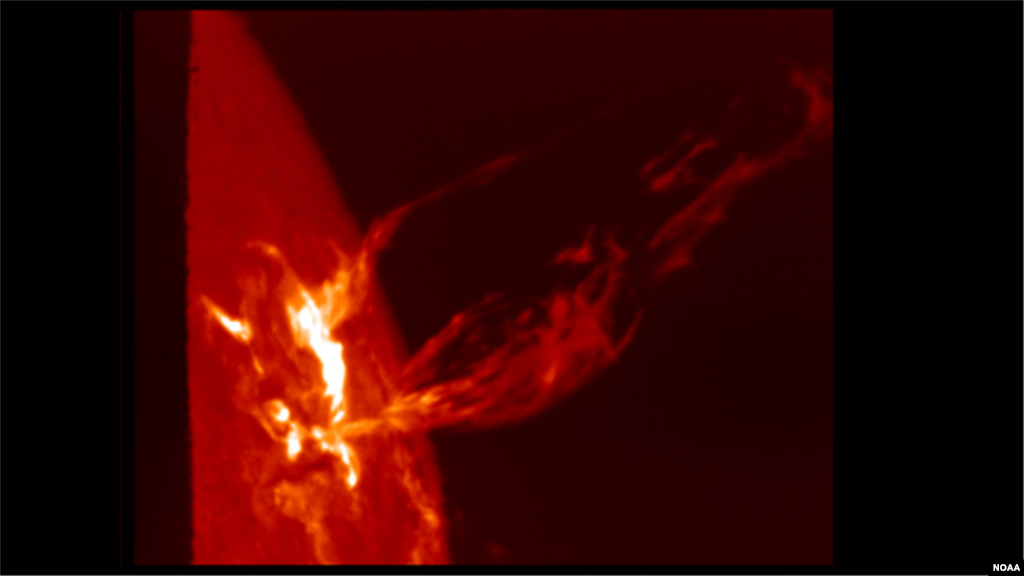
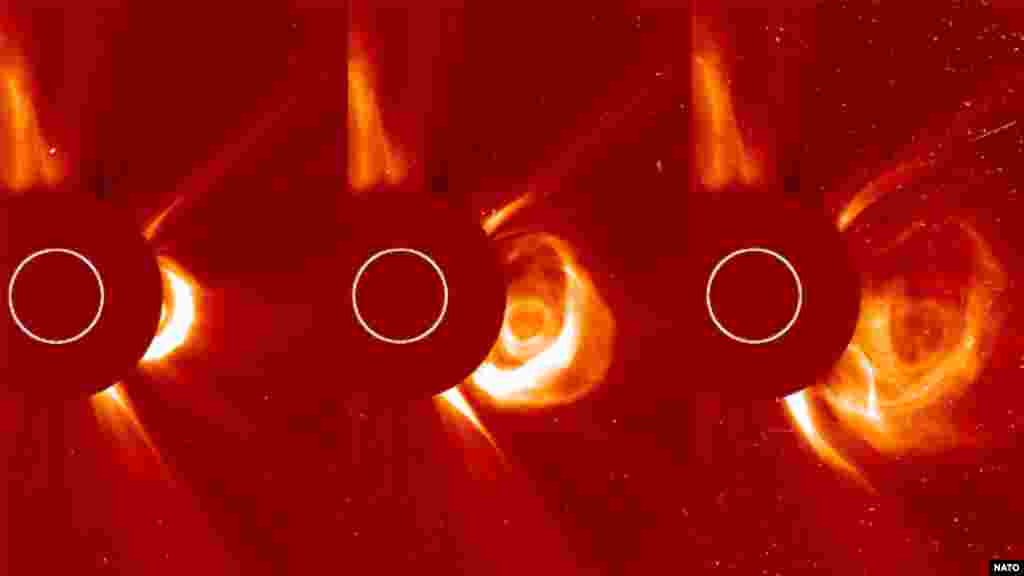
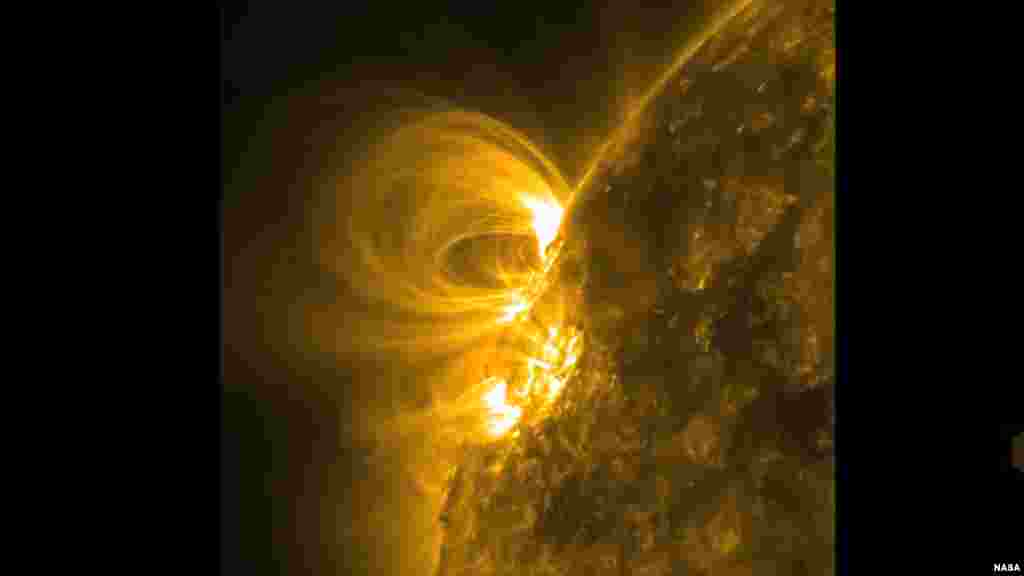
In a Coronal Mass Ejection (CME) solar material streaks out through the interplanetary medium, impacting any planet or spacecraft in its path. (NOAA)
With the sun nearing the peak of its 11-year cycle, scientists say a powerful solar storm may be headed our way, which could shut down electricity supply networks and disorient GPS and satellite systems.
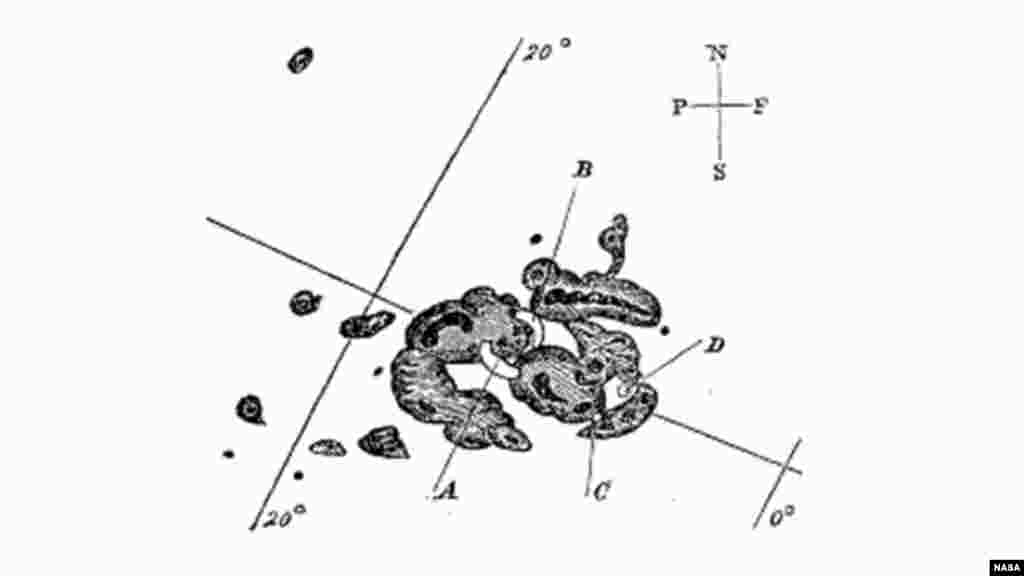
The worst known geomagnetic solar storm hit Earth in 1859, observed and sketched by astronomer Richard Carrington. The Carrington event upset global telegraph communications. Surprised operators watched sparks fly from telegraph lines and set telegraph paper on fire.
While not nearly as powerful, other storms in history have cut power, knocked out telephone service, short-circuited satellites and caused radio blackouts.
Major solar storm overdue
The Earth is overdue for another Carrington-like storm, according to a new report released by Lloyd’s of London, the world oldest insurance market.
Co-author Neil Smith says it could be even more devastating, given the worldwide dependence on electric power supply grids.
“We are estimating that 20-40 million people might be without power from anywhere up to one, even two years," he said. "That has to do with the critical issue of replacement transformers. That number of people without power could result in an economic cost somewhere between $0.6 trillion to $2.6 trillion.”
Space Weather
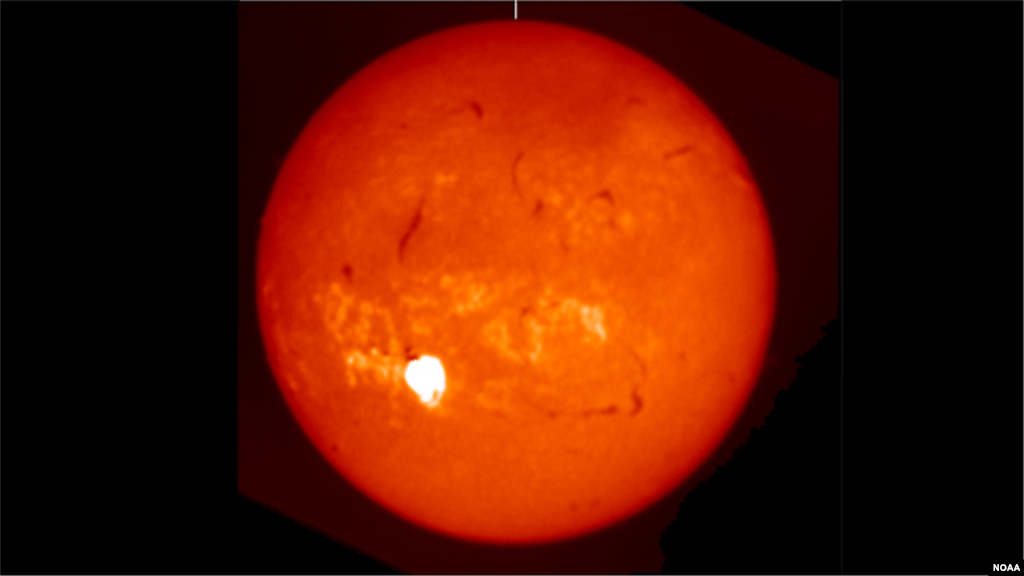
1/12Solar flares are intense, short-lived releases of energy. (Photo: NOAA Space Weather Prediction Center)
Show moreShow less
2/12In a Coronal Mass Ejection (CME) solar material streaks out through the interplanetary medium, impacting any planet or spacecraft in its path. They are sometimes associated with flares, but usually occur independently. (Photo: NOAA Space Weather Prediction Center)
Show moreShow less
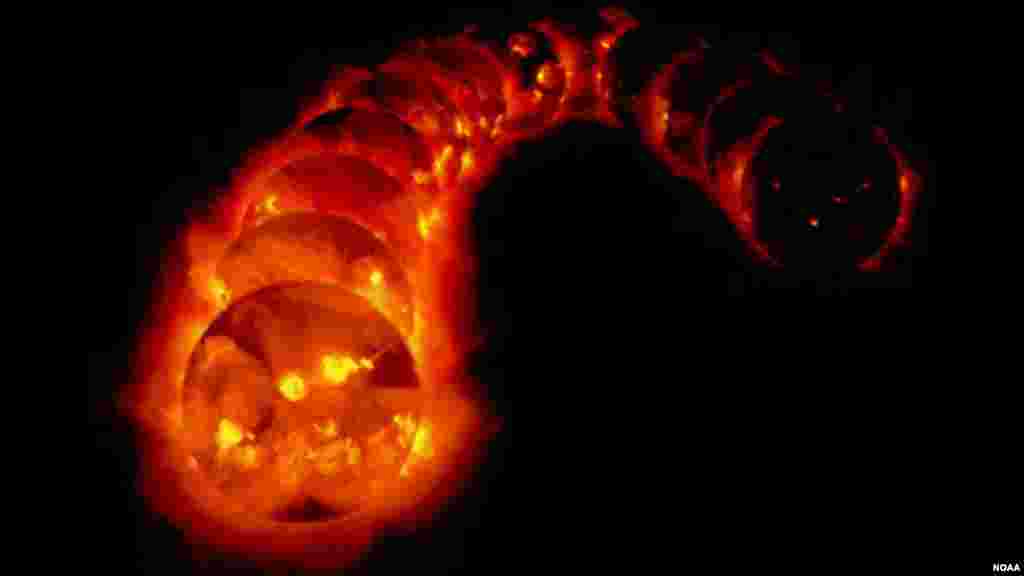
3/12The sun from maximum to minimum. (Photo: NOAA Space Weather Prediction Center)
Show moreShow less
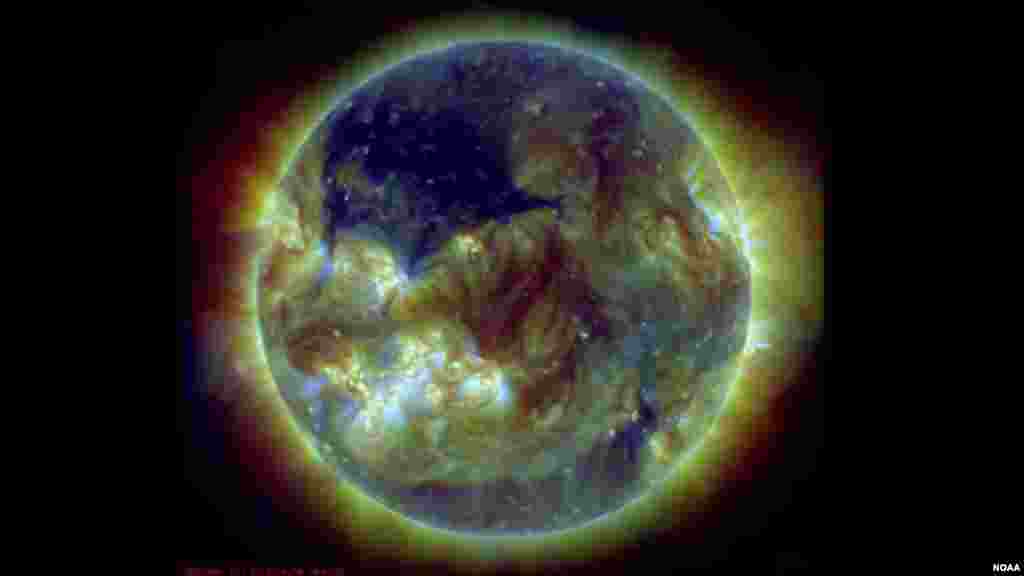
4/12A coronal hole on the sun, seen here in dark blue, is an area of the sun's atmosphere, the corona, where the magnetic field opens up and the material flows quickly out. (Photo: NOAA Space Weather Prediction Center)
Show moreShow less
5/12The sun erupting with a CME traveling at over 900 miles per second. (Photo: ESA & NASA/SOHO)
Show moreShow less
6/12Sunspots sketched by Richard Carrington on Sept. 1, 1859. (Credit: NASA/Royal Astronomical Society)
Show moreShow less
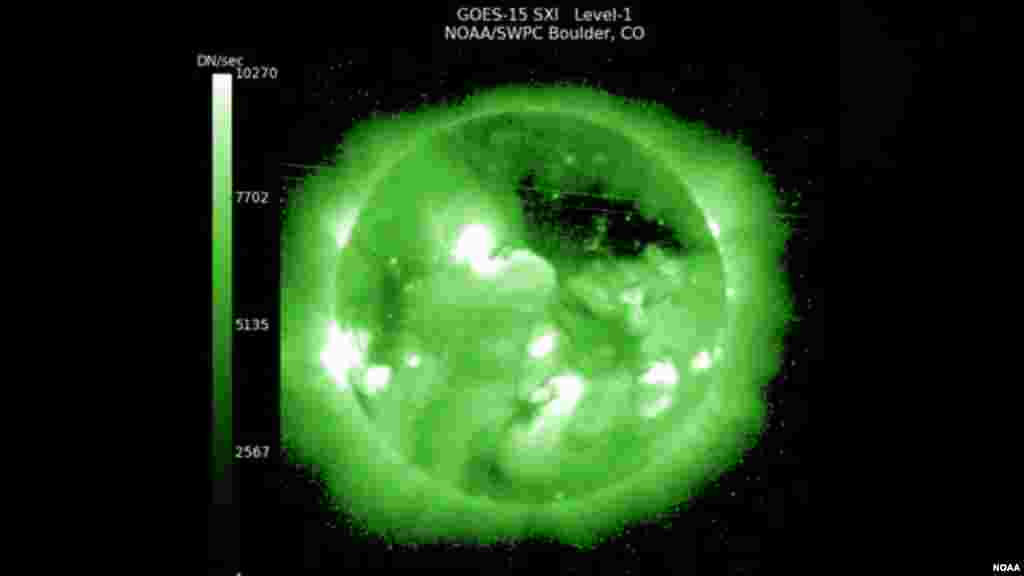
7/12GOES or Geosynchronous Orbit Satellite solar X-ray image from July 19, 2013. GOES continuously monitors the Earth’s surface. (Photo: NOAA Space Weather Prediction Center)
Show moreShow less
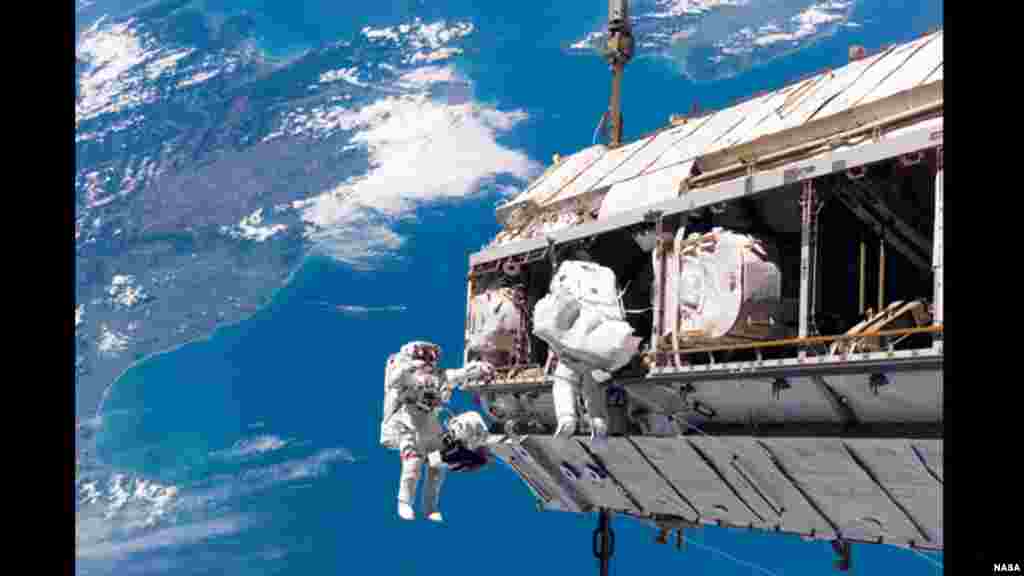
8/12Astronauts, pilots and airline personnel are at risk from solar radiation depending on how much time they are in space and over Polar Regions. (Photo: NASA)
Show moreShow less
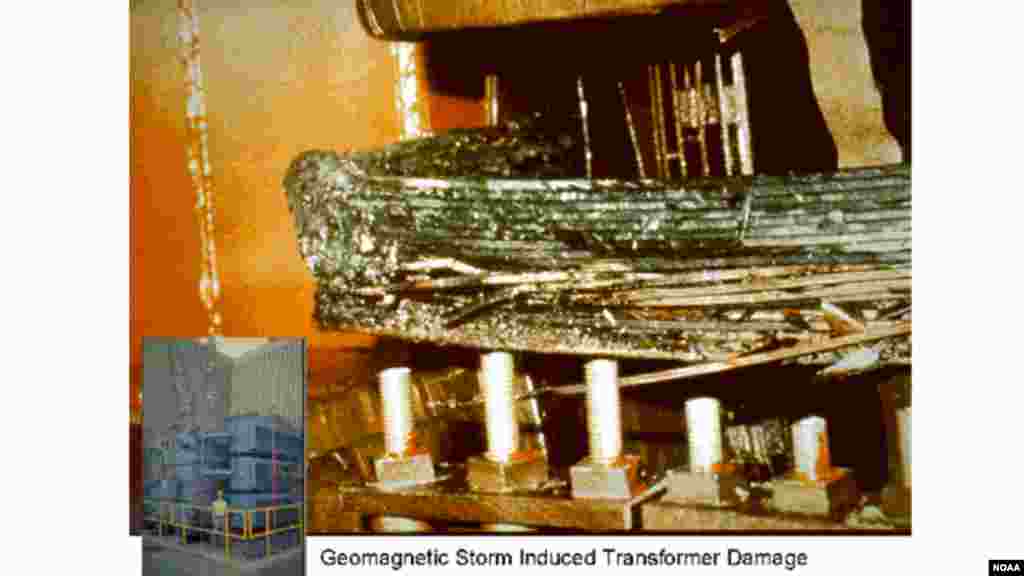
9/12Solar storms can seriously damage power grid transformers. (Credit: NOAA Space Weather Prediction Center)
Show moreShow less
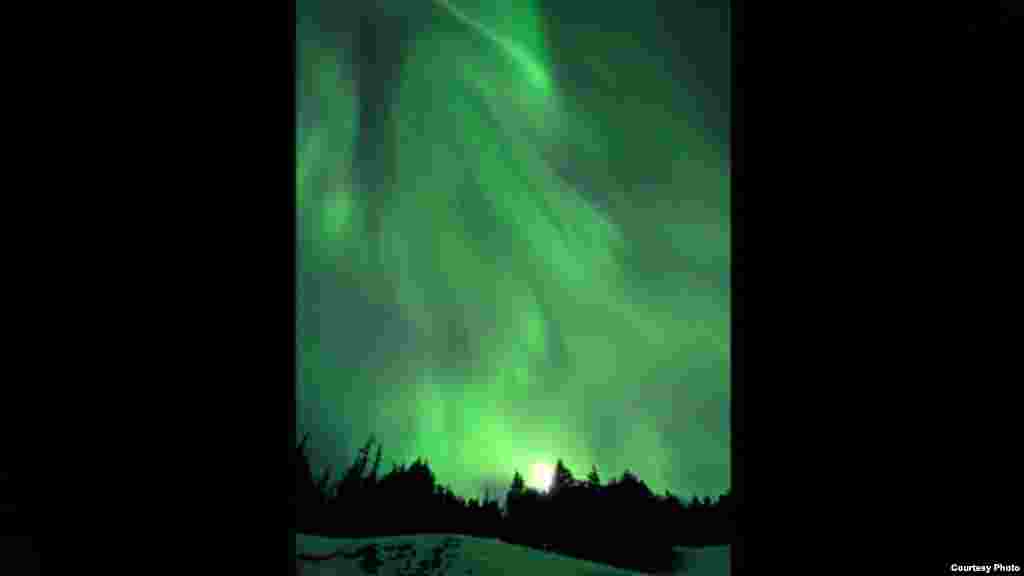
10/12Auroras over Alaska. (Photo: Daryl Pederson)
Show moreShow less
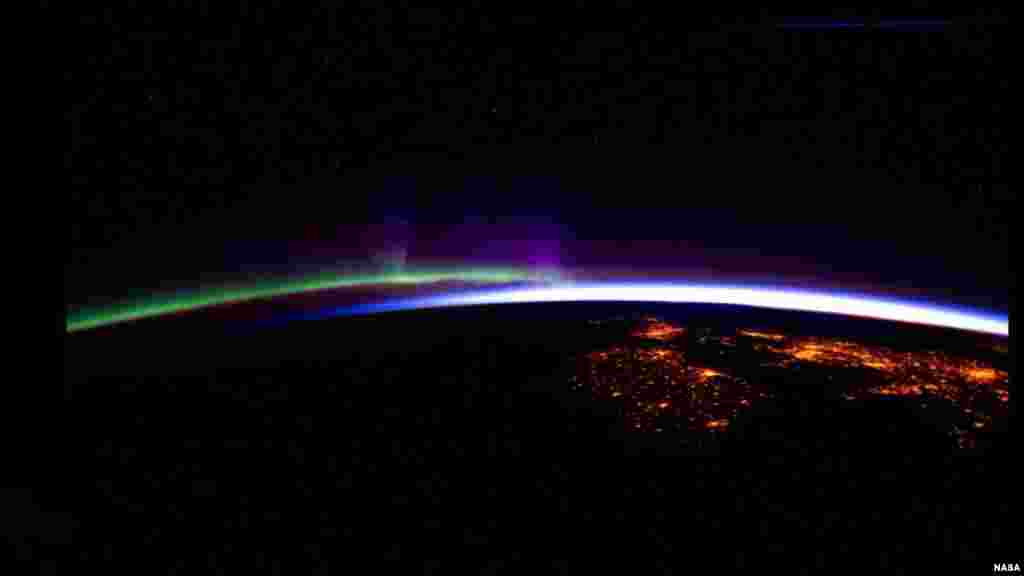
11/12Night lights from the International Space Station show cities of Ireland and the United Kingdom in the foreground contrasted by the bright sunrise in the background. The greens and purples of the Aurora Borealis are seen along the rest of the horizon.
Show moreShow less
12/12Loops, flares and eruptions on particularly active day on the sun. (Credit: NASA/Solar Dynamics Observatory)
Show moreShow less
Previous slide
Next slide
The focus of the report is North America. Smith says the continent’s geologic features and aging infrastructure put it at high risk for bad solar weather. The power grid, satellites, aircraft communications, astronauts and oil pipelines are particularly vulnerable. “If there was a big solar flare, it could of course knock out a whole lot of transformers.”
He observes coronal mass ejections (CMEs) that race through the solar system at speeds of three million to five million kilometers per hour. They reach Earth in less than two days. Wiltberger sees them, at the speed of light, less than eight minutes after an eruption on the sun.
That gives space weather forecasters some lead time, but Wiltberger says predicting precisely when and where a storm will hit is much more complex.
“The real challenge that we have, that we are struggling with and trying to build into our numerical models, is to understand what the magnetic field is going to be inside this hot gas that is coming out," he said, "because it’s that magnetic field that is the key that unlocks the entry of energy and mass into the Earth’s, near-Earth’s region.”
Wiltberger says the models could provide a framework to monitor a storm and improve predictions. He hopes that system will be operational within five years.
Greater international cooperation needed
In the meantime, Neil Smith of Lloyd’s of London is calling for greater cooperation to mitigate the impact before the next big storm comes on the horizon.
“We are just raising awareness of the issue, because step one is to get different parties aware that this is a potential issue," he said. "And then we need to work with governments and the utility industry to tackle it. It’s not something that any one party could actually solve on their own.”
Smith adds that such work is critically important, to avoid what could become large-scale economic and societal chaos.