



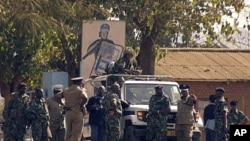
The chairman of Malawi’s Human Rights Consultative Committee (MHRCC) says police seemed to have used excessive force in violent protests Wednesday in major cities across the country.
Justin Dzonzi also said some of the protesters are to blame for destroying property, which he said provoked a reaction from the police.
“Looking at it from all angles, obviously, the police used excessive force,” said Donzi, “because all the reports indicate that these people were armed with stones. If you begin to shoot at people armed with stones as a police officer, you must certainly be exceeding the reasonable requirement of overcoming resistance.”
Witnesses say angry demonstrators set fires in Lilongwe and Mzuzu, while police in Blantyre fired tear gas to disperse protesters who numbered in the hundreds.
Dzonzi said the angry protesters should share the blame for the violence.
“The police would be guilty of using excessive force, but notwithstanding the fact that part of the violence was provoked by the demonstrators themselves,” said Dzonzi.
A coalition of civic and rights groups as well as opposition parties organized the nationwide demonstrations to express what they said is their anger and disgust at President Mutharika’s “marauding tyranny, bad economic policies and [poor] democratic governance.”
Dzonzi said President Bingu Wa Mutharika has yet to address concerns of protest organizers.
“On top of the list would be fuel scarcity. Malawi is experiencing one of its worse fuel shortages it has ever experienced,” said Dzonzi. “Then we have [alleged] blatant abuse of the majority that the ruling party has in parliament by [introducing] quite unpopular pieces of legislation…The list is long and that might give you an idea of general mood of Malawians, which will partly explain why such a peaceful demonstration might have erupted into violence.”
Mr. Mutharika has been criticized for his handling of a diplomatic disagreement that prompted Britain to cut economic aid to its former colony. Dzonzi said a majority of Malawians are displeased with how the president handled the spat.
“It was certainly part of the [reasons]put forward for holding a peaceful demonstration against the administration,” said Dzonzi. “Of course you also have to understand that these issues have actually been on the table for quite some time now.”