Malaysian police detain two men March 6, 2013, when they were coming out from Tanjung Labian, a village adjacent to Kampung Tanduo, a village adjacent to Kampung Tanduo, where Malaysian troops stormed the camp of an armed Filipino group on Tuesday.
Malaysian troops have killed at least 13 fighters believed to be a part of an armed Filipino group staking a decades-old claim to a southern territory.
Defense Minister Zahid Hamidi told reporters Wednesday that Malaysian troops are still searching the remote region of Borneo Island in search of the militants. He warned there may be more casualties.
Police said most of the estimated 200 militants appear to have fled into the surrounding farmland after Malaysia on Tuesday launched air strikes and sent hundreds of soldiers to drive the fighters out of the area.
Malaysian Forces Fight Philippine Armed Group in Borneo
1/8Police search two men who came out of Tanjung Labian, a village near where Malaysian troops stormed the camp of an armed Philippine group, March 6, 2013.
Malaysian troops have killed at least 13 fighters believed to be a part of an armed Philippine group staking a decades-old claim to a southern territory.
2/8Malaysian police monitor the delivery of goods to a grocery store in Felda Sahabat near where Malaysian troops stormed the camp of an armed Philippine group, March 6, 2013.
Malaysian troops have killed at least 13 fighters believed to be a part of an armed Philippine group staking a decades-old claim to a southern territory.
3/8Philippine Muslim women carry torches a rally south of Manila to call for a peaceful resolution to the fighting between Malaysian forces and a Philippine armed group in Borneo, March 6, 2013.
Malaysian troops have killed at least 13 fighters believed to be a part of an armed Philippine group staking a decades-old claim to a southern territory.
4/8Philippine Muslim protesters shout slogans against the military assault launched by Malaysian forces in Borneo during a rally at the Malaysian Embassy east of Manila, Philippines, March 5, 2013.
Malaysian troops have killed at least 13 fighters believed to be a part of an armed Philippine group staking a decades-old claim to a southern territory.
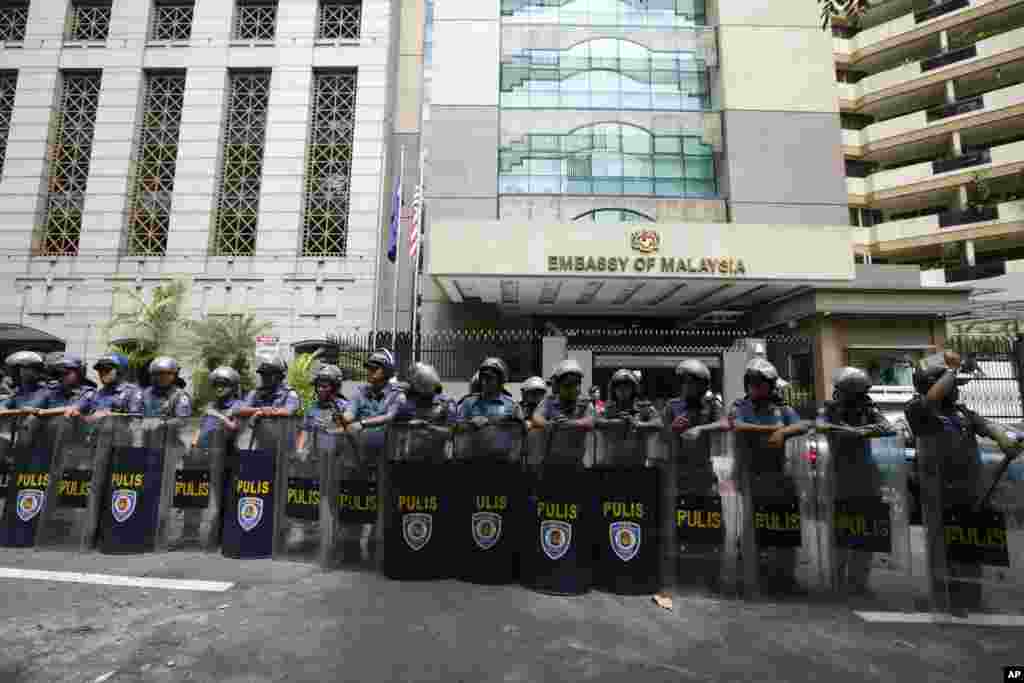
5/8Riot police guard the Malaysian Embassy east of Manila following a protest against Malaysia's military assault on a Philippine armed group on Borneo Island, March 5, 2013.
Malaysian troops have killed at least 13 fighters believed to be a part of an armed Philippine group staking a decades-old claim to a southern territory.
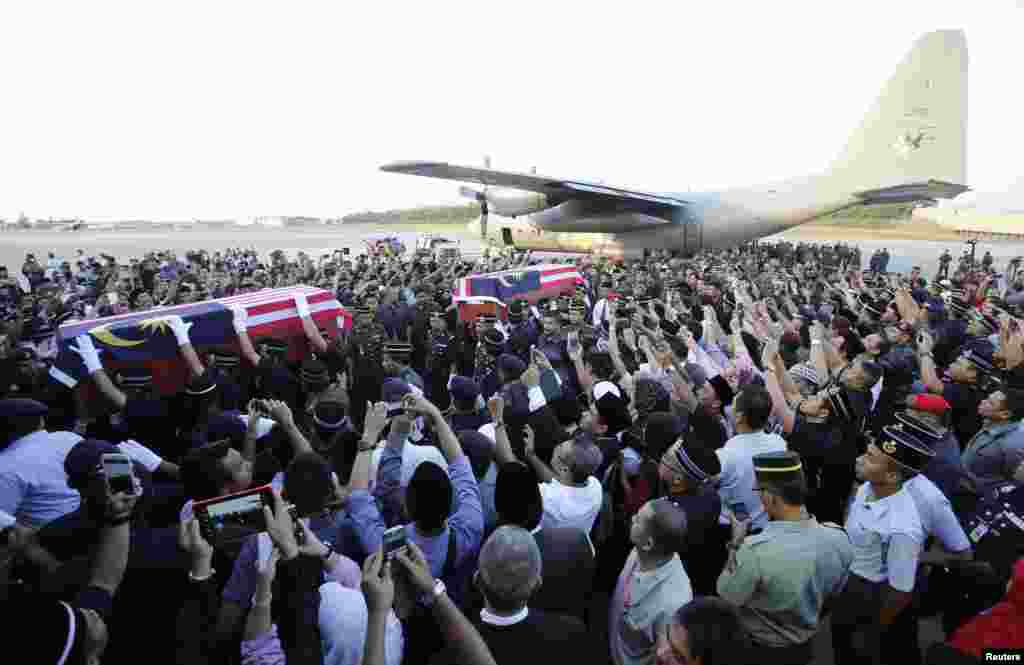
6/8Coffins of Malaysian police who were killed on Saturday in Semporna in Sabah state, are carried after their arrival at an airport in Subang, outside Kuala Lumpur, March 4, 2013.
Malaysian troops have killed at least 13 fighters believed to be a part of an armed Philippine group staking a decades-old claim to a southern territory.
7/8Philippine residents who fled Malaysia's Sabah state arrive with their belongings in the southern Philippines, March 4, 2013.
Malaysian troops have killed at least 13 fighters believed to be a part of an armed Philippine group staking a decades-old claim to a southern territory.
8/8Philippine residents who fled the Malaysian state of Sabah arrive with their belongings at the port of Jolo, in the southern Philippines, March 4, 2013.
Malaysian troops have killed at least 13 fighters believed to be a part of an armed Philippine group staking a decades-old claim to a southern territory.
Previous slide
Next slide
Malaysian national police chief Ismail Omar said troops are expanding their search.
"The mopping and searching continues in this area of four square kilometers, and I instructed my commanders on the ground to be careful in this operation because we believe that enemies are there and I do not want the safety of the security officers, either police or the army, to be a victim in this operation," he said.
The dispute began in mid-February when around 200 members of the armed group stormed a seaside village and demanded to be recognized as the ancestral owners of the eastern Malaysian state of Sabah.
At least 32 intruders and eight police officers have been killed during clashes. A spokesperson for the Filipino group has said the militants will not surrender, and are willing to fight to the death.
The militants belong to the Sultanate of Sulu, a former Islamic power that once controlled parts of Borneo and the southern Philippines. Although the sultanate lost power about a century ago, the group still claims sovereignty over the area, which it says was illegally merged with Malaysia when it gained independence from Britain.
The conflict is Malaysia's worst security crisis in years, and threatens to damage ties with the Philippines.
Manila has urged the group to stop the conflict and return home, warning its members could face prosecution. But it has also urged Malaysia to exercise restraint and not to harm the interests of the estimated 800,000 Filipinos in eastern Sabah state.
Some information for this report was provided by AP and Reuters.
The Voice of America provides news and information in more than 40 languages to an estimated weekly audience of over 326 million people. Stories with the VOA News byline are the work of multiple VOA journalists and may contain information from wire service reports.