


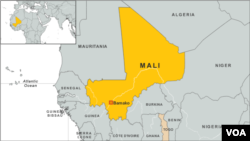
The aid group Oxfam warns as fighting escalates in northern Mali, the plight of refugees is expected to get worse. It says current humanitarian operations could be overwhelmed unless major changes are made to meet growing demands.
In the past year, nearly 150,000 people have fled to Burkina Faso, Mauritania and Niger. But while they sought safe haven in those countries, Oxfam says the refugees face increasing threats to their safety and well-being.
“In general, the situation is not good in refugee camps. If we can say that essential and basic needs have been met, there’s still lots of work to be done,” said Ilaria Allegrozzi, the group’s policy and campaign manager, who is in the capital, Bamako.
Especially, she said, regarding nutrition, education and protection.
“Up to 21 percent of children in refugee camps are malnourished, which is definitely very, very high,” she said.
The warning threshold set by the World Health Organization is 15 percent. The 21 percent figure was reported at a camp in Niger.
“There’s a major shortfall in the provision of primary education. And this really puts children at further risk. In Mauritania, only 12 percent of the refugees of primary school age have been enrolled in M’bera camp in Mauritania,” she said.
Allegrozzi said that forced recruitment of the refugees by armed groups has also been a problem.
“It’s a concern. It’s a risk, as well as sexual violence for girls and women. Living in a refugee camp is not easy and people can be exposed to any sort of security incident and human rights threat,” she said.
The neighboring countries hosting the Malian refugees have faced some hard times in recent years themselves.
“Burkina Faso, Mauritania and Niger are very fragile countries in terms of the political situation, the security situation, but also in terms of the humanitarian situation. In 2012, there was a very serious food crisis, which affected all the Sahel countries, including those where refugees are now hosted. So resources have been affected. People have been affected. Communities have been made more vulnerable. Now, sharing resources is definitely a challenge,” she said.
Allegrozzi added that Oxfam is calling for a “significant shift in the way humanitarian operations are carried out.”
“The main challenge would be to ensure more coordination among humanitarian agencies operating in Mauritania, in Niger, in Burkina Faso, so that assistance can be delivered to those in need," he said.
Oxfam is also calling on all military forces in Mali to “respect and receive training in international humanitarian and human rights law” to help ensure the protection of civilians.

In the past year, nearly 150,000 people have fled to Burkina Faso, Mauritania and Niger. But while they sought safe haven in those countries, Oxfam says the refugees face increasing threats to their safety and well-being.
“In general, the situation is not good in refugee camps. If we can say that essential and basic needs have been met, there’s still lots of work to be done,” said Ilaria Allegrozzi, the group’s policy and campaign manager, who is in the capital, Bamako.
Especially, she said, regarding nutrition, education and protection.
“Up to 21 percent of children in refugee camps are malnourished, which is definitely very, very high,” she said.
The warning threshold set by the World Health Organization is 15 percent. The 21 percent figure was reported at a camp in Niger.
“There’s a major shortfall in the provision of primary education. And this really puts children at further risk. In Mauritania, only 12 percent of the refugees of primary school age have been enrolled in M’bera camp in Mauritania,” she said.
Allegrozzi said that forced recruitment of the refugees by armed groups has also been a problem.
“It’s a concern. It’s a risk, as well as sexual violence for girls and women. Living in a refugee camp is not easy and people can be exposed to any sort of security incident and human rights threat,” she said.
The neighboring countries hosting the Malian refugees have faced some hard times in recent years themselves.
“Burkina Faso, Mauritania and Niger are very fragile countries in terms of the political situation, the security situation, but also in terms of the humanitarian situation. In 2012, there was a very serious food crisis, which affected all the Sahel countries, including those where refugees are now hosted. So resources have been affected. People have been affected. Communities have been made more vulnerable. Now, sharing resources is definitely a challenge,” she said.
Allegrozzi added that Oxfam is calling for a “significant shift in the way humanitarian operations are carried out.”
“The main challenge would be to ensure more coordination among humanitarian agencies operating in Mauritania, in Niger, in Burkina Faso, so that assistance can be delivered to those in need," he said.
Oxfam is also calling on all military forces in Mali to “respect and receive training in international humanitarian and human rights law” to help ensure the protection of civilians.