


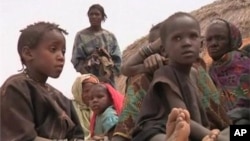
Clashes between government forces and Tuareg separatists in northern Mali have caused over 300,000 people to flee their homes for safety since the beginning of this year. The Norwegian Refugee Council, NRC, says many people are living with host families while others are out in the open in makeshift shelters. The group says families have lost their livelihoods and children are not attending school as they should.
Arne Bangstad, the head of NRC's rapid response section, has just returned from a trip to Burkina Faso, home to thousands of Malian refugees.
“They are staying in camps. Some of them are planned. There are so-called spontaneous camps where they receive food, water and shelter, but, they are not receiving any livelihood assistance, very little education, or activities that need a mid-term perspective,” said Bangstad.
The NRC official says enabling the refugees to return home would be the most sustainable and durable solution.
“If that is not possible, Burkinabe authorities and the international community need to look at how we provide livelihood and education for the refugees, so they can at least gain skills and educate their children. In addition they need to know how to generate income while they are in the camps,” explained Bangstad.
While humanitarian agencies such as the Norwegian Refugee Council are able to assist refugees, Internally Displaced Persons (IDPs) are very hard to reach.
“We have very little access to the displaced in northern Mali. The international community is delivering health and nutritional assistance to some of the locations in larger towns. The majority of the displaced we are not reaching and we don’t know their situation,” said Bangstad.
Bangstad said they are concerned with the health and nutritional situation of these people because their situation is much worse than the people who escaped northern Mali.
To listen to the entire interview between Kim Lewis and Arne Bangstad, click on audio.
Arne Bangstad, the head of NRC's rapid response section, has just returned from a trip to Burkina Faso, home to thousands of Malian refugees.
“They are staying in camps. Some of them are planned. There are so-called spontaneous camps where they receive food, water and shelter, but, they are not receiving any livelihood assistance, very little education, or activities that need a mid-term perspective,” said Bangstad.
The NRC official says enabling the refugees to return home would be the most sustainable and durable solution.
“If that is not possible, Burkinabe authorities and the international community need to look at how we provide livelihood and education for the refugees, so they can at least gain skills and educate their children. In addition they need to know how to generate income while they are in the camps,” explained Bangstad.
While humanitarian agencies such as the Norwegian Refugee Council are able to assist refugees, Internally Displaced Persons (IDPs) are very hard to reach.
“We have very little access to the displaced in northern Mali. The international community is delivering health and nutritional assistance to some of the locations in larger towns. The majority of the displaced we are not reaching and we don’t know their situation,” said Bangstad.
Bangstad said they are concerned with the health and nutritional situation of these people because their situation is much worse than the people who escaped northern Mali.
To listen to the entire interview between Kim Lewis and Arne Bangstad, click on audio.
