Meles Zenawi Leaves Mixed Legacy After 20 Years in Power
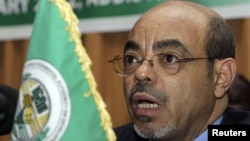
Ethiopia's Prime Minister Meles Zenawi in Addis Ababa, January 27, 2012.
NAIROBI — Ethiopian Prime Minister Meles Zenawi has died at the age of 57 after months of speculation about his health. State television announced his death Tuesday, saying he had been recovering overseas. Meles leaves a mixed legacy after more than 20 years in power, having guided rapid development with one hand, while silencing all forms of dissent with the other.
Rise to power
Meles came to power in a 1991 coup, as the head of an alliance of rebel groups called the EPRDF (Ethiopian People's Revolutionary Democratic Front).
Their rebellion helped to end a harsh communist dictatorship, known as the Derg, during which time tens of thousands of government opponents were imprisoned or executed.
Meles has been praised for helping to dig Ethiopia out of poverty following years of civil war.
His ruling party has gone to great lengths to incorporate the United Nations Millennium Development Goals into its national policy. According to the U.N., the country has spent 60 percent of its total expenditures on agriculture, education, health and other poverty-alleviating sectors in the last seven years.
Hands-on
Meles outlined his hands-on development philosophy in a speech at the U.N. General Assembly in 2010.
"We have taken full charge of our destiny, devised our own strategy, and maximized the mobilization of our domestic resources to achieve the Millennium Development Goals. We made the best use of the limited available international assistance to supplement our own efforts," he said.
While Meles often dismissed the effectiveness of foreign assistance, external aid to Ethiopia averaged more than $3.8 billion per year between 2008 and 2011, according to the World Bank.
Former U.S. Ambassador to Ethiopia Tibor Nagy described Meles as a visionary with a clear plan for his country's future.
"I had many private conversations with the prime minister and he's not shy in using words like 'Ethiopia cannot be a beggar nation' or 'If our people don't see certain progress in x number of years then we're all finished.' He was very realistic about that and not afraid to articulate it," said Nagy.
US ally
Meles also was known as an ally with the United States in the war against terrorism.
But Nagy recognizes there were philosophical issues that were difficult to bridge, including the government's reluctance to relinquish control over telecommunications, to open up to private ownership or to allow foreign banks to operate in the country.
Human rights groups have long-criticized the Ethiopian government for suppressing opposition voices by limiting freedom of speech and assembly.
“Those rights have been steadily eroded throughout the leadership of Meles Zenawi, so we have a situation now where it's almost impossible in Ethiopia for people to express their opinions, to protest, to criticize the government, and in that context that means that the government continues to commit a wide range of human rights violations," said Claire Beston, the Ethiopia and Eritrea researcher for Amnesty International.
Beston says the rights situation really deteriorated after the 2005 elections, which opposition parties say was rigged. Nearly 200 people died in post-election violence and protests.
In recent years, Ethiopian courts have sentenced journalists and opposition activists to lengthy prison sentences under an anti-terrorism law.
Eritrea
For nearly the entire Meles regime, tension between Ethiopia and neighboring Eritrea remained high. The two countries fought a border war from 1998 to 2000 that killed more than 70,000 people.
The Ethiopian military has also twice intervened in neighboring Somalia to confront Islamist militants allegedly backed by Eritrea.
While Meles has been a strong and visible force behind the ruling party for the last 20 years, analysts say he also has groomed a number of younger politicians, including Deputy Prime Minister Hailemariam Desalegn - a technocrat with an engineering degree from a university in Finland.
Dr. J. Peter Pham, Director of the Africa Center at the Atlantic Council in Washington says any successor will have “big shoes to fill.”
“There is a shift in generation and whether that transition will be smooth, whether it will be successful remains to be seen. But the fact that provision was made for a technically prepared next generation itself is, I think, another legacy piece," he said.
Photo Gallery: Meles Zenawi
Ethiopian Leader Meles Dies at 57
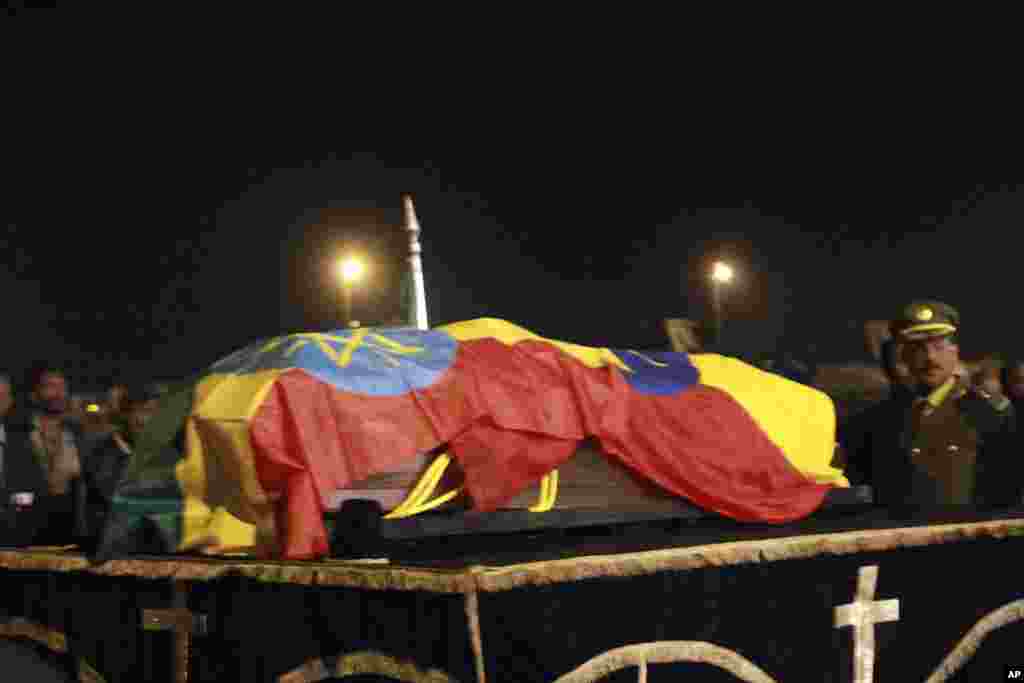
1/19The casket containing the body of Prime Minister Meles Zenawi arrives at the Addis Ababa International Airport, Ethiopia, August 22, 2012.
Ethiopia is mourning the death of Prime Minister Meles Zenawi at the age of 57. Meles died late August 22 of an unspecified infection while seeking treatment outside the country.
Show moreShow less
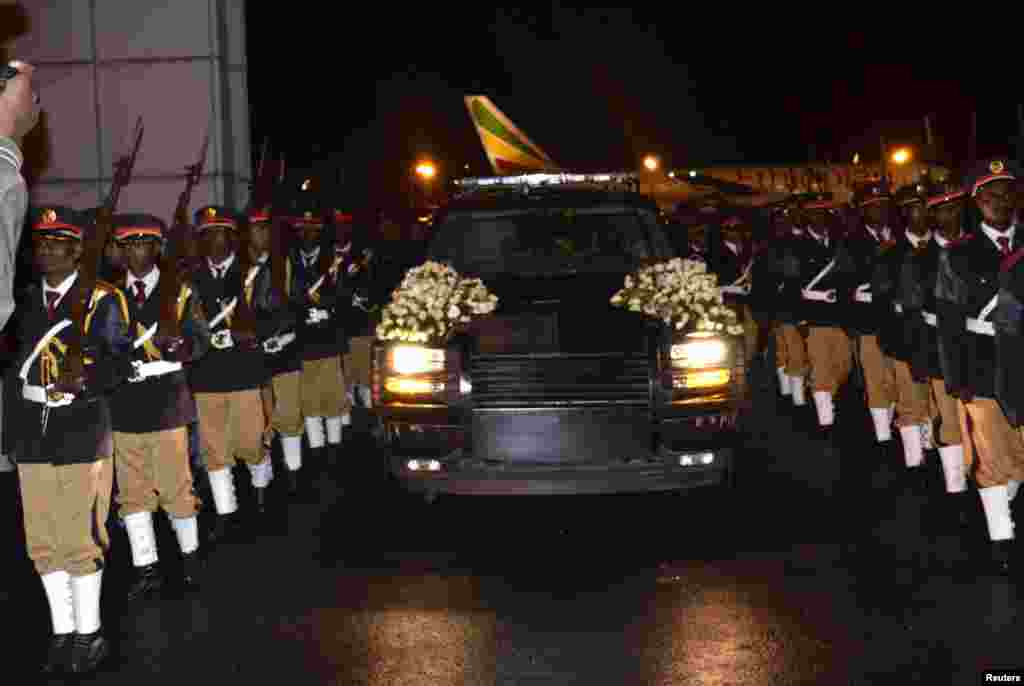
2/19The body of Ethiopia's Prime Minister Meles Zenawi is escorted upon arrival in Ethiopia's capital Addis Ababa early August 22, 2012.
Ethiopia is mourning the death of Prime Minister Meles Zenawi at the age of 57. Meles died late August 22 of an unspecified infection while seeking treatment outside the country.
Show moreShow less
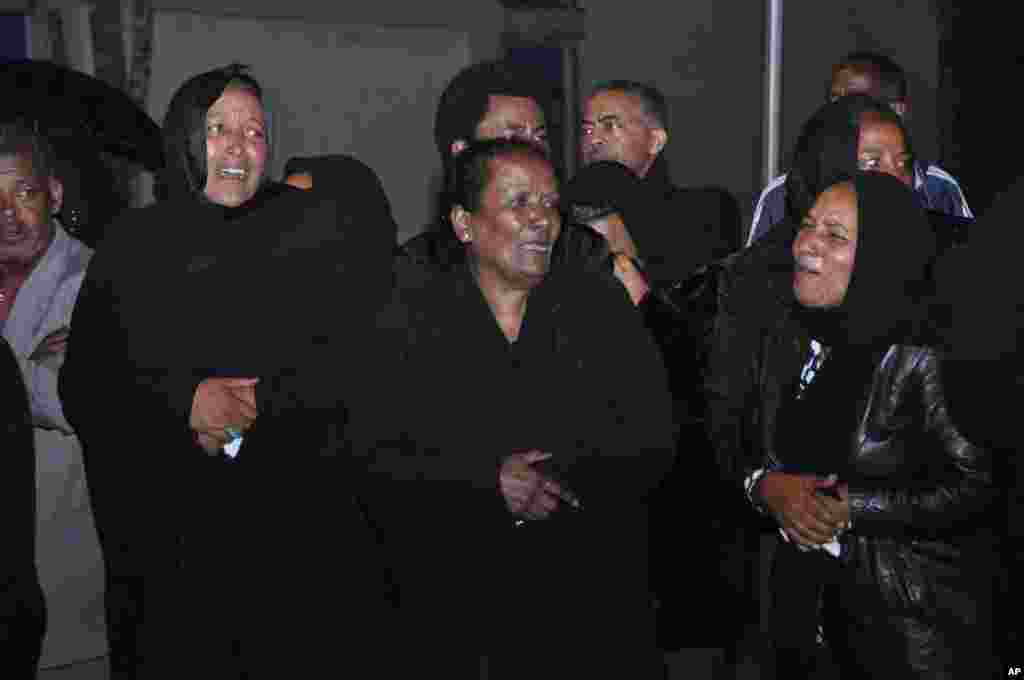
3/19Ethiopian women in black gather to mourn as the body of the late Prime Minister Meles Zenawi arrived in Addis Ababa, August 22, 2012.
Ethiopia is mourning the death of Prime Minister Meles Zenawi at the age of 57. Meles died late August 22 of an unspecified infection while seeking treatment outside the country.
Show moreShow less
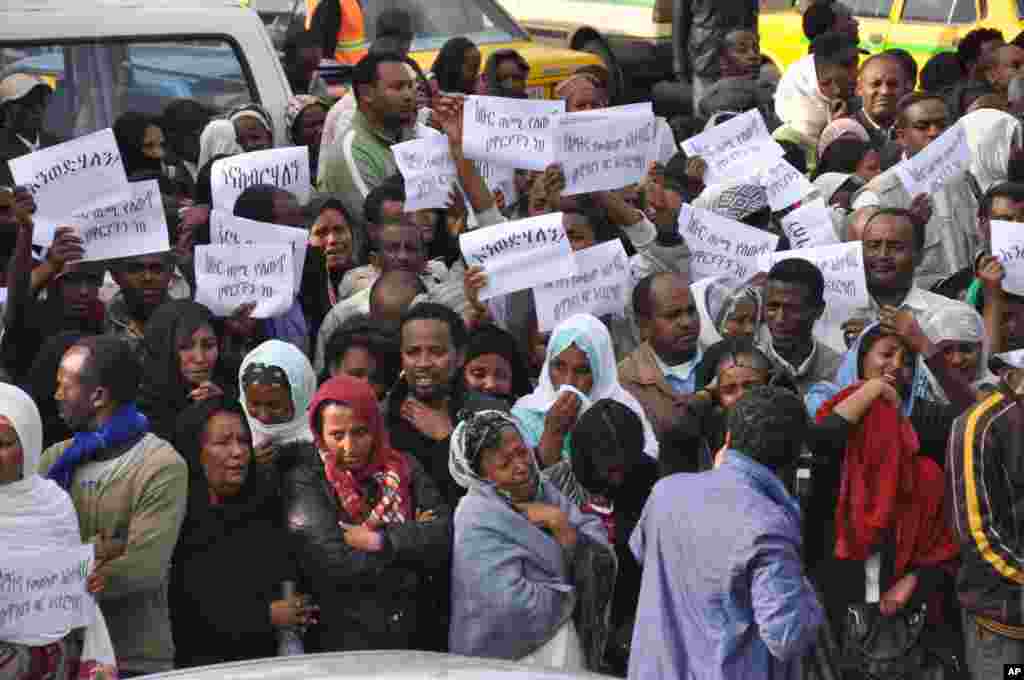
4/19Ethiopians carry posters in Amharic reading "Meles We Love You" as they gather to mourn as the body of the late Prime Minister Meles Zenawi arrived in Addis Ababa, August 22, 2012.
Ethiopia is mourning the death of Prime Minister Meles Zenawi at the age of 57. Meles died late August 22 of an unspecified infection while seeking treatment outside the country.
Show moreShow less
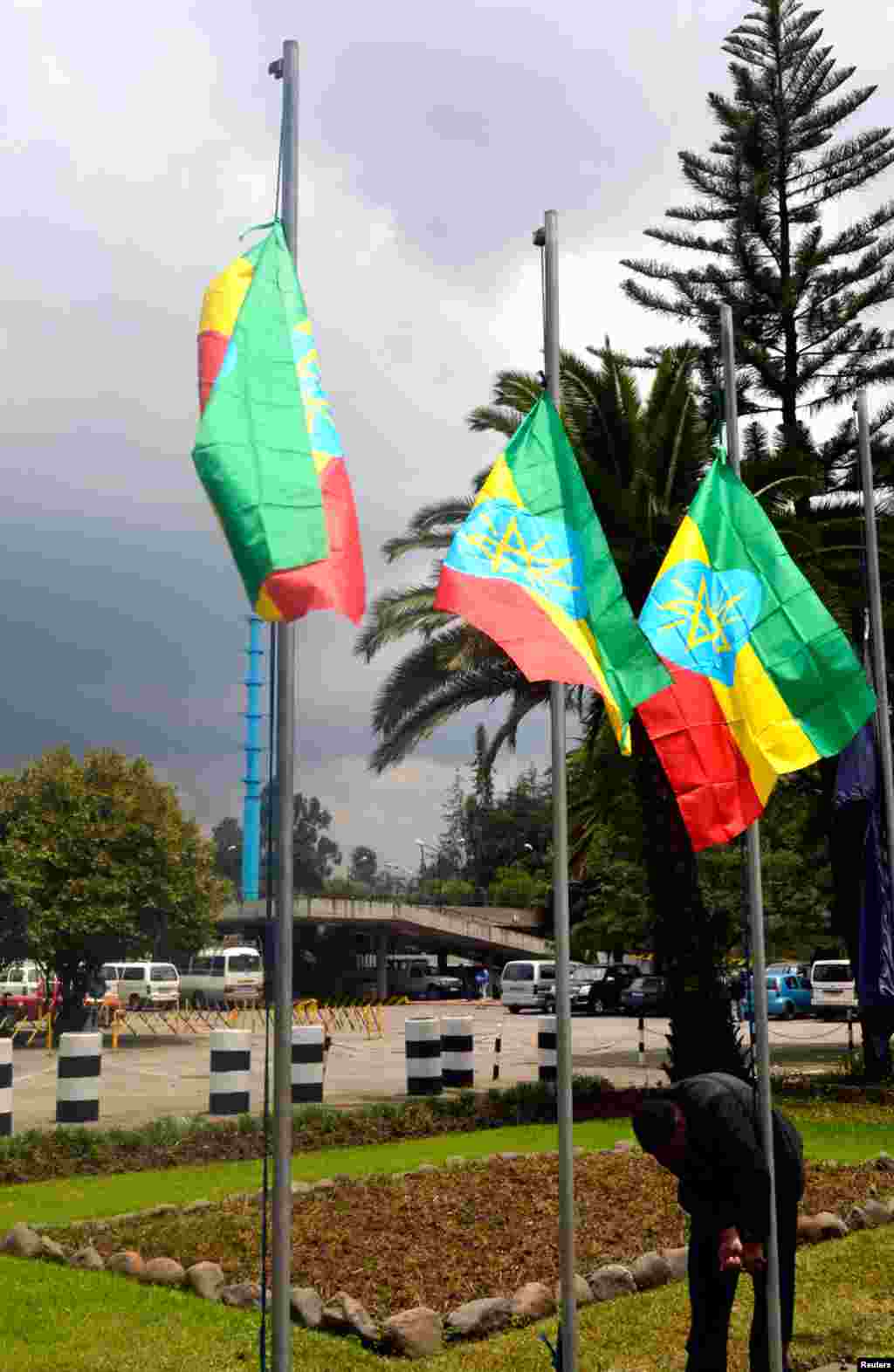
5/19Ethiopian national flags fly at half mast in Addis Ababa, August 21, 2012.
Ethiopia is mourning the death of Prime Minister Meles Zenawi at the age of 57. Meles died late August 22 of an unspecified infection while seeking treatment outside the country.
Show moreShow less
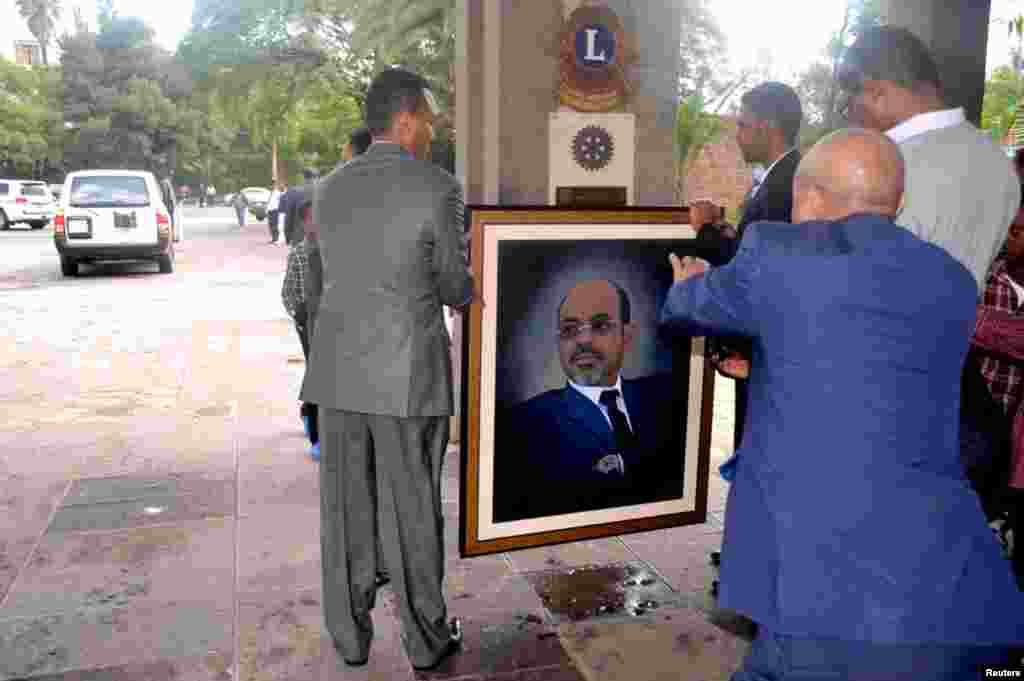
6/19Officials move a portrait of Meles shortly after the announcement of his death in Addis Ababa, August 21, 2012.
Ethiopia is mourning the death of Prime Minister Meles Zenawi at the age of 57. Meles died late August 22 of an unspecified infection while seeking treatment outside the country.
Show moreShow less
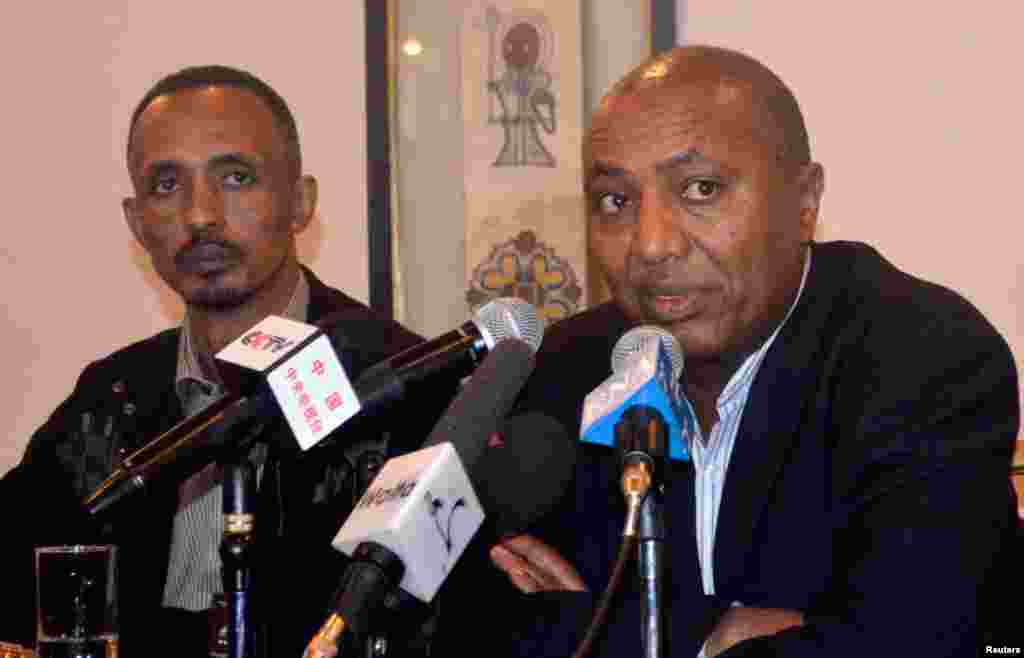
7/19Ethiopian government spokesman Bereket Simon (R) makes the official announcement of Meles' death in Addis Ababa, August 21, 2012.
Ethiopia is mourning the death of Prime Minister Meles Zenawi at the age of 57. Meles died late August 22 of an unspecified infection while seeking treatment outside the country.
Show moreShow less
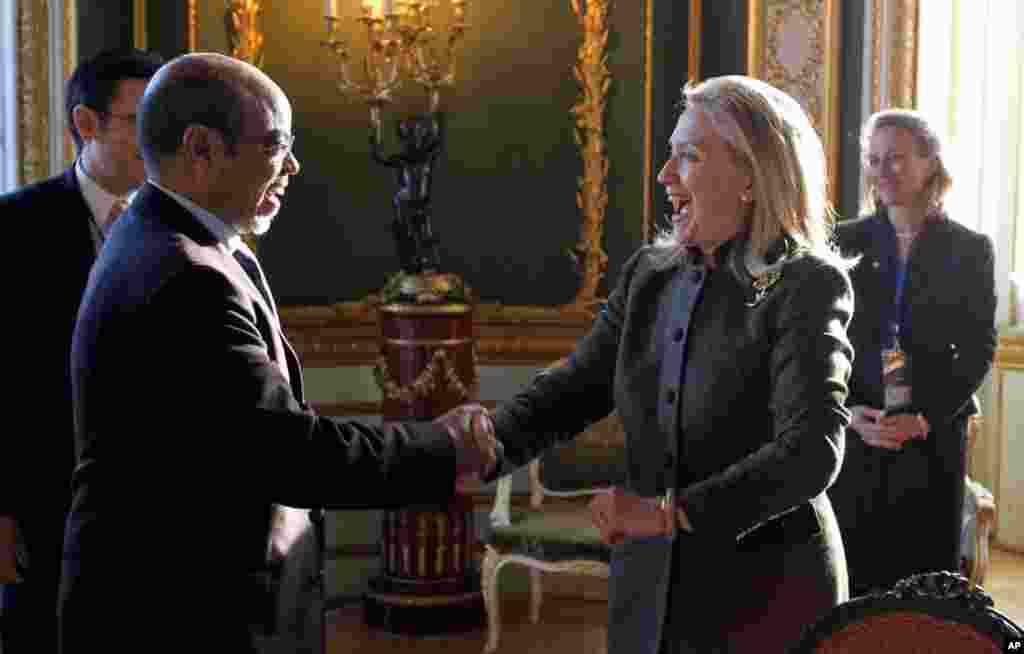
8/19U.S. Secretary of State Hillary Clinton meets with Meles at the London Conference on Somalia, February 23, 2012.
Ethiopia is mourning the death of Prime Minister Meles Zenawi at the age of 57. Meles died late August 22 of an unspecified infection while seeking treatment outside the country.
Show moreShow less
9/19The late Ethiopian Prime Minister Meles Zenawi arrives with his wife Azeb Mesfi for the 18th African Union Summit in Addis Ababa, January 29, 2012.
Ethiopia is mourning the death of Prime Minister Meles Zenawi at the age of 57. Meles died late August 22 of an unspecified infection while seeking treatment outside the country.
Show moreShow less
10/19Meles speaks to reporters after meeting with Egyptian Prime Minister Essam Sharaf in Cairo, Egypt, September 17, 2011.
Ethiopia is mourning the death of Prime Minister Meles Zenawi at the age of 57. Meles died late August 22 of an unspecified infection while seeking treatment outside the country.
Show moreShow less
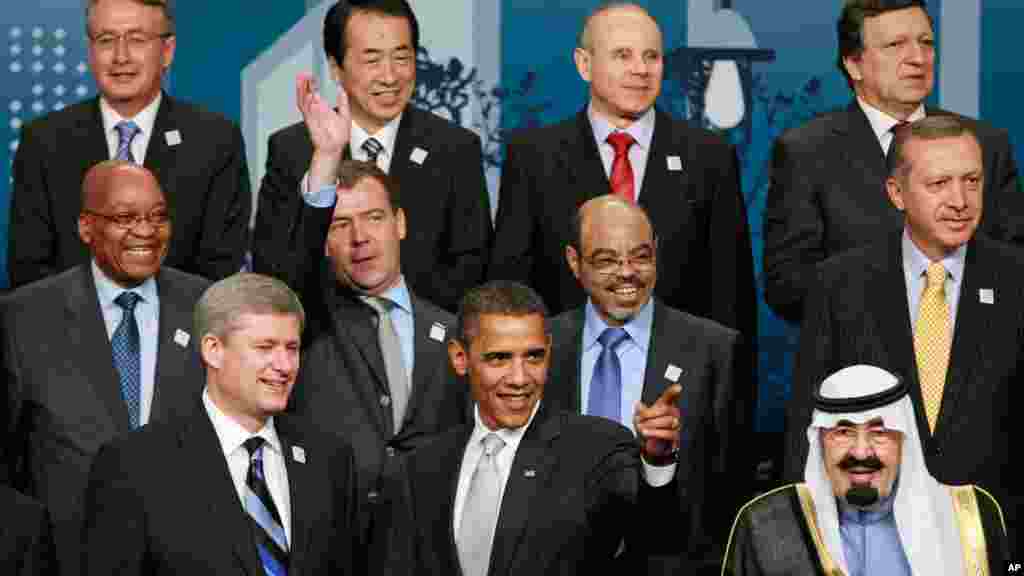
11/19Meles and other world leaders pose during a group photo at the G20 summit in Toronto, Canada, June 27, 2010.
Ethiopia is mourning the death of Prime Minister Meles Zenawi at the age of 57. Meles died late August 22 of an unspecified infection while seeking treatment outside the country.
Show moreShow less
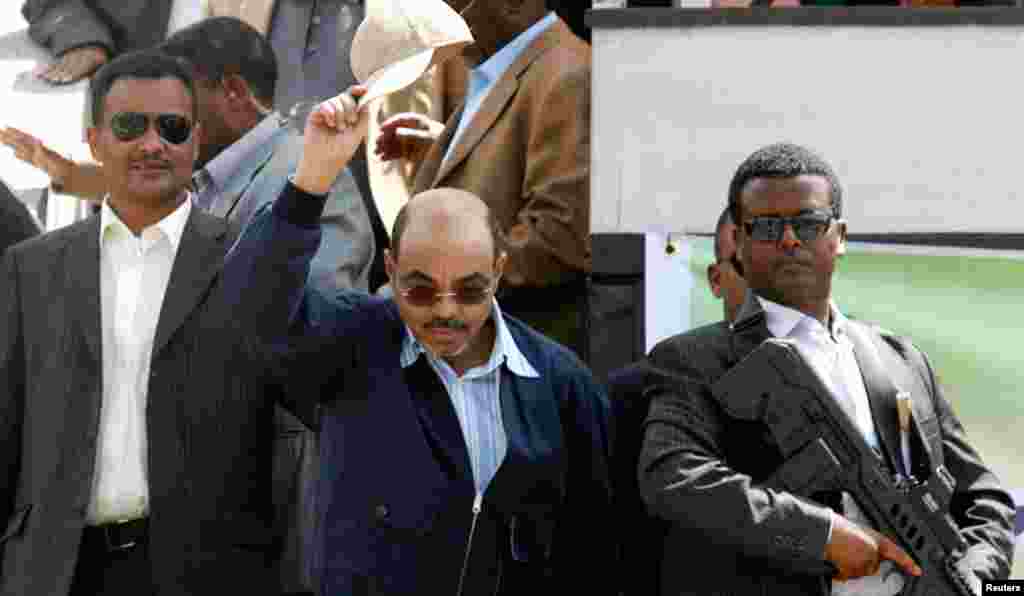
12/19Meles lifts his cap to salute supporters of the EPRDF party at the Meskel Square in Addis Ababa, May 25, 2010.
Ethiopia is mourning the death of Prime Minister Meles Zenawi at the age of 57. Meles died late August 22 of an unspecified infection while seeking treatment outside the country.
Show moreShow less
13/19A poster featuring the prime minister displayed in downtown Addis Ababa, Ethiopia, May 2010.
Ethiopia is mourning the death of Prime Minister Meles Zenawi at the age of 57. Meles died late August 22 of an unspecified infection while seeking treatment outside the country.
Show moreShow less
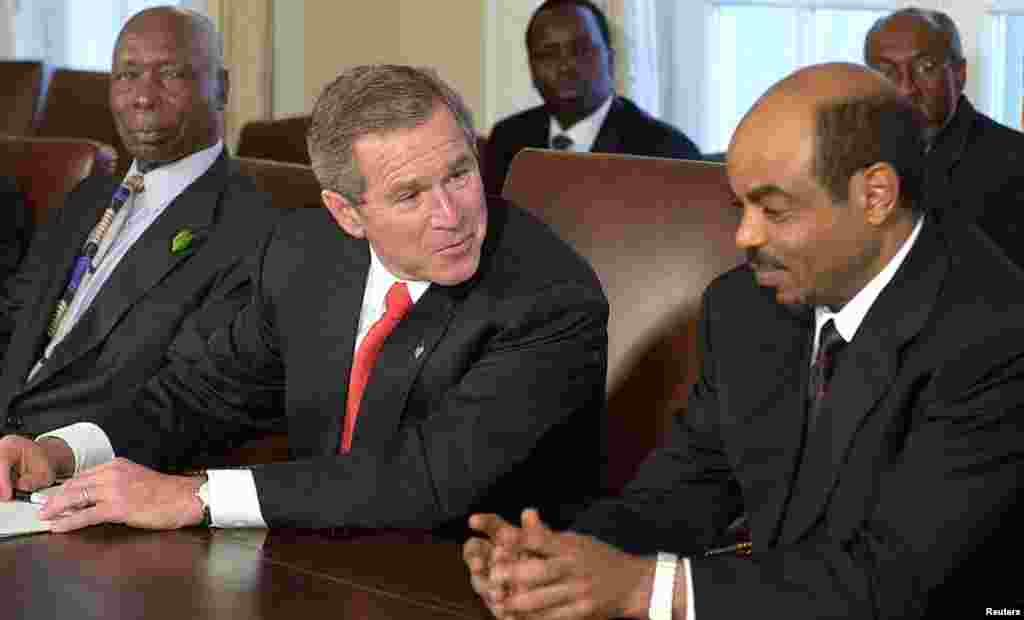
14/19U.S. President George W. Bush chats with Meles during a meeting with Kenyan President Daniel Arap Moi for talks on combatting international terrorism, the White House, Washington, December 5, 2002.
Ethiopia is mourning the death of Prime Minister Meles Zenawi at the age of 57. Meles died late August 22 of an unspecified infection while seeking treatment outside the country.
Show moreShow less
15/19German Chancellor Gerhard Schroeder welcomes Meles to Berlin, Germany, February 5, 2002.
Ethiopia is mourning the death of Prime Minister Meles Zenawi at the age of 57. Meles died late August 22 of an unspecified infection while seeking treatment outside the country.
Show moreShow less
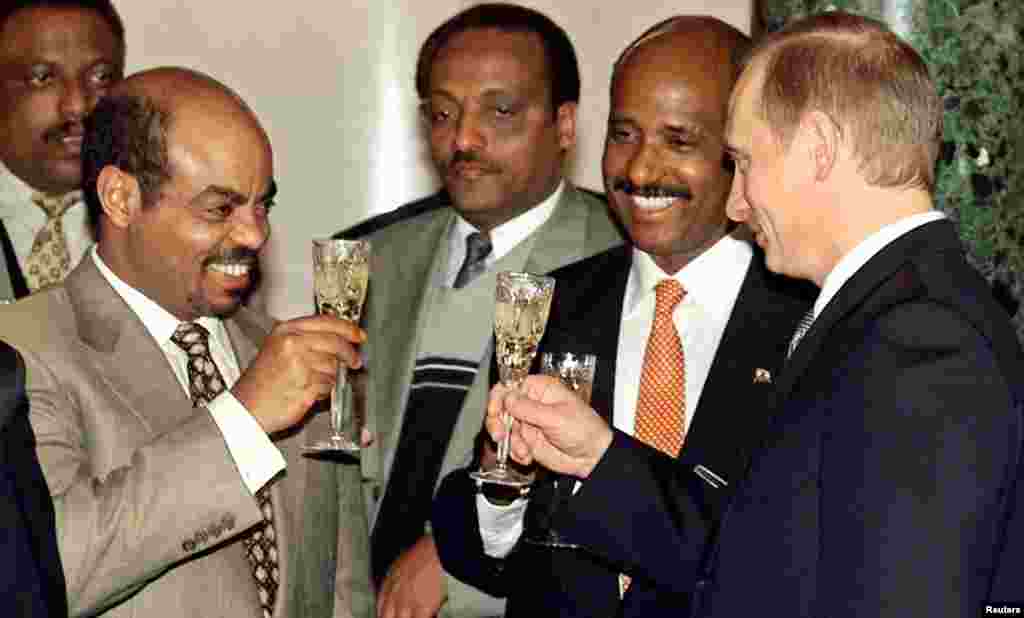
16/19Meles and Russian President Vladimir Putin meet in Moscow, Russia, December 3, 2001.
Ethiopia is mourning the death of Prime Minister Meles Zenawi at the age of 57. Meles died late August 22 of an unspecified infection while seeking treatment outside the country.
Show moreShow less
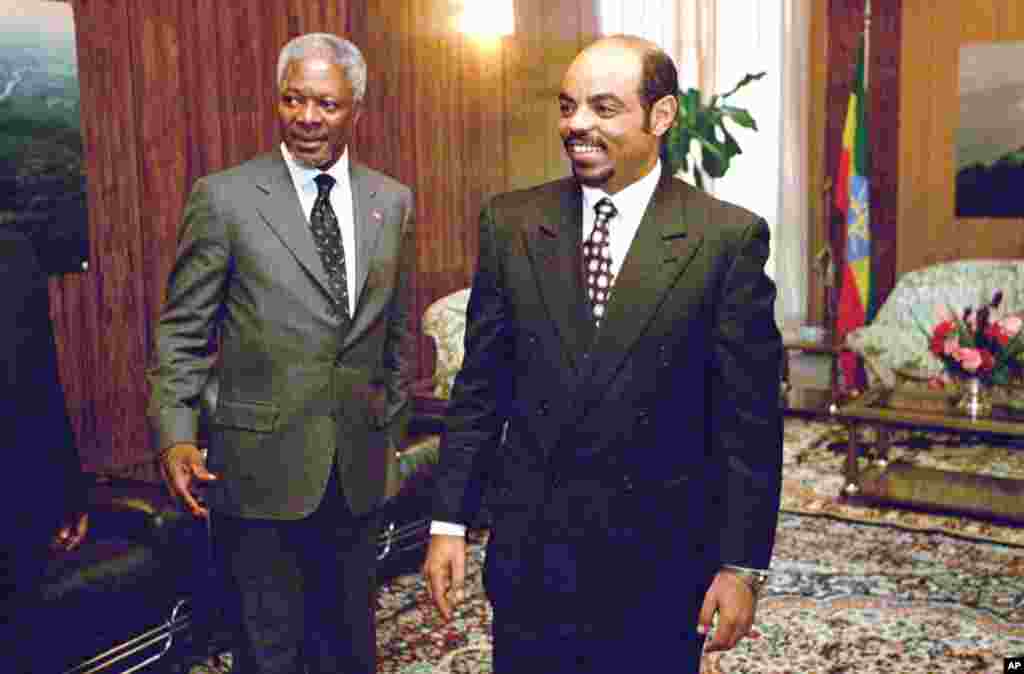
17/19UN Secretary General Kofi Annan with Meles before their meeting in the office of the prime minister in Addis Ababa, Ethiopia, April 30, 1998.
Ethiopia is mourning the death of Prime Minister Meles Zenawi at the age of 57. Meles died late August 22 of an unspecified infection while seeking treatment outside the country.
Show moreShow less
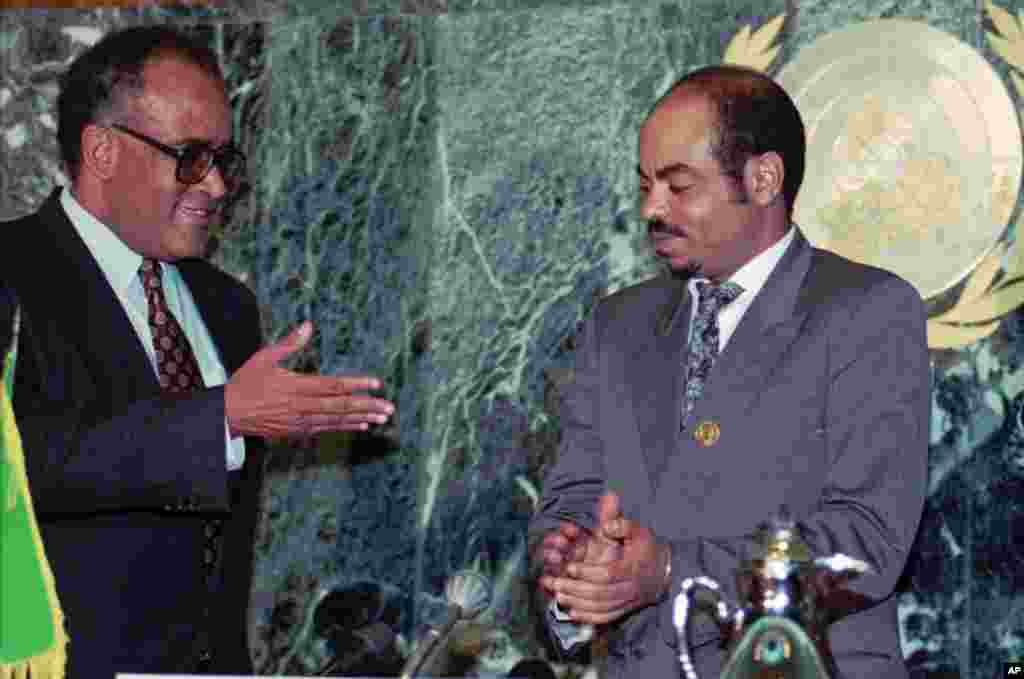
18/19Salim Ahmed Salim, Secretary General of the Organization of African Unity, meets with Meles in Addis Ababa, June 28, 1995.
Ethiopia is mourning the death of Prime Minister Meles Zenawi at the age of 57. Meles died late August 22 of an unspecified infection while seeking treatment outside the country.
Show moreShow less
19/19Meles accompanies Palestinian leader Yasser Arafat as he arrives at Addis Ababa's African Hall to attend a meeting, June 26, 1995.
Ethiopia is mourning the death of Prime Minister Meles Zenawi at the age of 57. Meles died late August 22 of an unspecified infection while seeking treatment outside the country.