


KISMAYO —
In the Somali port of Kismayo, local residents and business community leaders are calling on the United Nations Security Council to lift a ban on charcoal export so they can clear out several million sacks lying on the road between the new Kismayo International airport and the city center.
The U.N. monitoring group on Somalia and Eritrea said the al-Qaida linked group al-Shabab earned up to $25 million from the charcoal trade last year when they controlled Kismayo.
According to the investigators, the militant group levied taxes at every stage of the charcoal from production to export. Due to that, in February this year the U.N. enacted the ban in a bid to weaken al-Shabab financially.
Hassan Awlibah, the chairman of Kismayo's business community, said Somalis have been working in the charcoal trade even before al-Shabab came to power.
He says the Somali people have been working in the charcoal trade for a long time and he says the situation had forced people to cut down trees when they didn’t have a government and they were hungry.
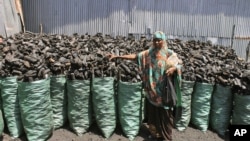
Today the charcoal ban, aimed at weakening al-Shabab, is still in effect and as you drive through Kismayo’s southern entrance you see more than four million sacks laying on both sides of the road. The charcoal is worth up to an estimated $40 million.
Awlibah says Somali businessmen have invested heavily in the charcoal trade and he believes the international community is punishing them by not allowing them to export the charcoal.
He says we think all these people in the international community have agreed to make the business people, who have invested in charcoal, poor. He says if they are looking for a solution to the charcoal menace they can give us a period of time so that we can export the charcoal. Awlibah says we don’t want to see people cutting down trees any more, but what we want first is to help the people that invested in the charcoal trade.
According to Kismayo authorities more than 5,000 people work in the charcoal trade.
A temporary 12-member committee that is operating Kismayo's port notes that dozens of empty ships have been docked waiting for the ban to be lifted so that they can transport the charcoal.
The committee is run by Ahmed Madobe, leader of the Ras Kamboni militia, which helped to liberate Kismayo from al-Shabab, Madobe says if the ban is not lifted, a new wave of violence could break out, and the public could turn against against the African Union (AU) forces that now control Kismayo.
He says the charcoal ban can bring insecurity. He says there is no other life here that the people know and they have poured all their wealth into the charcoal business. Madobe says this can result in problems and insecurity for the people of Kismayo and for the AU forces.
Local official Hassan Ilmi Mooge told VOA the international community has to help to revive other sectors in the area like farming, fishing and the livestock trade.
He says since the international community banned the charcoal trade they haven’t given us any other other way of surviving. He says there is no farming taking place here and no export of livestock so there is nothing coming to the people. Mooge says they have even cut all the humanitarian assistance they used to provide to us. He says for four years we were under huge pressure from al-Shabab and no aid agency came to help us.
For close to five years al-Shabab controlled the port city and banned the international humanitarian agencies from operating in areas under its control.
Local businessmen in Kismayo now have to convince the international community they don't have ideological links to al-Shabab and above all, that they don’t support the group's terror activities in the country.
The U.N. monitoring group on Somalia and Eritrea said the al-Qaida linked group al-Shabab earned up to $25 million from the charcoal trade last year when they controlled Kismayo.
According to the investigators, the militant group levied taxes at every stage of the charcoal from production to export. Due to that, in February this year the U.N. enacted the ban in a bid to weaken al-Shabab financially.
Hassan Awlibah, the chairman of Kismayo's business community, said Somalis have been working in the charcoal trade even before al-Shabab came to power.
He says the Somali people have been working in the charcoal trade for a long time and he says the situation had forced people to cut down trees when they didn’t have a government and they were hungry.
Today the charcoal ban, aimed at weakening al-Shabab, is still in effect and as you drive through Kismayo’s southern entrance you see more than four million sacks laying on both sides of the road. The charcoal is worth up to an estimated $40 million.
Awlibah says Somali businessmen have invested heavily in the charcoal trade and he believes the international community is punishing them by not allowing them to export the charcoal.
He says we think all these people in the international community have agreed to make the business people, who have invested in charcoal, poor. He says if they are looking for a solution to the charcoal menace they can give us a period of time so that we can export the charcoal. Awlibah says we don’t want to see people cutting down trees any more, but what we want first is to help the people that invested in the charcoal trade.
According to Kismayo authorities more than 5,000 people work in the charcoal trade.
A temporary 12-member committee that is operating Kismayo's port notes that dozens of empty ships have been docked waiting for the ban to be lifted so that they can transport the charcoal.
The committee is run by Ahmed Madobe, leader of the Ras Kamboni militia, which helped to liberate Kismayo from al-Shabab, Madobe says if the ban is not lifted, a new wave of violence could break out, and the public could turn against against the African Union (AU) forces that now control Kismayo.
He says the charcoal ban can bring insecurity. He says there is no other life here that the people know and they have poured all their wealth into the charcoal business. Madobe says this can result in problems and insecurity for the people of Kismayo and for the AU forces.
Local official Hassan Ilmi Mooge told VOA the international community has to help to revive other sectors in the area like farming, fishing and the livestock trade.
He says since the international community banned the charcoal trade they haven’t given us any other other way of surviving. He says there is no farming taking place here and no export of livestock so there is nothing coming to the people. Mooge says they have even cut all the humanitarian assistance they used to provide to us. He says for four years we were under huge pressure from al-Shabab and no aid agency came to help us.
For close to five years al-Shabab controlled the port city and banned the international humanitarian agencies from operating in areas under its control.
Local businessmen in Kismayo now have to convince the international community they don't have ideological links to al-Shabab and above all, that they don’t support the group's terror activities in the country.