


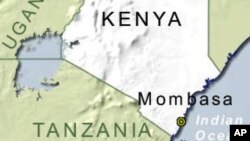
A Kenyan separatist group is not abandoning its call for secession, despite constitutional reforms that could give leaders from its region an increased voice in the national government.
Ali Saie, youth leader for the Mombasa Republican Council, says the constitutional reforms do not change their stance, because they still do not trust the national government. “In a way, the constitution is very good, if the national leaders are good,” Saie said. But he said “we expect nothing, they’re just bending the rules here.”
The Mombasa Republican Council has long advocated Kenya’s coastal region break away and form its own independent country, saying the region’s population is marginalized and poorly represented at the national level.
As part of Kenya’s new constitution, ratified in 2010 but not yet fully implemented, the country’s regions will be divided into 47 counties rather than the current eight provinces. Each county will have representation in a national parliament and Senate.
But Saie said he does not believe the central leaders will allow these entities to have much power.
“The constitution says we will have a governor, senator and a member of parliament,” said Saie. “But then again, the national government is now forcing to put its people” as appointed county bosses, in addition to the elected representatives. And these bosses, he said, will interfere with the locally-elected officials.
The government has banned the Mombasa Republican Council, a move Saie said has created a roadblock to negotiations between the group and the government. “We told him [Prime Minister Raila Odinga] that we can’t talk with him until they remove the unlawful tag, the ban on our group.”
Shaukat Abdulrazed, a government official in Nairobi who is originally from the coastal region, said some of the grievances the MRC brings up are legitimate, such as a lack of jobs and educational opportunities in the region. But he does not believe separation is the answer. “Mombasa has always been and will always be a part of this country,” he said. “With the new constitution, we would like to take advantage of the diversity we have in the country.”
The first general elections under the new constitution will be held in March 2013.
Ali Saie, youth leader for the Mombasa Republican Council, says the constitutional reforms do not change their stance, because they still do not trust the national government. “In a way, the constitution is very good, if the national leaders are good,” Saie said. But he said “we expect nothing, they’re just bending the rules here.”
The Mombasa Republican Council has long advocated Kenya’s coastal region break away and form its own independent country, saying the region’s population is marginalized and poorly represented at the national level.
As part of Kenya’s new constitution, ratified in 2010 but not yet fully implemented, the country’s regions will be divided into 47 counties rather than the current eight provinces. Each county will have representation in a national parliament and Senate.
But Saie said he does not believe the central leaders will allow these entities to have much power.
“The constitution says we will have a governor, senator and a member of parliament,” said Saie. “But then again, the national government is now forcing to put its people” as appointed county bosses, in addition to the elected representatives. And these bosses, he said, will interfere with the locally-elected officials.
The government has banned the Mombasa Republican Council, a move Saie said has created a roadblock to negotiations between the group and the government. “We told him [Prime Minister Raila Odinga] that we can’t talk with him until they remove the unlawful tag, the ban on our group.”
Shaukat Abdulrazed, a government official in Nairobi who is originally from the coastal region, said some of the grievances the MRC brings up are legitimate, such as a lack of jobs and educational opportunities in the region. But he does not believe separation is the answer. “Mombasa has always been and will always be a part of this country,” he said. “With the new constitution, we would like to take advantage of the diversity we have in the country.”
The first general elections under the new constitution will be held in March 2013.
