


News / Africa

More Protests Break Out in Ivory Coast

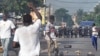
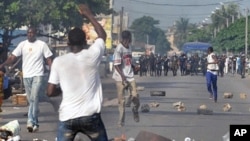
Several dozens of Ivorian opposition youth clash with police during a demonstration on 17 Feb 2010 in Abidjan against the dissolution of Ivorian cabinet and electoral commission
TEXT SIZE - +

More protests have broken out in Ivory Coast against the president's dismissal of the government.

Demonstrators set fire to a city bus in the main city of Abidjan Wednesday, while hundreds of people marched in towns around the country.

Opposition groups had called for street protests after President Laurent Gbagbo dissolved the cabinet and electoral commission last Friday.

The dismissals are likely to delay a presidential election that has already been postponed six times since Mr. Gbagbo's mandate ran out in 2005.

The groups accused Mr. Gbagbo of staging a virtual coup, and said they no longer recognize him as president.

The president's office had said a new government would be unveiled Tuesday, but officials later said the announcement would be delayed.

Prime Minister Guillaume Soro has said he is holding consultations to form the new administration.

In a statement earlier this week, U.N. Secretary-General Ban Ki-moon urged Ivorians to remain calm and avoid any action that could trigger renewed violence.

A 2002 civil war in Ivory Coast left the country divided between a rebel-controlled north and government-controlled south.

A 2007 peace deal left Mr. Gbagbo as president and former rebel leader Soro as prime minister.

The former rebel New Forces have warned that the president's actions could push the West African country back into civil war.


Some information for this report was provided by AP, AFP and Reuters.

You May Like

Experts Weigh In on Challenges of Closing Guantanamo Prison

Former chief military prosecutor at Guantanamo delivers petition to White House with more than 370,000 signatures, demanding facility be closed down immediately More

Karzai to Discuss Enhancing Defense Ties with India

Afghanistan looking for more military aid as it prepares for withdrawal of NATO forces by next year More

India, China Pledge to Overcome Border Tensions

Indian prime minister and Chinese premier attempt to move past tense standoff in the Himalayas during Delhi talks More

Burmese President Opens US Visit with VOA Town Hall Meeting

Ahead of his meeting with President Obama Monday, Thein Sein answered questions on human rights and economic development in his country More

This forum has been closed.
Comments
     
There are no comments in this forum. Be first and add one

Featured Videos

Your JavaScript is turned off or you have an old version of Adobe's Flash Player. Get the latest Flash player.
Video

Video US Oil Surge Could Impact Mideast Geopolitics

The United States will account for a third of new oil supplies over the next five years, and will become energy self-sufficient in 20 years, according to a new report by the Paris-based International Energy Agency (IEA). Although U.S. oil imports from Arab Gulf countries increased last year, analysts predict the U.S. will lose its dependence on Middle East imports, which is expected to have a huge impact on international relations and the balance of power. VOA's Henry Ridgewell reports.