More Than 20 Killed in Sectarian Violence in Burma
Smokes and flames billow from burning buildings in Sittwe, capital of Rakhine state in western Burma, where sectarian violence is ongoing, June 12, 2012.
More than 20 people have been killed in western Burma's Rakhine State, as international pressure mounts for an end to the sectarian fighting between ethnic-Rakhine Buddhists and Rohingya Muslims.
President Thein Sein has declared a state of emergency and has sent army troops to Rakhine, which has been hit with a wave of rioting and arson in recent days. Hundreds of homes have been destroyed.
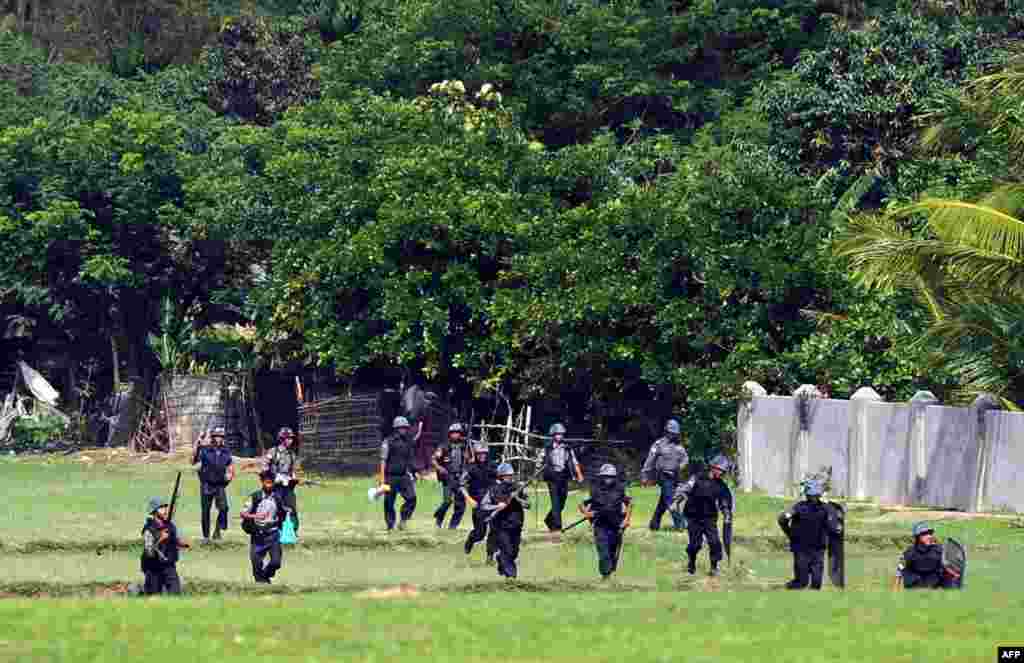
There was a heavy security presence Tuesday in the regional capital, Sittwe, where fires dotted the area amid destroyed homes and shops, and people ran to escape the chaos. In Maungdaw, residents reported mostly peaceful streets, and 400 kilometers away in Rangoon, police dispersed a small mob of monks.
In predominately Muslim Bangladesh, officials said their border guards have turned back more than 500 Rohingya Muslims trying to flee the fighting. Bangladesh's Foreign Ministry said it is not in the the country's best interest to allow the Rohingyas entry.
The United States has expressed concern about the situation. Secretary of State Hillary Clinton said the violence underscores the need to make a serious effort to achieve national reconciliation in Burma.
Troops Patrol Western Burma as Sectarian Strife Continues
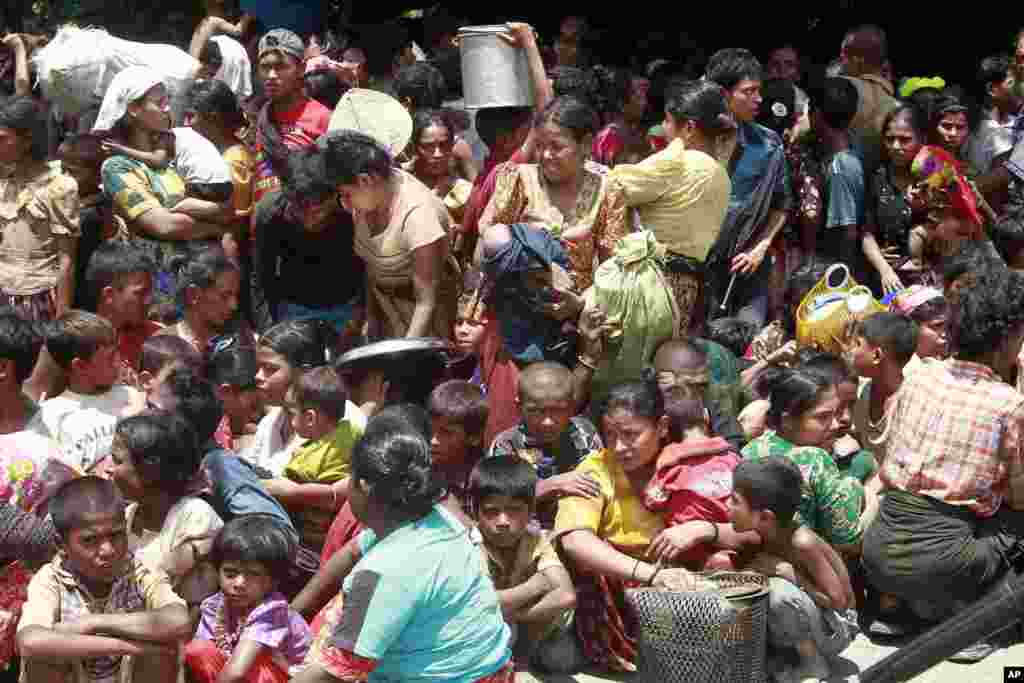
1/13Muslims women and children from villages gather before being relocated to secure areas in Sittwe, capital of Rakhine state in western Burma, where sectarian violence is ongoing, June 12, 2012.
Armed security forces preside over an uneasy calm in western Burma, as international pressure mounts for an end to a week of deadly violence between Muslims and Buddhists.
Show moreShow less
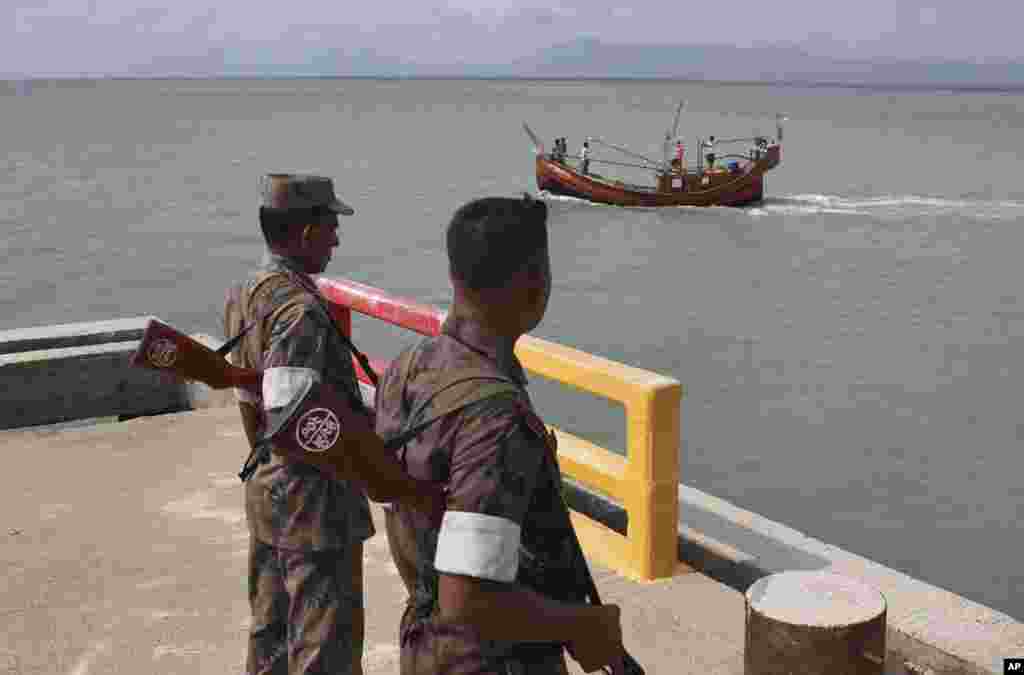
2/13Bangladeshi Border Guard soldiers keep watch at a wharf in Taknaf, Bangladesh, June 12, 2012.
Armed security forces preside over an uneasy calm in western Burma, as international pressure mounts for an end to a week of deadly violence between Muslims and Buddhists.
Show moreShow less
3/132013年4月3日韓國的車輛被拒絕進入朝鮮開城工業區之後,掉頭回去。
Armed security forces preside over an uneasy calm in western Burma, as international pressure mounts for an end to a week of deadly violence between Muslims and Buddhists.
Armed security forces preside over an uneasy calm in western Burma, as international pressure mounts for an end to a week of deadly violence between Muslims and Buddhists.
Show moreShow less
5/13Security forces try to restore order in Rakhine state, Burma, after a wave of deadly religious violence, as the United Nations evacuated foreign workers, June 11, 2012.
Armed security forces preside over an uneasy calm in western Burma, as international pressure mounts for an end to a week of deadly violence between Muslims and Buddhists.
Show moreShow less
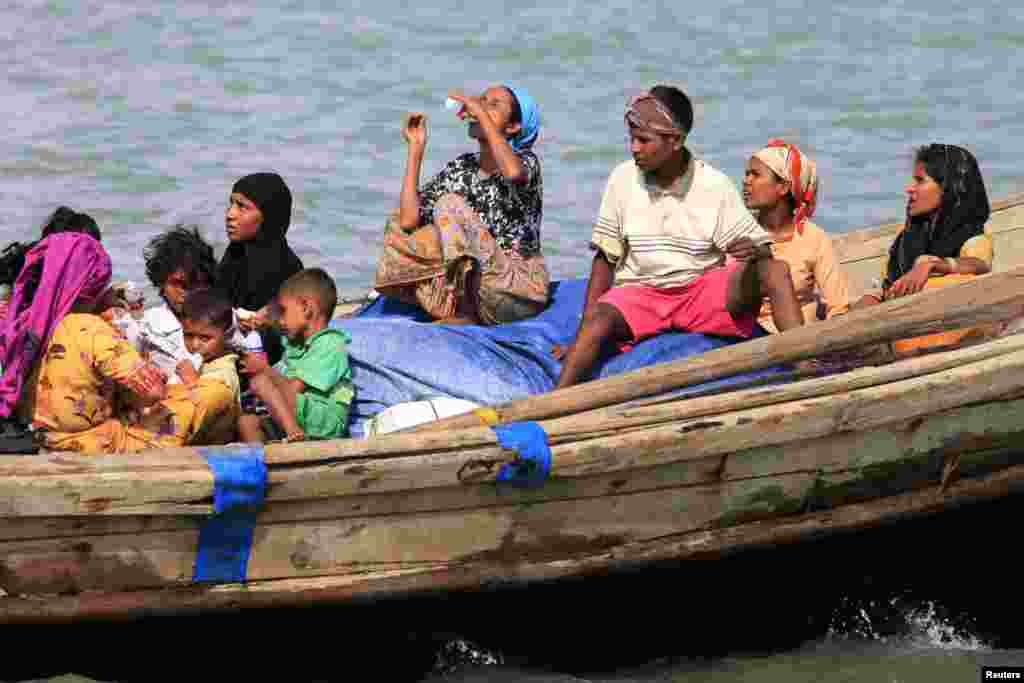
6/13Muslim Rohingya people on a boat cross the river Naf, from Burma into Teknaf, Bangladesh, June 11, 2012.
Armed security forces preside over an uneasy calm in western Burma, as international pressure mounts for an end to a week of deadly violence between Muslims and Buddhists.
Show moreShow less
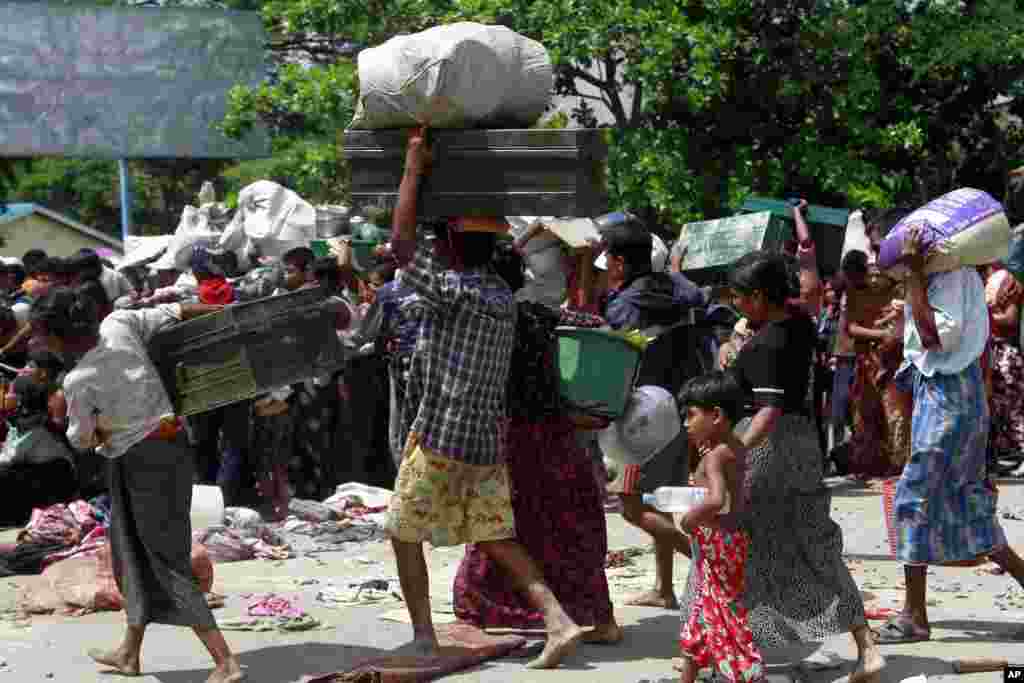
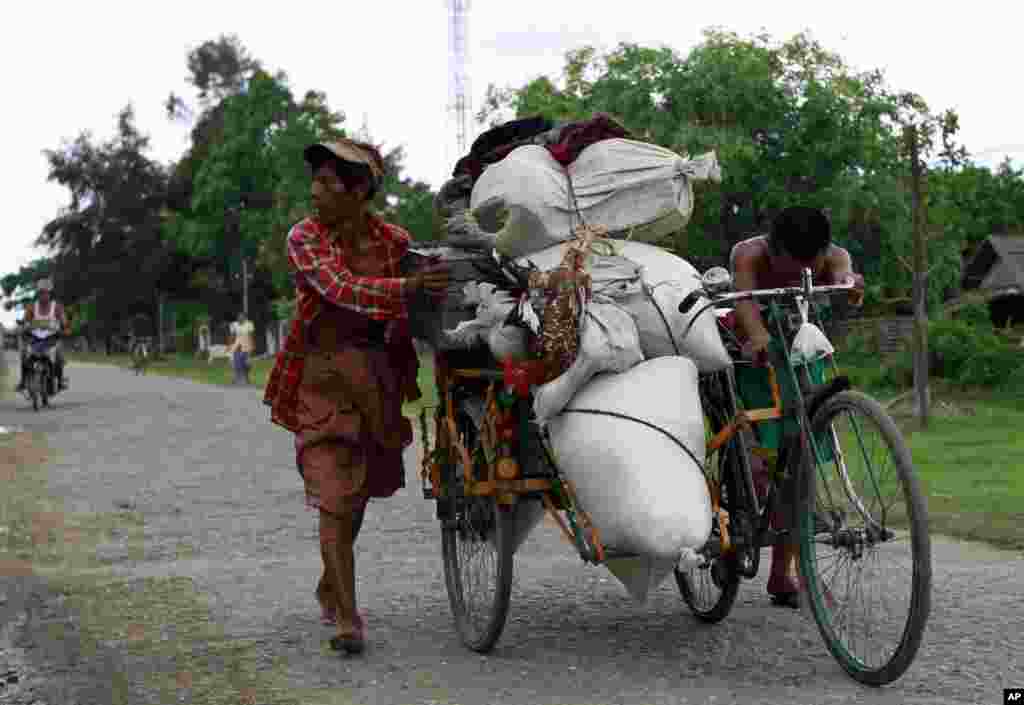
7/13Local residents push a trishaw vehicle carrying their belongings in a village in Sittwe, where sectarian violence is impacting on the local population, June 11, 2012.
Armed security forces preside over an uneasy calm in western Burma, as international pressure mounts for an end to a week of deadly violence between Muslims and Buddhists.
Show moreShow less
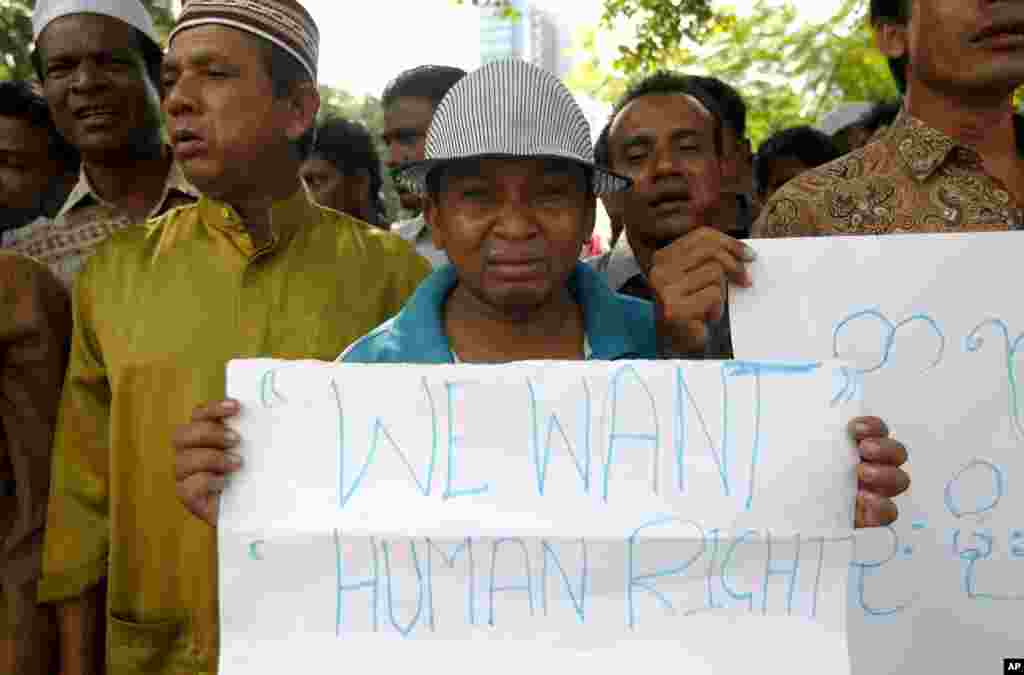
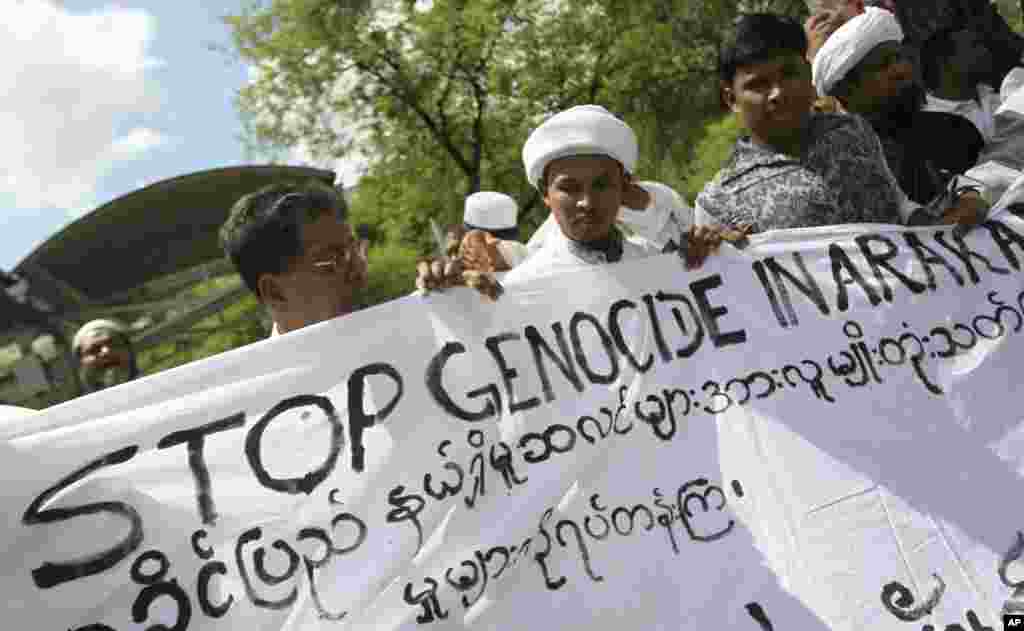
8/13Rohingya protesters gather in front of a U.N. regional office in Bangkok, Thailand, to call for an end to the ongoing unrest and violence in Burma’s Rakhine State, June 11, 2012.
Armed security forces preside over an uneasy calm in western Burma, as international pressure mounts for an end to a week of deadly violence between Muslims and Buddhists.
Show moreShow less
9/13Men carry sacks filled with shellfish on a beach at Diani Beach on the Indian Ocean coast of Kenya, some 30 km (19 miles) south of Mombasa.
Armed security forces preside over an uneasy calm in western Burma, as international pressure mounts for an end to a week of deadly violence between Muslims and Buddhists.
Show moreShow less
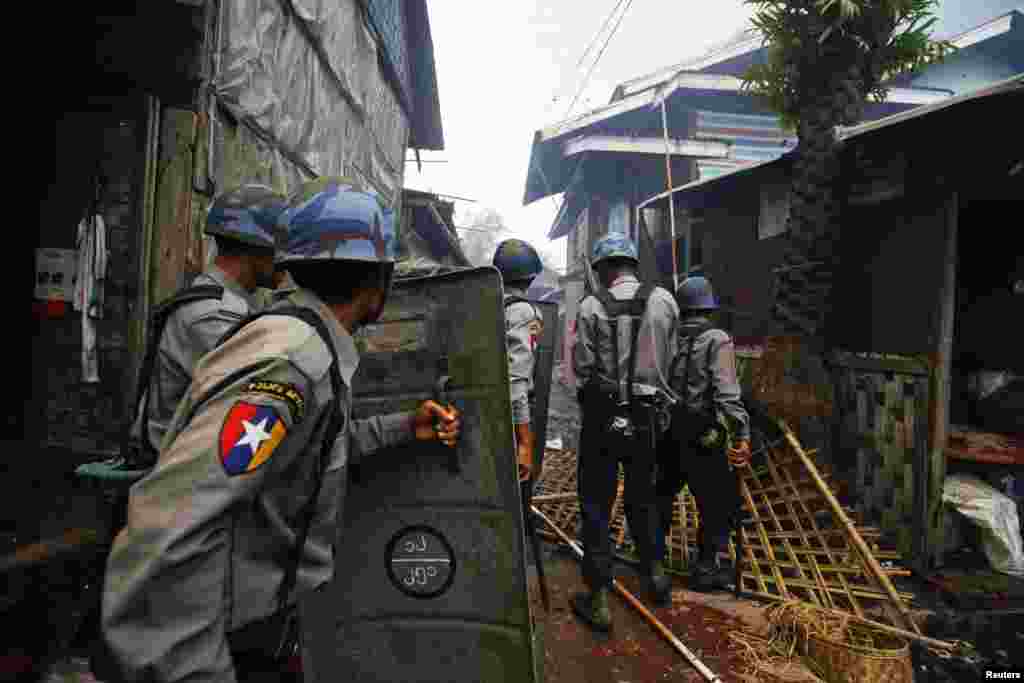
10/13Policemen move towards burning houses during fighting between Buddhist Rakhine and Muslim Rohingya communities in Sittwe, June 10, 2012.
Armed security forces preside over an uneasy calm in western Burma, as international pressure mounts for an end to a week of deadly violence between Muslims and Buddhists.
Show moreShow less
11/13Սերժ Սարգսյանի երդմնակալության օրը, Երևան, 2013թ. ապրիլի 9
Armed security forces preside over an uneasy calm in western Burma, as international pressure mounts for an end to a week of deadly violence between Muslims and Buddhists.
Show moreShow less
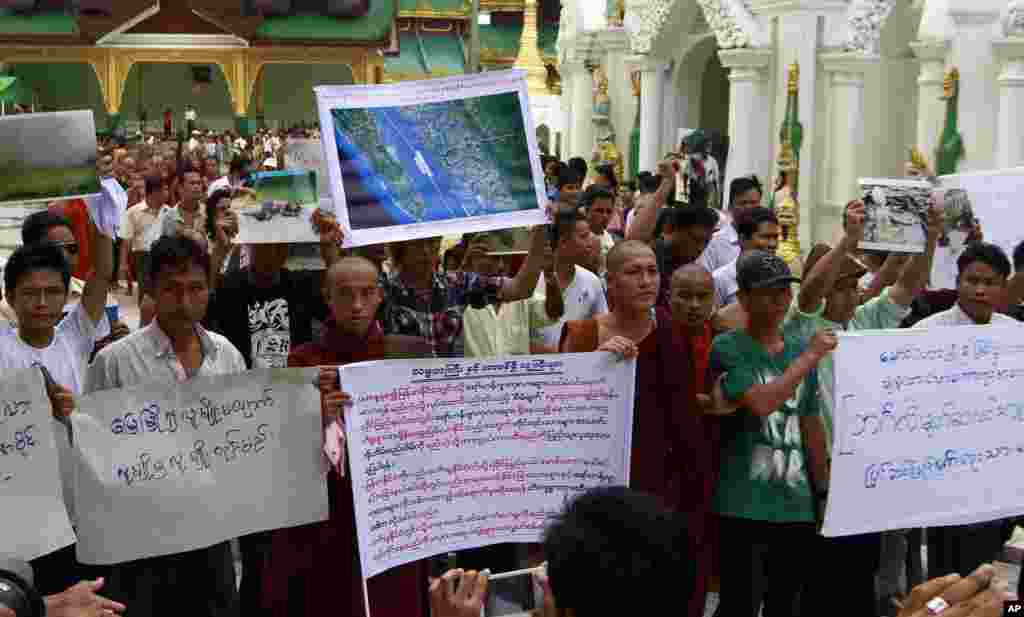
12/13Buddhist monks and ethnic Rakhine people hold placards at Shwedagon pagoda in Rangoon, Burma, June 10, 2012.
Armed security forces preside over an uneasy calm in western Burma, as international pressure mounts for an end to a week of deadly violence between Muslims and Buddhists.
Show moreShow less
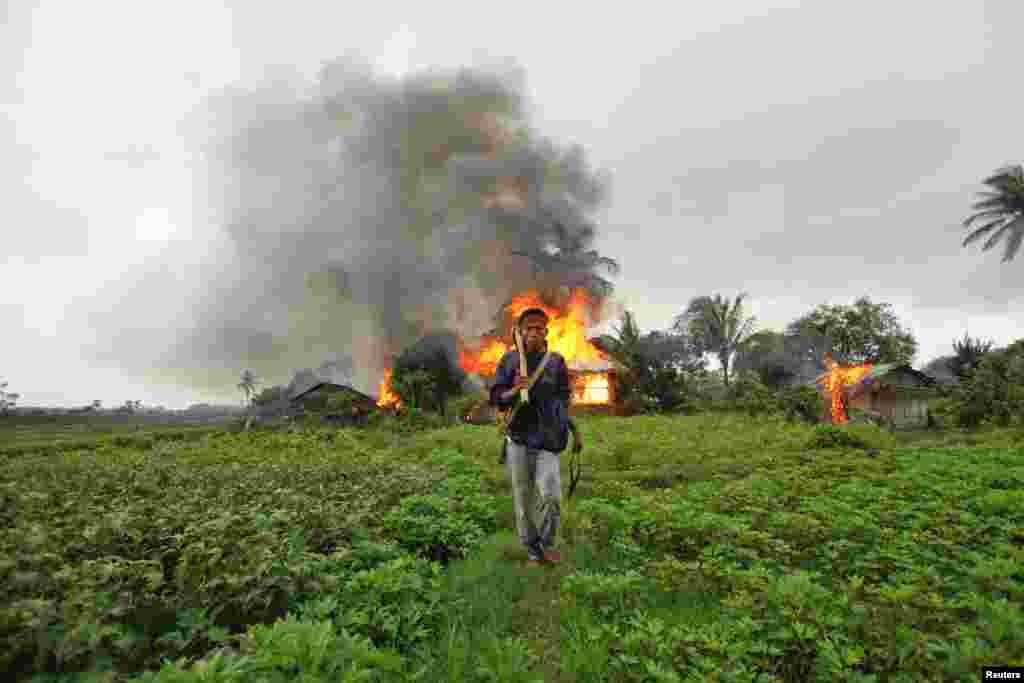
13/13An ethnic Rakhine man holds homemade weapons as he walks in front of houses that were burnt during fighting between Buddhist Rakhine and Muslim Rohingya communities in Sittwe, June 10, 2012.
Armed security forces preside over an uneasy calm in western Burma, as international pressure mounts for an end to a week of deadly violence between Muslims and Buddhists.
Show moreShow less
Previous slide
Next slide
Violence Erupts
The violence erupted a week ago when a Buddhist mob in Sittwe ambushed a bus and killed 10 Rohingya passengers, mistakenly believing they were responsible for the recent gang-rape and murder of a Buddhist woman.
According to an official with U.S.-based Human Rights Watch, Phil Robertson, there are reports that riot police in the region are favoring the ethnic Rakhine over the Rohingya. He said the government must be more even-handed in resolving the problem.
The Rakhine group has been oppressed by the government for decades, but domestic media coverage of the riots has been tilted against the Rohingya population. State-backed media and private news outlets have reported on the conflict using terms derogatory to the Rohingya.
Robertson said the violence has the potential to "significantly tarnish the reformist credentials" of Burma's new nominally civilian government if authorities do not bring the fighting under control. Burma's military rulers transferred power to the new government last year.
President Thein Sein, too, warned that the violence could jeopardize the country's nascent reform process. He said the unrest is fueled by "hatred and revenge based on religion and nationality," and he noted that it could spread to other parts of the country. If that happens, he said the country's stability, peace, and democratization process could be severely affected.
But Lex Rieffell, a non-resident senior fellow at the U.S.-based Brookings Institution, said it is unclear how challenging the violence would be to the new Burmese government.
“There’s no simple answer to that question," said Rieffel. "I think we can only hope and pray that it’s easy. That people sort of come to their senses and realize that there’s no reason to … that there are other ways of dealing with differences than killing each other.”
Not Unique to Burma
Rieffel pointed out that this type of violence happens in countries other than Burma.
“We’ve seen this kind of communal violence in many parts of the world," he said. "The country I deal a lot with is Indonesia, and Indonesia has had some horrible episodes of communal violence and still this year continues to have horrible communal violence issues. Thailand, look at Thailand, southern Thailand. Look at the Philippines, [the island of] Mindanao, look at India. I mean this is hardly unique to Burma.”
The unrest has highlighted long-standing tensions between Buddhists and minority Rohingya Muslims. Burma does not classify its estimated 800,000 Rohingyas as Burmese citizens, instead regarding them as illegal immigrants from neighboring Bangladesh.
Rohingya activist and scholar Knurl Islam said there is long history of trying to exclude the Rohingya in Rakhine.
"We are two communities," said Islam. "We have been living together for a long time, we are still living together. We have to live together, we know it. But they do not want Muslims, they say we are illegal immigrants, we have nothing to do in their country."
Richman reported from Washington and Bernstein from Bangkok.