



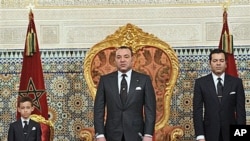
King Mohamed VI has sometimes been called “the King of the Poor” for the reforms he has instituted in that country since inheriting the throne from his father, King Hassan II, in 1999. He instituted wider media freedoms and allowed media to report on corruption; he released political prisoners and amended the country’s penal code to ban torture; he acknowledged the government’s responsibility for thousands of so-called disappearances and other past human rights abuses; and he compensated victims and their relatives.
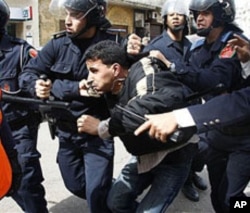
However, these gestures were not enough to guarantee Morocco’s immunity to the wave of discontent that has swept through North Africa since the beginning of the year. Inspired by Tunisia and Egypt, Moroccan youth began February 20 to stage street protests of their own.
There is an important difference, however, between the uprising in Morocco and those in neighboring countries. Tunisians and Egyptians were calling for their leaders to step down. Moroccan activists are calling for reform within the monarchy: they want greater personal and civil freedoms; they are advocating independent judicial and legislative branches; they want something to be done about poverty which is most acute among rural populations. And activists are insisting on an end to the nepotism and political corruption said to exist in the Crown’s own inner circle.
Promises
In a speech televised on March 9, King Mohamed appeared to have listened to their demands. He announced he had appointed a committee of legal experts, charged with drafting draft amendments to the constitution. These, he said, would be put to a referendum in June. He promised that the Prime Minister will in the future be elected, not appointed.
He also promised to reinforce systems for, as he put it, “boosting moral integrity in public life". It was a clear allusion to corruption scandals that have peppered the press and were further underscored during the WikiLeaks scandal.
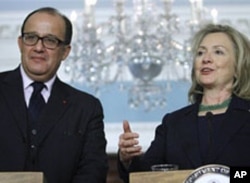
Moroccan Foreign Minister Taieb Fassi Fihri was in Washington this week, reinforcing his country’s commitment to democracy. Responding to complaints that activists would not be included in the process of rewriting the constitution, he said that Morocco would take an inclusive approach to reform.
“Everyone is invited to contribute,” he said. “The large majority of the main political parties participate and trade unions and many NGOs, including youth. And then because his Majesty fixed the bar high, in terms of reforms, I am sure that there will be a large, large enthusiasm and a large majority of people will vote in favor of this reform.”
Diplomatic cables released by WikiLeaks last December cast accused the King and his inner circle of coercing and soliciting bribes in the country’s real estate sector.
Activists have since demanded that the King take action against cronies who have abused their positions. When asked whether such investigations might be forthcoming, Fassi Fehri responded simply, “No, no.”
He then added, “Morocco put its fingers on corruption, on justice reforms, on transparency many years ago. And we work hard in respect of our law to go forward in this specific area.”
Freedom, transparency
The Minister said that in the next month, many of the new reforms will be institutionalized and he stressed his personal commitment to transparency and freedom of competition among companies.
However, some democracy advocates remain skeptical that the King will institute any substantial reforms, complaining that while the monarch was long on promises, he was a little short on details.
Abdoubakr Jamai is the former editor-in-chief of the now-defunct Journal Hebdomadaire, one of Morocco’s most independent newspapers, it folded last year due to what at least one rights group termed financial stress and political pressure.
“The speech remains ambiguous to many Democrats,” Jamai said, “because he [King Mohamed] claims that Morocco will usher in an era of democratization with the institution of a constitutional monarchy, with a Prime minister who will be designated from the winning party in parliamentary elections, with separation of powers, independence of the judiciary, et cetera. The problem with all these things is that we were supposed to have them before.”
Jamai said that he did not believe the address was the speech of an institution happy to see democratization take hold; rather, it was the speech of an institution had lost some credibility and was being cornered into giving up some of its privileges.
Democracy activists may be in the minority in Morocco, he added, but they are well organized and have many reasons to continue demonstrating. “Because this minority is extremely committed, because Morocco is not a democracy, because there is such corruption, because there is such poverty in Morocco, because there is such social inequality and inequity in general, this minority in my opinion can only swell. I don’t see it shrink[ing].”
If the Monarchy doesn’t consider more serious democratization soon, Jami warns, it could one day end up fighting for its very survival.