



Back in the 1950s few women in the United States worked outside of the home, and even fewer earned doctorate degrees or went on to have professional careers.
However, as the first chief of astronomy at the U.S. space agency, Nancy Grace Roman is a notable exception.
Mesmerized by the moon
Roman’s fascination with space began not long after she was born in Nashville, Tennessee in 1925, the only child of a teacher and a scientist.
“My grandmother sent back a letter that mother had written when I was four, saying that my favorite thing to draw was the moon," she says. "Certainly by the time I was in seventh grade, I knew I had to have a long education if I wanted to become an astronomer, but I figured I’d try it and if I didn’t get far enough I could always end up teaching in high school or math or physics.”
Pursuing her interest in astronomy was not easy. Women of her generation were systematically discouraged from going into science.
“I still remember asking my high school guidance teacher for permission to take a second year of algebra instead of a fifth year of Latin," she says. "She looked down her nose at me and sneered, ‘What lady would take mathematics instead of Latin?’ That was the sort of reception that I got most of the way.”
Shaking off stereotypes
But Roman was determined to become an astronomer and learn everything she could about stars. She went to college, studied science and earned her doctorate in astronomy from the University of Chicago in 1949.

She spent the next decade teaching and working as a research associate but soon realized that, as a woman, her prospects for advancement at a research institution were limited.
So, in 1959, she accepted a job at NASA, the U.S. space agency, to set up a program in space astronomy.
As part of her new job, Roman travelled around the country, trying to understand what astronomers really wanted.
“Astronomers had been wanting to get observations from above the atmosphere for a long time. Looking through the atmosphere is somewhat like looking through a piece of old, stained glass," Roman says. "The glass has defects in it, so the image is blurred from that.”
Honing Hubble
That need for clear, sharp images from space was all the motivation she needed.
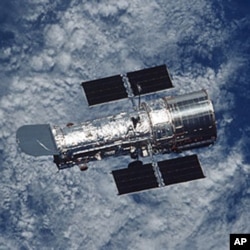
“I set up a committee of astronomers from all over the country, plus some engineers from NASA, to sit down together and decide what we should do, what did the astronomers want to do, what did the engineers think was possible to do, and I led that effort for several years until we had a fairly detailed design of what we thought would make sense.”
That design was the Hubble Space Telescope, an instrument that could soar above the atmosphere, orbit the earth, and capture and transmit clear observations of the universe back to earth.
NASA’s current chief astronomer, who worked with Roman at the agency, calls her “the mother of the Hubble Space Telescope.”
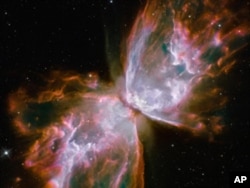
“Which is often forgotten by our younger generation of astronomers who make their careers by using Hubble Space Telescope," says Ed Weiler. "Regretfully, history has forgotten a lot in today’s Internet age, but it was Nancy in the old days before the Internet and before Google and e-mail and all that stuff, who really helped to sell the Hubble Space Telescope, organize the astronomers, who eventually convinced Congress to fund it.”
Encouraging others to reach for the stars
Since retiring from NASA in 1979, Roman spends much of her time consulting, teaching and lecturing across the country, all the while continuing to be a passionate advocate for science.

Today, at the age of 86, Roman enjoys motivating young girls to dream big.
“One of the reasons I like working with schools is to try to convince women that they can be scientists and that science can be fun,” she says.
Roman hopes she's inspired young women to set aside their inhibitions and reach for the stars, just as she did.