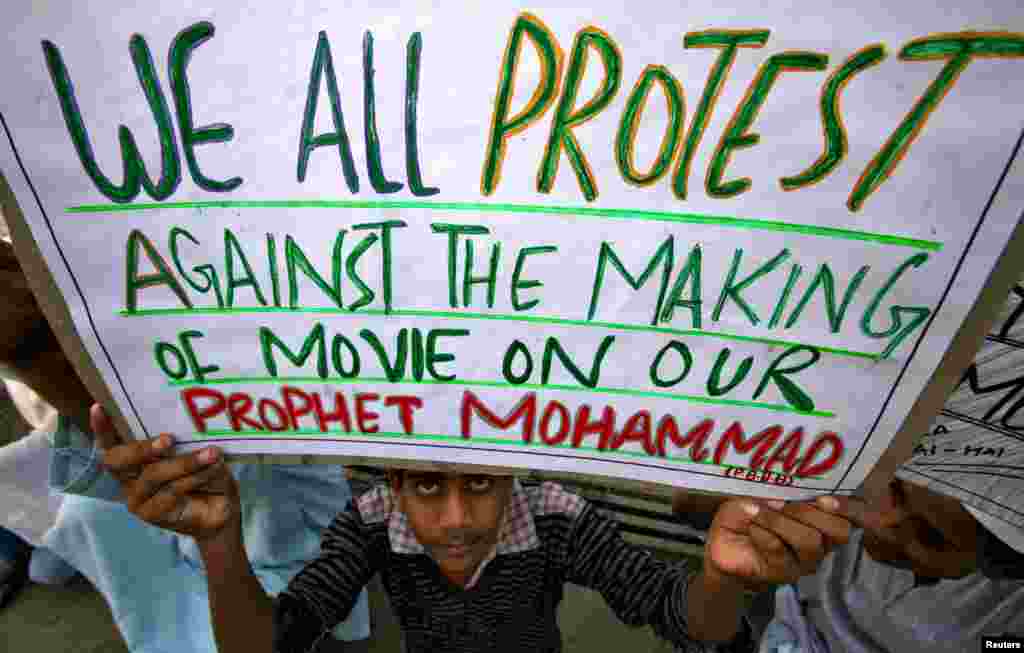
Muslim demonstrators hold banners during a protest in front of the U.S. embassy in Bangkok September 18, 2012. Demonstrators staged a peaceful protest against the anti-Islam film on Tuesday.
Protests against an anti-Islam film spread to Thailand, northwestern Pakistan and Indian-controlled Kashmir Tuesday, while an insurgent group in Afghanistan claimed responsibility for a suicide attack it says was in response to the video.
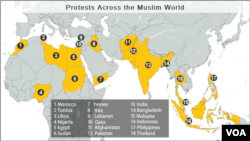
Protests Across the Muslim World
The U.S. Embassy in Bangkok closed at midday, ahead of the planned protest, but said it was not aware of any specific threat to Americans in Thailand.
In Peshawar, Pakistan, protesters threw stones and chanted anti-American slogans as police lobbed tear gas to try to push them back from the U.S. consulate.
The protests in Srinagar, the main city in Kashmir, also turned violent as stone-throwing demonstrators clashed with police.
Meanwhile, al-Qaida's North Africa branch issued a statement calling for more attacks against U.S. diplomats in retaliation for the low-budget film that mocks the Prophet Muhammad.
The group specifically threatened attacks in Algeria, Tunisia, Morocco and Mauritania.
Anti-Islam Film Protests
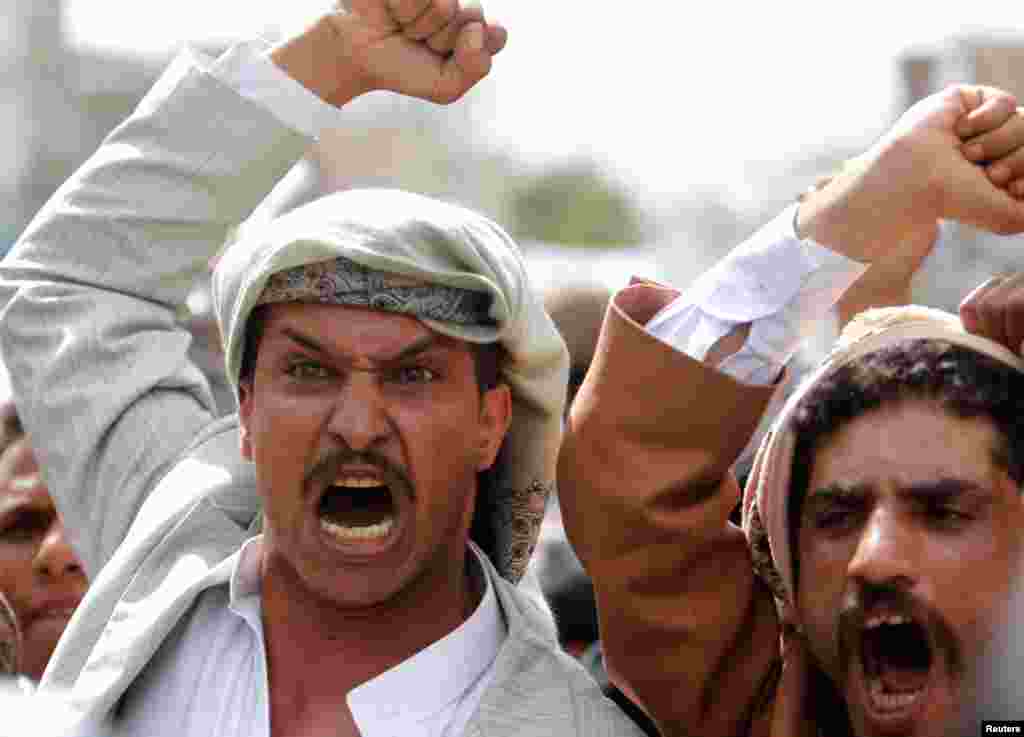
1/12On a road leading to the U.S. embassy in Sanaa, protesters shout slogans against the anti-Islam film made in the U.S. mocking the Prophet Muhammad, September 21, 2012.
Protests continue over 'The Innocence of Muslims', a film Muslims say insults the Prophet Muhammad.
Show moreShow less
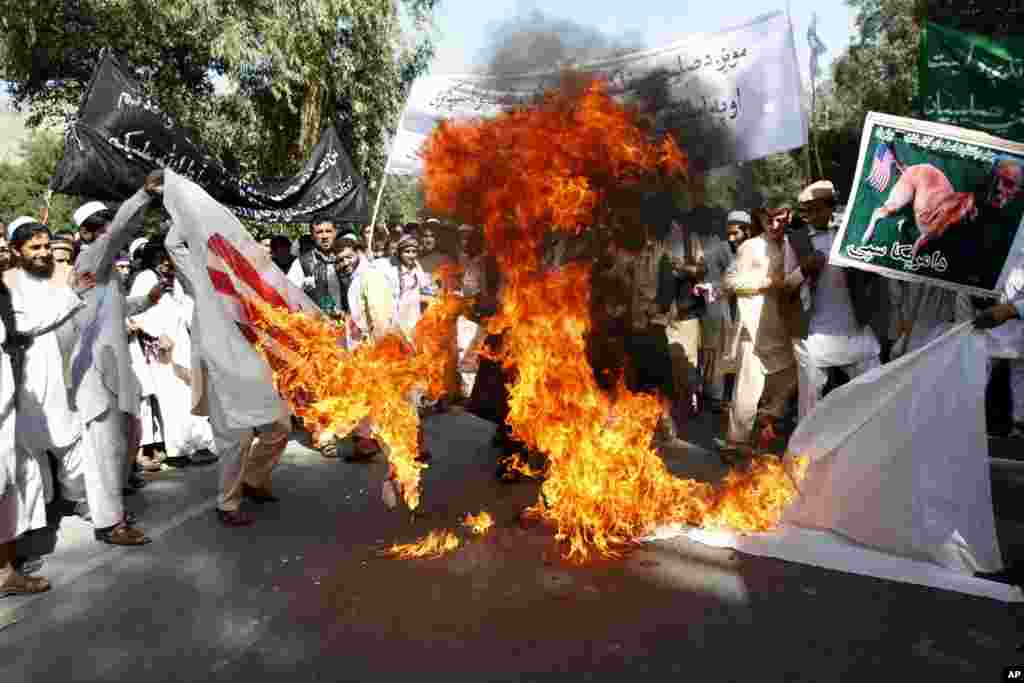
2/12Afghan university students burn a U.S. flag in the Surkhrod district of Nangarhar province, Afghanistan, September 19, 2012.
Protests continue over 'The Innocence of Muslims', a film Muslims say insults the Prophet Muhammad.
Show moreShow less
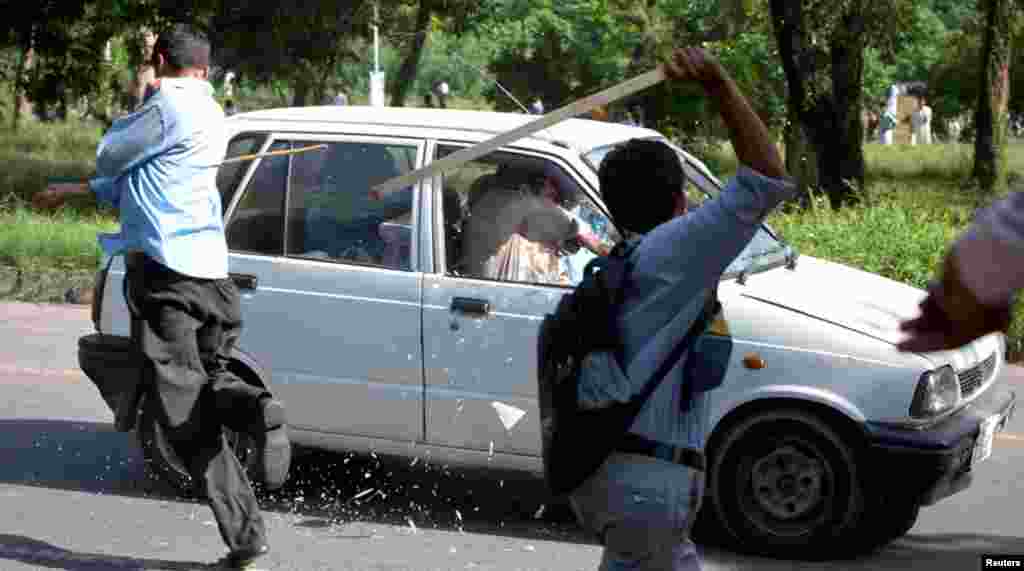
3/12Protesters use sticks to smash the windscreen and windows of a car during an anti-America protest march in Islamabad September 20, 2012.
Protests continue over 'The Innocence of Muslims', a film Muslims say insults the Prophet Muhammad.
Show moreShow less
4/12A protester covers his face in front of tear gas during clashes with riot police along a road at Kornish El Nile leading to the U.S. embassy, near Tahrir Square in Cairo, September 15, 2012.
Protests continue over 'The Innocence of Muslims', a film Muslims say insults the Prophet Muhammad.
Show moreShow less
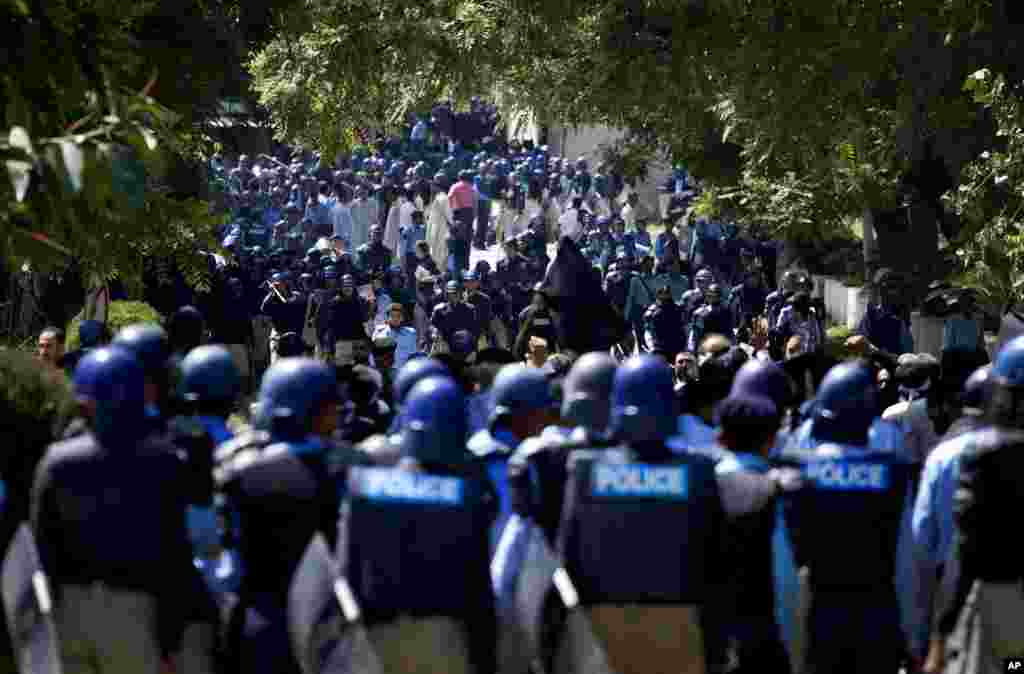
5/12Pakistani police officers stand guard as Pakistani lawyers chant slogans near the area that houses the U.S. Embassy and other foreign missions in Islamabad, Pakistan, September 19, 2012.
Protests continue over 'The Innocence of Muslims', a film Muslims say insults the Prophet Muhammad.
Show moreShow less
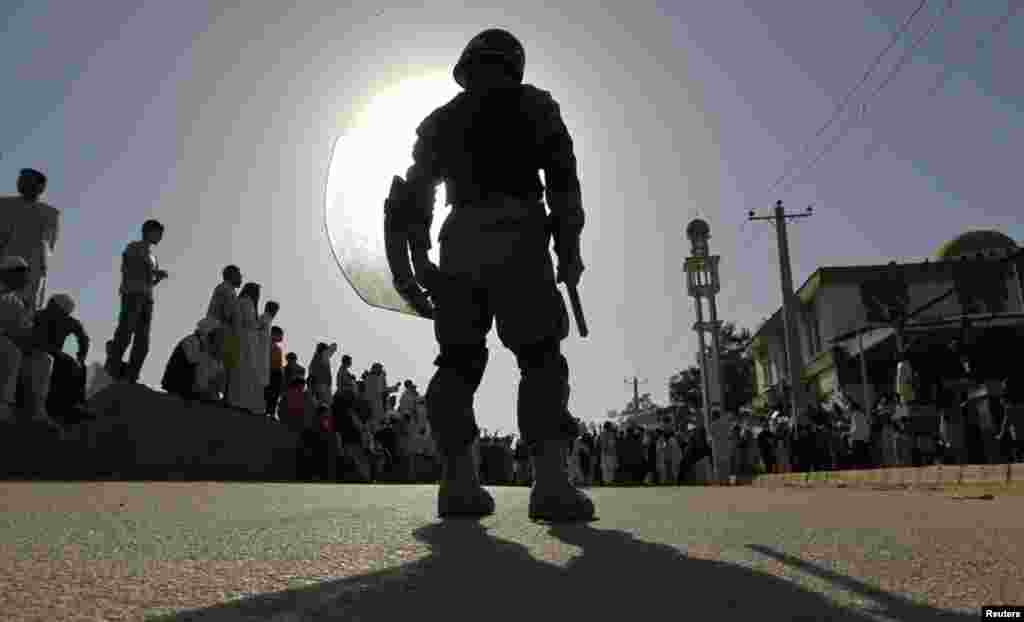
6/12A riot policeman keeps watch during a demonstration in Kabul, September 21, 2012.
Protests continue over 'The Innocence of Muslims', a film Muslims say insults the Prophet Muhammad.
Show moreShow less
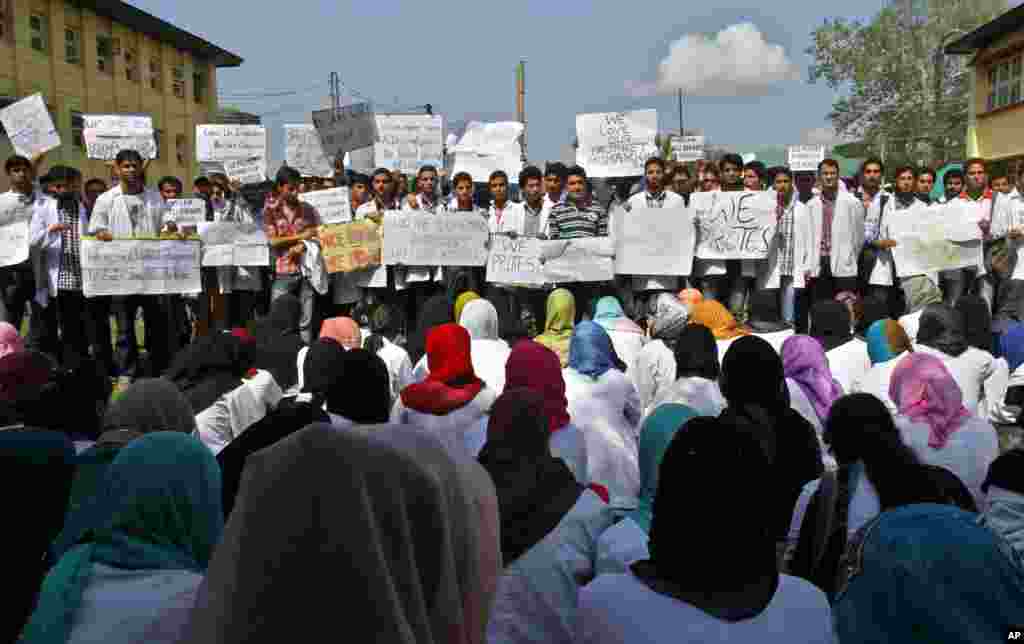
7/12Kashmiri medical students protest against the anti-Islam film in Srinagar, India, September 19, 2012.
Protests continue over 'The Innocence of Muslims', a film Muslims say insults the Prophet Muhammad.
Show moreShow less
8/12A Muslim man holds up a placard during a protest against the anti-Islam film in Jammu, India September 21, 2012.
Protests continue over 'The Innocence of Muslims', a film Muslims say insults the Prophet Muhammad.
Show moreShow less
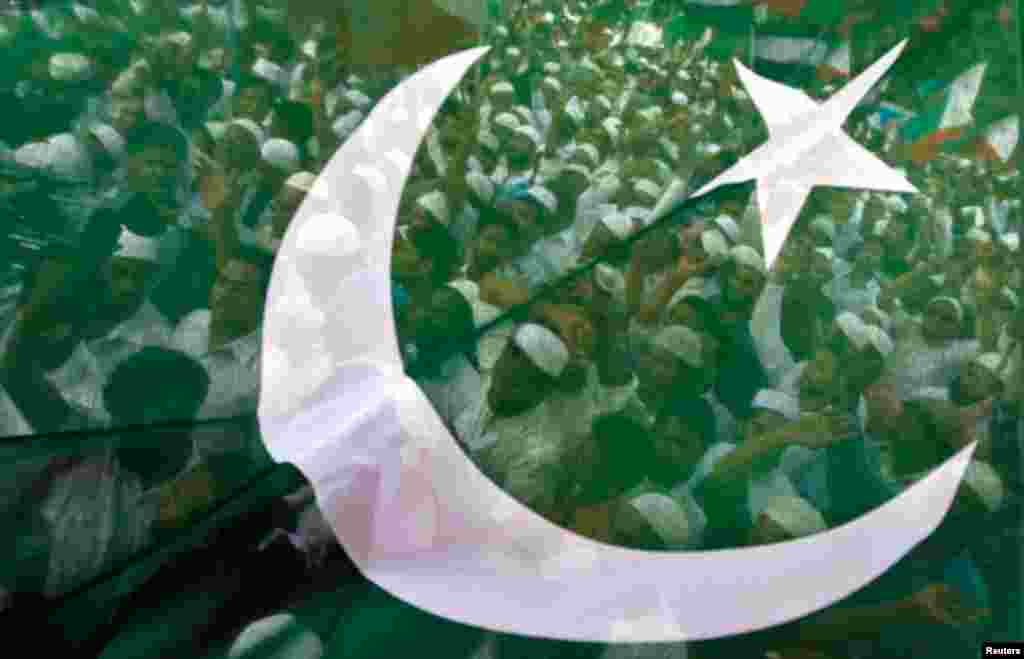
9/12Muslim demonstrators are seen through a flag as they shout anti-U.S. slogans during a protest in Chennai, September 18, 2012.
Protests continue over 'The Innocence of Muslims', a film Muslims say insults the Prophet Muhammad.
Show moreShow less
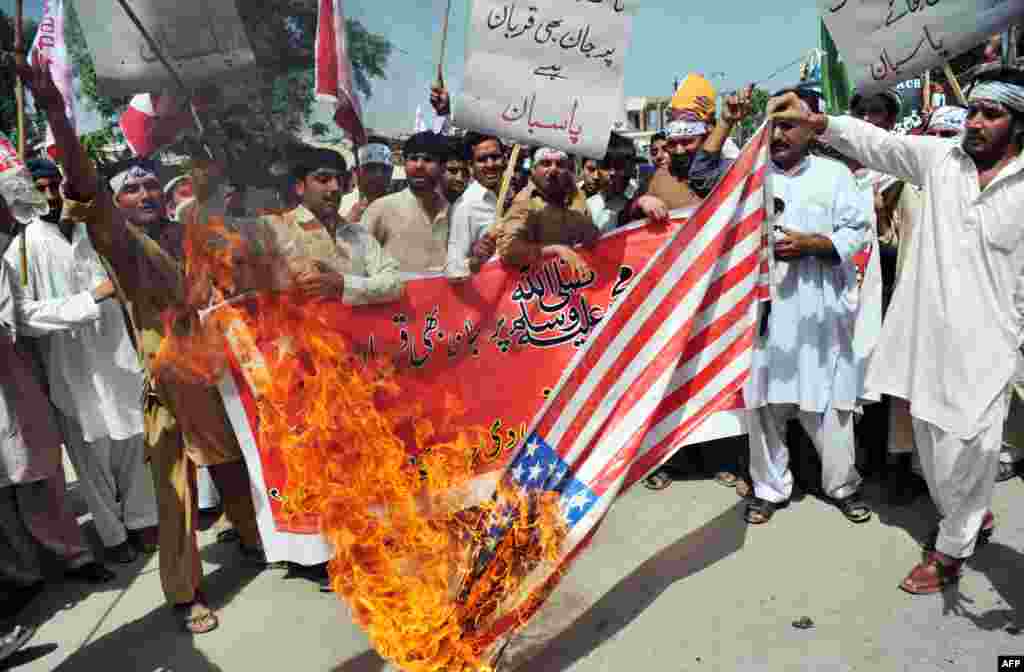
10/12Pakistani activists of the hard line Sunni party Jamaat-e-Islami (JI) burn a US flag during a protest against an anti-Islam movie in Peshawar, September 18, 2012.
Protests continue over 'The Innocence of Muslims', a film Muslims say insults the Prophet Muhammad.
Show moreShow less
11/12Muslim demonstrators hold a defaced poster of U.S. President Barack Obama during an anti-U.S. protest in Chennai, September 18, 2012.
Protests continue over 'The Innocence of Muslims', a film Muslims say insults the Prophet Muhammad.
Show moreShow less
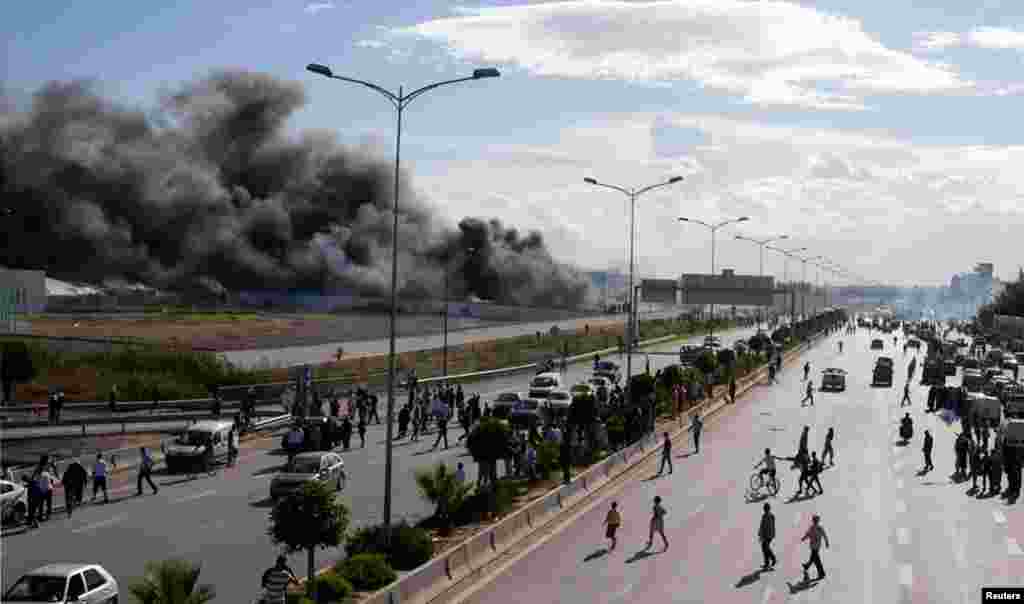
12/12Protesters set fire to trees in the U.S. Embassy compound in Tunis September 14, 2012.
Protests continue over 'The Innocence of Muslims', a film Muslims say insults the Prophet Muhammad.
Show moreShow less
Previous slide
Next slide
Demonstrations and violence have hit around 20 countries since last week, when the American ambassador in Libya and three of his staff were killed in an attack on the U.S. consulate in Benghazi.
Also Tuesday, officials in Bangladesh said the country blocked access to YouTube in order to prevent people from seeing the video.
Pakistan ordered its own block Monday after Google, which owns the video sharing website, refuse to remove the clip.
Google has barred access to the video, itself, in Libya, Egypt, Indonesia and India.
On Monday, the leader of the Shi'ite militant group Hezbollah called for sustained protests in a rare public appearance before thousands of supporters at a rally in the Lebanese capital, Beirut.
Sheikh Hassan Nasrallah accused U.S. spy agencies of being behind events that have unleashed a wave of anti-Western sentiment in the Muslim and Arab world.
Washington has sent ships, extra troops and special forces to protect U.S. interests and citizens in the Middle East, while a number of its embassies have evacuated staff and are on high alert for trouble.
The man allegedly behind the private film, The Innocence of Muslims, was questioned Saturday by U.S. authorities in California.
Some information for this report was provided by AP, AFP and Reuters.
The Voice of America provides news and information in more than 40 languages to an estimated weekly audience of over 326 million people. Stories with the VOA News byline are the work of multiple VOA journalists and may contain information from wire service reports.