


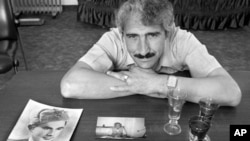
An untold story of the Nazi Holocaust is on display at a Jewish temple in St. Louis, Missouri. It's a photography exhibit, featuring portraits of elderly Albanian Muslims - men and women who helped save nearly 2,000 Jews who fled to Albania during World War II.
Untold story
"Who ever heard of Muslims saving Jews?," asks photographer Norman Gershman. After hearing the story, he decided to visit Albania to meet the surviving families who had sheltered Jews. "I wanted to go to Albania first to discover for myself who are these people."
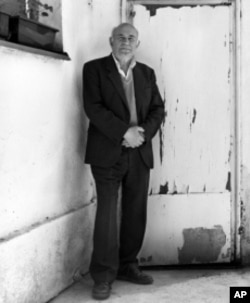
For the past six years, Gershman, a fine art photographer whose work is typically displayed in museums, traveled throughout Albania and Kosovo. He photographed most of his subjects in their homes, often with objects that were significant to the people they sheltered.
In one photograph, a man stands with three Jewish prayer books that a family left behind after the war.
"I'll never forget this - when we were at this guy's home and he was looking at us sort of like angrily and he said 'What are you doing here?'" says Gershman. "We said, 'Well, your family saved this Jewish family,' and he looked at us and said, 'So what? Any Albanian would have done the same thing. We did nothing special,' and he meant it."
Word of honor
The Albanians have a word for this: Besa. It translates as 'word of honor,' and is a cultural precept unique to Albania.
"The word Besa in Albanian is kind of protection of when they host a guest, the Albanians, it's a rule, they protect them with their own lives," says Alberto Colonomos, a Jewish man born in 1933 in what was then Yugoslavia. He was 10 years old when his family fled to Albania.
"There were about 7,200 Jews living in that area. They deported them to the concentration camps and they deported them all the way to Treblinka. They killed them all, nobody came back. But about 50 families escaped a week or two weeks before the deportation."
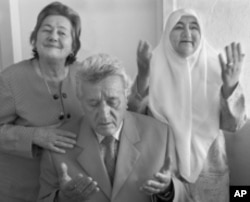
A wealthy man who worked in a tobacco factory took in the Colonomos family. Unlike many Jews in other parts of Europe who survived the war in cellars and attics, Jews in Albania were given Muslim names and treated as honored guests. Colonomos explains that under Besa, Albanians put their guests before their own family.
"They really hid us with their lives. They knew that the Germans - the consequences if they catch them were very, very stiff. So they would be shot. But when they have that Besa, they will not denounce their guests. They were amazing people."
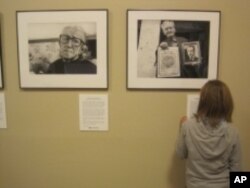
Gershman's black and white portraits have been in over 70 exhibitions around the world. For the rest of the year they are on display - for the first time in the American Midwest - at Temple Emanuel, a Reform Jewish synagogue in St. Louis, Missouri.
Interfaith dialogue
"We are really delighted to have it and were really excited to see the interest," said Rabbi Justin Kerber, who has led the congregation for a year and a half. He hopes the exhibit will help start an interfaith dialogue in his own community that will spread to other parts of the country.
"At this time when there is so much tension in the world and so much attention being paid to Jewish-Muslim conflict or Israeli-Arab conflict, it's really important for everyone to understand that is not the only story," says Kerber. "It's not the way things have always been and I'm really looking forward to growing this relationship with the Islamic Foundation."
That hope is shared by Mufti Minhajuddin Ahmed, the Imam and director of Religious Services of the Greater Islamic Foundation of St. Louis, which partnered with Temple Emanuel for a panel discussion on the exhibit's opening night.
"I think at a time when the Jewish-Muslim relations are very sour to many of the events taking place in the Middle East, this was a very timely and much-needed exhibition that highlights how Muslims have saved Jews and these are the true teachings of Islam," says Ahmed. "This is an opportunity for others to learn that it's a religion that is not born in violence. Rather they are teachings of compassion and kindness."
The compassion and kindness - the Besa - of the Albanian Muslims was recognized by Israel in 2007. The Jewish state awarded them one of its highest honors, Righteous Among Nations, which is granted to non-Jews who saved the lives of Jews during the Holocaust.
Gershman's photographs of those men and women have been published in a book called "Besa: Muslims Who Saved Jews During World War II." A documentary film based on Gershman's trip to Albania will be released next year.