


As food prices soar worldwide, experts are advising policymakers that certain strategies to calm the markets - and the populace - do more harm than good.
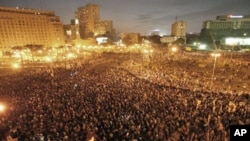
Recent demonstrations in Egypt, Tunisia and Algeria recall memories of food riots in several countries in 2007 and 2008. While experts say the situation today has not reached that level, lessons learned then are part of a new guide the UN Food and Agriculture Organization (FAO) has published aimed at help policymakers wrestling with high food prices.
Don't ban exports
"I think the most negative experience in 2008 was the ban on exports," says FAO senior advisor Garry Smith.
India, Vietnam and other countries banned rice exports after bad weather damaged their crops. But taking rice off an already tight world market kicked global prices even higher.
"That's one of the things we strongly discourage," Smith says.
But Russia banned wheat exports this summer after drought ruined a third of its harvest.
"It's obviously also contributed to the current price situation," Smith says.
India has also banned onion exports in the face of high domestic prices. Experts are most concerned about the impacts of rising prices on an FAO list of 77 low-income countries that rely heavily on food imports, including 25 in Asia and 43 in Africa.
Price controls
Ethiopia is trying to control inflation by setting maximum prices for staple foods. Smith says that approach rarely works.
"It's all very well for a government to say, 'That's the maximum price,'" he says, "but what typically happens is product just moves to a black market."
In the legal markets, merchants forced to sell goods at a loss cannot afford to re-stock. In parts of Ethiopia, VOA reports on shortages of price-controlled goods such as cooking oil and oranges.
"Both export bans and price controls are pure political posturing," says agricultural economist Chris Barrett at Cornell University. "They tend not to wind up benefiting the poor populations that they most need to benefit."
Reserves buffer prices
Experts say global grain reserves currently are large enough to prevent a crisis on the scale of 2007-2008.
Some countries, including Saudi Arabia, are looking into increase their national reserves to build a bigger buffer.
"A buffer stock is very effective at helping to take the top off price spikes," Barrett says. However, he adds, "Those are typically expensive to maintain. They're very vulnerable to political manipulation when the states wants to suppress prices a bit, especially in the run-up to elections."
Boost imports
Governments can take a lighter approach by lowering tariffs to boost imports of staples.
Maximo Torero with the International Food Policy Research Institute says this approach can help, but it must be done carefully because the government will lose revenue.
"They have to get that money from somewhere else to keep their budget in balance," he says. "So, those types of policies can only be implemented for short term periods if you don't want to get into a fiscal problem."
Algeria has decided to accept that risk. Riots already broke out there earlier this month. FAO's Garry Smith says boosting imports will bring prices down.
"The question," he says, "is whether it's used as just a blunt instrument to be dumped into the market at subsidized prices and push the whole market down, or whether it's used to support needy groups."
Target the needy
Smith says targeting measures to needy groups is a much better way for governments to tackle the crisis. While he pans Ethiopia's price controls, he praises the country's safety net program.
"Local communities identify needy households," he says. "That's a way that we can better assure accurate targeting of need."
In addition to providing funds those families can use to buy food in local markets, the program also creates jobs for the unemployed in water or conservation projects or other plans aimed at improving agricultural productivity.
Smith says that's important, because investing in agriculture is how countries will avoid these problems in the future. But even though 70 percent of the world's extremely poor live in rural areas, Smith says, "Politicians will always err towards choices [that] will pacify urban communities because they're the ones who rise up."
Preventing those uprisings may be the goal in the short term. But Smith says a country's long-term food security lies with its farmers.