




For decades, films and television shows almost always portrayed American Indians as stereotypes. The stories were written and produced by white Americans. In 1977, Native American Public Telecommunications (NAPT) was founded to bring audiences native stories and accurate portrayals of the culture.
Taking control
Shirley Sneve heads the organization. She is a Lakota, a member of the Rosebud Sioux tribe, who grew up in Flandreau, South Dakota. One of her earliest and most lasting influences was her mother, who has written and published more than 20 children’s books about Native Americans.
"When I was growing up my mother was always telling stories and she wrote all the time," says Sneve. "It was something that was always important to our family to understand our history, where we came from, and how we relate as natives in today’s world.”
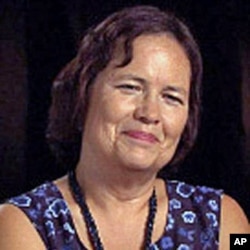
Sneve studied journalism, and became a storyteller herself. "Unlike my mother, who created stories out of her head, I liked to tell stories about other people."
But these days, Sneve mostly helps other people tell stories as executive director of NAPT, one of five groups created to increase the diversity of voices on American public television.
"It can’t just be about Indians, it needs to be by Indians, Native Americans," says Sneve, who believes the authentic voice is important. "There has been so much garbage out there over the years by non-Indians that have perpetuated the stereotypes. You know the westerns and the stoic Indians, even more contemporary projects. They don’t do us any favors. We can tell our own stories better than anybody else. That is why we are so forceful about involving Native Americans in the creation of these documentaries."
Shedding light
Recent films that have received funding from NAPT have examined the impact of politics and economics on tribal fishing, explored what it is like to be a young Native American in the 21st century, profiled three young Lakota women who reconnected with their incarcerated father. Another revealed the little-known history of the original code talkers, members of the Choctaw tribe who transmitted secret tactical messages in their native language during World War l.
Sneve says many of NAPT’s documentaries have been broadcast by other U.S. television stations, and some have been shown in other countries. They are also for sale on the organization’s website.
Some films, like the multi-part historical series, "We Shall Remain," include sections in native languages. Sneve would like to see more films done that way.
"It is through our languages that we speak to the creator and our ceremonies are still conducted in the native languages, and it brings meaning to culture for us to be mindful of our language. And I don’t think it limits our audiences. We do have to put English subtitles on there, but it shows that Native people and their cultures are still alive and vibrant and that the languages are used in our everyday lives."
Spreading the word
In addition to film, Native American Public Telecommunications has funded radio programming, but in this changing media world, Sneve says she would like to be able to support some interactive programs on the web.
"The hour-long documentary is not the best way to go sometimes to communicate your message. People are busy. There are so many entertainment options right now."
That makes it harder to get an audience, she says, especially with young people, who are more likely to get their information and entertainment from computers and mobile devices. But for now, Sneve is thankful to be able to bring Native voices and stories to television.