



Nepal's former rebels, facing intense domestic and diplomatic pressure, have agreed to "temporarily" halt their six-day strike that crippled commerce throughout the struggling Himalayan nation. But the Maoists say their street protests will continue until their demands are met, including the resignation of Prime Minister Madhav Kumar Nepal, who enjoys little public support.
Hours after Kathmandu's middle class took to the streets to vent their frustration with the Maoist's indefinite strike, the former rebels gave up - for the time being, at least - that part of their civil disobedience campaign.
Maoist party chairman and previous prime minister Pushpa Kamal Dahal says, however, that other street action by tens of thousands of cadres and supporters will continue.
Dahal, better known as Prachanda, tells reporters the Maoists, in Kathmandu, will continue to picket and demonstrate around the Singha Durbar (Lion Palace), where most government ministries are located. Protests will also continue, he says, at 75 government headquarters across the country.
Earlier in the day, riot police fired into the air and released tear gas to break up clashes as peace activists marched spontaneously to call for an end to the Maoist's strike. Some injuries were reported.
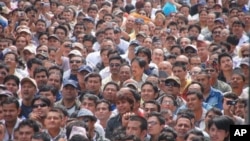
Before the unplanned peace march, an estimated 20,000 people gathered in the historic Basantapur plaza for an event organized by nearly 50 leading professional organizations, representing a cross-section of mainstream society.
Organizers gave all political parties a 48-hour deadline to settle their differences, threatening to call mass street demonstrations of their own.
Maoist cadres, armed with bamboo sticks, beginning on Sunday patrolled the capital and other cities attempting to ensure shops remained shuttered. Their action also forced the closure of schools and stopped nearly all motorized transport, except for emergency vehicles.
Nepal, as part of a peace accord, faces a May 28 deadline, now seemingly impossible to meet, to write a new constitution and reintegrate former rebel fighters into the Army or society.
The Maoists, in 2006, ended a decade-long civil war against the state and signed a peace agreement. That brought them into the political process and they won the most seats in a parliamentary election two years later. But a dispute over control of the Nepal Army sent the Maoists last year into the opposition camp.
The rising tension during the past week had threatened to plunge Nepal, one of Asia's poorest countries, back towards civil war.
In the past week in separate VOA interviews, Prime Minister Nepal expressed willingness to resign if the right replacement steps forward and there is political consensus, while the Maoist chairman predicted he would succeed Mr. Nepal.