



A new report by the U.S. Coast Guard and the Bureau of Ocean Energy Management says the British petroleum company BP was "ultimately responsible" for the worst offshore oil spill in U.S. history. The explosion last year aboard the Deepwater Horizon oil rig in the Gulf of Mexico spilled nearly five million barrels of oil and killed 11 workers.
It all breaks down to man and cement. Both get blamed.
Government investigators say the cause of the explosion was a failure in the cement barrier needed to enclose hydrocarbons at the well base. They go on to blame BP, as the operator of the well, for making a series of bad management decisions. And again, BP along with Transocean, the owner of the well, for not correcting the mistakes. Another thing: the well was "significantly behind schedule" and $58 million over budget at the time of the explosion.
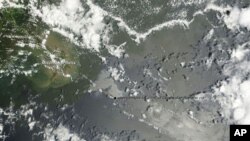
For three months, millions of liters of oil spewed into the gulf. Fouling wildlife. Beaches. Marshes. But, now, on the surface, the ocean looks clean.
"Mother Nature is just incredibly resilient," said Ed Overton at Louisiana State University has worked on numerous federal research projects on the spill.
Tropical Storm Lee last week churned the waters and washed up a few tar balls, But Professor Overton says that is remarkable considering the size of the spill. "We had people talking about decades-to-centuries before the gulf would return to normal. That's just not the case. You cannot go into the Gulf of Mexico today and find significant damage to the ecology. It may be there, but it sure is hard to find," he said.
His worries still extend offshore, in the deepest of waters.
"The damage that's to the smallest of creatures -- the little animals we cannot see with the naked eye. We can't see the damage down there so we only have to surmise that there was damage out there," he said.
Total damage will not be known until a government lawsuit against BP and other companies is settled. Wednesday's report cited seven violations of federal regulations.
BP released a statement saying it agrees with the report's "core" conclusion that multiple events and parties lead to the explosion. Transocean says the report confirms that the cause was failure of cement, not improper maintenance of the blowout preventer.
The report suggests numerous industry and regulatory changes. Some, have already been implemented. But stronger safety measures directly related to the disaster have yet to be passed by Congress.