


The U.N. doctrine known as the "responsibility to protect" is a relatively new concept.
Jared Genser, a lawyer who has edited a book on the subject, explains.
"It is a doctrine that was adopted by the U.N. World Summit in 2005 that says that all states have an obligation to protect their own citizens from the commission of mass atrocities against its population - and that, of course, includes not actually committing those atrocities and specifically, the atrocities described include genocide, war crimes, crimes against humanity and ethnic cleansing," Jared said.
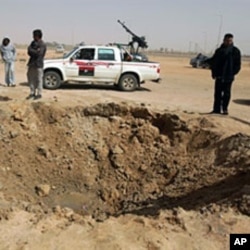
On February 15, protests broke out in Libya against the rule of Colonel Moammar Gadhafi. He responded with massive force, even using air force planes to attack civilians.
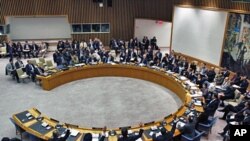
Eleven days later, in what experts such as Genser describe as record time, the U.N. Security Council invoked the "responsibility to protect" and set out tough measures against the Gadhafi government.
"The Security Council resolution that was [unanimously] adopted puts in place banking and financial sanctions against Moammar Gadhafi and his cronies [close friends]," said Genser. "It also puts in place an arms embargo on the country itself, making it harder for them to purchase weapons. And it even referred the case to the International Criminal Court for investigation of potential crimes against humanity and war crimes."
Genser says this is the first time the doctrine was explicitly invoked by the Security Council regarding the situation in a specific country.
But since that document was adopted, Colonel Gadhafi’s army has been regaining territory from rebel forces whose position - experts say - is growing more precarious day by day.
Jared Genser says, "Gadhafi and his regime are fighting for their very lives."
"The sanctions imposed and the referral to the [International] Criminal Court are all potential impacts down the road, but don’t have any direct effect on him today in Libya and don’t do anything to protect Libyan civilians today from the military being unleashed upon it, which has continued to happen, both in terms of air strikes coming from planes and helicopters and also in terms of ground troops going after a civilian population," Gensner said.
And according to Fred Abraham with the organization Human Rights Watch, conditions in Libya are dire.
"We have documented now a crackdown in the capital, Tripoli - a wave of arrests and disappearances, scores of people have been arrested over the past two weeks and we don’t know where many of them are," said Abraham. "And I should add that Libya has a record of torture and political killings, so there’s reason to fear for these people’s safety."
Abraham says the fear in Tripoli is palpable.
"We have noticed people with whom we’ve spoken on the telephone have now begun to say that they can’t talk or they don’t answer the phones at all," he said. "Some people have even been praising the government - those who we know are critical, feel like they have to praise the government on the telephone. So that suggests an atmosphere of extreme repression," Abraham added.
Many experts say that while the current U.N. resolution citing the "responsibility to protect" is strong, it does not go far enough. Some analysts - such as Jared Genser - say a new resolution is needed, calling for an internationally-administered no-fly zone. But others - such as Fred Abraham - believe there will be no international consensus on the issue unless Russia and China, opposed to a no-fly zone, change their minds. Both are permanent members of the Security Council and have the right to veto any Council resolution.