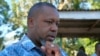



Niger President Mahamadou Issoufou says the longer the Libyan conflict drags on, the worse it will be for Libya's neighbors in the Sahel.
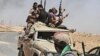
President Issoufou says the Libyan crisis has security consequences for Niger including the spread of arms, sometimes heavy arms into the Sahel.
Security forces in Niger recovered detonators, more than 600 kilograms of semtex explosives and $90,000 in cash during a shoot-out with suspected terrorists last month. President Issoufou's government says the arms came from Libya and were intended for Al-Qaida in the Islamic Maghreb (AQIM,) which is responsible for a string of kidnappings and ambushes across the Sahel.
Mauritania and Mali are fighting AQIM militants in the Wagadou forest region along their common border. Mauritania, Mali, and Niger all say they are concerned that some of the weapons captured by insurgents in Libya are being sold to the al-Qaida-affiliated group.
NATO Secretary-General Anders Fogh Rasmussen says the Libyan conflict risks destabilizing the region further.
Rasmussen says NATO understands the risk that fighting in Libya poses for security in the Sahel. That is why he is encouraging the international community to begin preparing for a peaceful, democratic transition in a post-Moammar Gadhafi Libya.
The fighting has also disrupted commerce across the region and has suspended work on a thousand-kilometer trans-Saharan highway between Libya and Niger. President Issoufou says Niger has lost billions of West African Francs in taxes and trade.
President Issoufou says the economic consequences to the Libyan conflict have cut trade between the countries, seriously affecting Niger tax revenue. The president says there are social consequences as well with the return home of more than 200,000 Nigeriens who were working in Libya.
Niger not only loses the remittances those workers were sending home from Libya but must now also absorb them into an economy where there is already high unemployment.
“At this point, it has been basically a migrant crisis. It could very quickly become a mixed crisis if Libyans start to leave in large numbers," said William Swing, the director of the U.N.'s International Organization for Migration. "And eventually could become something much larger on the refugee side.”
Swing's group says nearly 600,000 Egyptians, Tunisians, Algerians, Chadians, and Nigeriens have fled Libya since the fighting began in February.