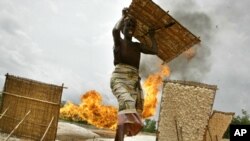
An unidentified woman carries her tapioca after drying it near a gas flare belonging to the Shell oil company in Utorogun, Nigeria, March 5, 2006 (file photo).
BAYELSA STATE, Nigeria — Officials in Nigeria say new laws are expected to pass this year banning dangerous gas flares that are damaging the country's environment and health and wasting natural resources. People in the oil-and gas-producing Niger Delta say the flares have been making people sick for decades, but past bans on the practice have largely been ineffective.
By day, gas flares in the Niger Delta—constantly burning flames atop large metal pipes—are an eerie reminder of the waste and pollution associated with the oil industry in Nigeria. By night, locals say the flares are so bright in some places they fear it damages their eyes.
Felix Fawei is a community leader in a remote area of the oil-rich Niger Delta, where fishing villages on the rivers and creeks are only accessible by boat and most people have no access to electricity.
"There are so many flares around," said Fawei. "So even sometimes you see that the water is very bright, but this area is very dark, because of this excess of flare."
The flares emit poisonous chemicals that make people sick and damage the farming and fishing industries. Fawei says the flares cause acid rain, cancer and a host of respiratory problems.
Flaring also wastes natural gas which could otherwise help power Africa's most populous country. Nigeria's BusinessDay newspaper reports $1 billion is lost yearly by burning gas that could otherwise be sold.
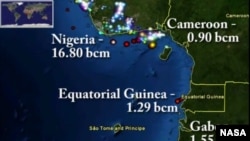
This map shows gas flare activity around Nigeria as of July 3, 2012.
Oil companies say they flare off the gas because instability and lack of infrastructure make it hard to use it productively.
Indutimi Komonibo, special adviser on oil and gas to the governor of Bayelsa State, says it's not just Nigeria that is suffering from flaring, and that the whole world should be concerned.
"Gas flaring causes climate change, ozone layer depletion. Even the soot that is released into the environment causes a lot of disaster," Komonibo noted.
Komonibo says by the end of the year new legislation in Nigeria is expected to permanently ban flaring. But activist groups say the practice was banned first in 1969 and again 10 years later. Even this year, a Nigerian judge declared flaring illegal, saying it is a violation of the people's rights.
Activist group "Justice in Nigeria Now" says for decades oil companies have been paying nominal fines to circumvent bans.
The World Bank says gas flaring accounts for a third of Nigeria's carbon emissions and about 1.2 percent of carbon emissions worldwide. Nigeria is second only to Russia in terms of the volume of gas flared off yearly.
Nigeria is also second only to Russia in terms of the reduction of flaring between 2005 and 2010. Royal Dutch Shell, the largest oil company in Nigeria says it has reduced flaring by 60 percent over the past nine years.
Activist group Environmental Rights Action, however, says the numbers are skewed and demand the immediate shutdown of oil platforms that still flare.