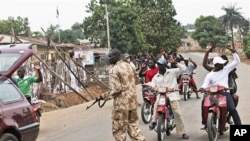



A Nigerian human rights group announced Sunday that at least 500 people were killed in violence that followed last week's election of President Goodluck Jonathan. Relief officials say more than 65,000 people have been displaced.
The Civil Rights Congress of Nigeria says most of the deaths occurred in northern states where Muslim supporters of defeated presidential candidate Muhammadu Buhari attacked churches, homes and police stations, sparking reprisal attacks by Christians.
Nigerian authorities are refusing to release details of the violence, fearing that it could lead to more rioting ahead of gubernatorial elections this week.
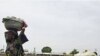
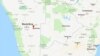
Nigeria's Emergency Management Agency says Kano, Kaduna, Bauchi, Adamawa, Niger and Katsina states were the hardest hit. Director General Mohammed Sani Sidi says his agency is helping more than 21,000 displaced civilians in Kano and nearly 10,000 displaced civilians in Zaria as well as people at more than 100 camps for displaced civilians in Kaduna.
"The intervention is continuing. We are not going to stop until we get this relief material across to all the victims that have been affected. We are doing everything possible in collaboration with the Nigerian army who have been very, very active and supportive in providing us with security cover," he said.
Sidi says the distribution of relief supplies has been slowed by the difficulty of finding drivers who are willing to enter areas where there has been violence.
In addition to displaced civilians in the north, Sidi says there are people who are originally from the north and are now living in the south who have taken refugee with security forces following the violence. "Most especially in Anambra and Imo, we have people from northern origin who, out of panic, on their own have decided to move to either military barracks or police barracks for safety for fear of reprisal attacks. Those people also we have been able to reach out to them and provide some kind of relief material to them," he said.
With more than 65,000 civilians displaced nationwide, Sidi says the only real answer is finishing this series of elections with peaceful state-wide voting to restore order. "What we are trying to achieve is to make sure that peace is maintained and restored in all these places so that people can go back to their various houses and the continue with their normal lives," he said.
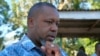
Twenty-six of Nigeria's 36 states are scheduled to hold state-wide elections on Tuesday. Voting in Kaduna and Bauchi has been delayed until Thursday. Electoral commission chief Attahiru Jega says he hopes that will allow for the "further cooling of tempers and for the security situation in those states to continue to improve."
Nigerian Human Rights Group: At Least 500 Killed in Post-Election Violence