


Accessibility links

Breaking News

Nigerian Officials: False Ebola 'Cures' a Crime

As drug companies search for a cure to Ebola, Nigerian health officials warn that false, so-called "remedies" could help spread the disease, which has killed nearly 900 people this year in West Africa.

Bitter kola is a popular snack sold on the streets of Nigeria. It looks like a nut and is sometimes considered a traditional treatment for colds and coughs. You chew on it, and it’s high in anti-oxidants.

But it is not - absolutely not - a medicine to fight Ebola, says Nigerian Minister of Health Onyebuchi Chukwu.

“This bares repetition, and I want to repeat, that as I speak to you, there is no scientific evidence that the use of bitter kola will either cure or prevent the Ebola disease,” says Chukwu.

Bitter kola was once studied as a possible treatment for Ebola, he says, but the studies were inconclusive.

Ebola Death Toll Almost 900

World Health Organization (WHO) Director-General Margaret Chan sits next to Keiji Fukuda, WHO&#39;s Assistant Director-General for health security after an emergency meeting. The WHO announced that <span class="Lbl">West Africa&#39;s epidemic of Ebola is an &quot;extraordinary event&quot; and now constitutes an international health risk, </span>in Geneva, <span class="Lbl">Aug. 8, 2014.</span>
1/10 World Health Organization (WHO) Director-General Margaret Chan sits next to Keiji Fukuda, WHO's Assistant Director-General for health security after an emergency meeting. The WHO announced that West Africa's epidemic of Ebola is an "extraordinary event" and now constitutes an international health risk, in Geneva, Aug. 8, 2014.
This undated photo made available by the Antwerp Institute of Tropical Medicine in Antwerp, Belgium, shows the Ebola virus viewed through an electron microscope. The World Health Organization on Aug. 8, 2014 declared the Ebola outbreak in West Africa to be an international public health emergency that requires an extraordinary response to stop its spread.
2/10 This undated photo made available by the Antwerp Institute of Tropical Medicine in Antwerp, Belgium, shows the Ebola virus viewed through an electron microscope. The World Health Organization on Aug. 8, 2014 declared the Ebola outbreak in West Africa to be an international public health emergency that requires an extraordinary response to stop its spread.
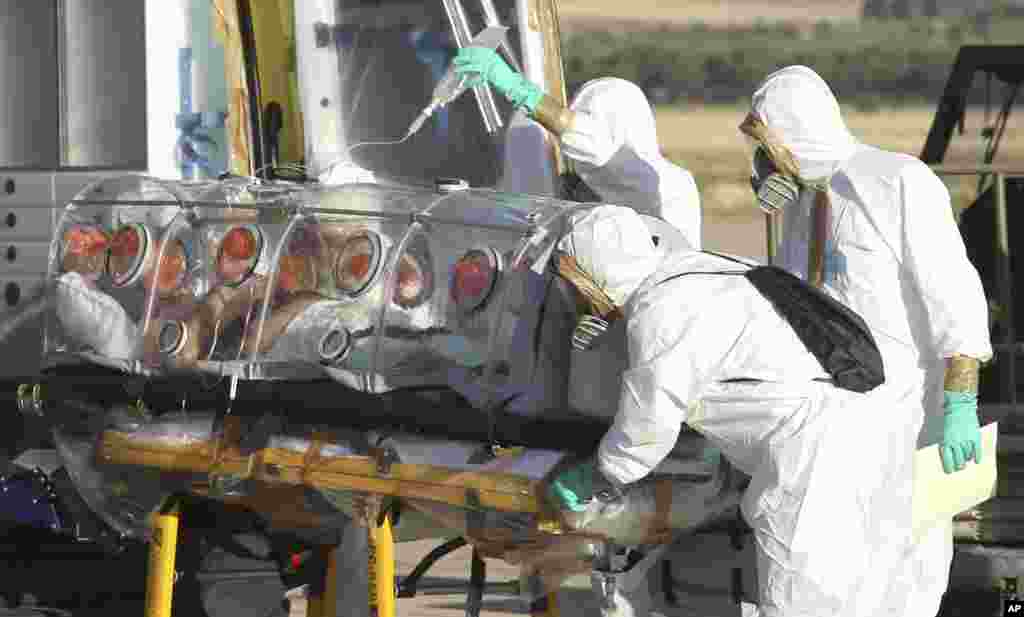
An ambulance transporting Miguel Pajares, a Spanish priest who was infected with the Ebola virus while working in Liberia, leaves the Military Air Base of Torrejon de Ardoz, near Madrid, Spain, Aug. 7, 2014.
3/10 An ambulance transporting Miguel Pajares, a Spanish priest who was infected with the Ebola virus while working in Liberia, leaves the Military Air Base of Torrejon de Ardoz, near Madrid, Spain, Aug. 7, 2014.
Aid workers and doctors transfer Miguel Pajares from a plane to an ambulance as he leaves the Torrejon de Ardoz military airbase, near Madrid, Spain, Aug. 7, 2014.
4/10 Aid workers and doctors transfer Miguel Pajares from a plane to an ambulance as he leaves the Torrejon de Ardoz military airbase, near Madrid, Spain, Aug. 7, 2014.
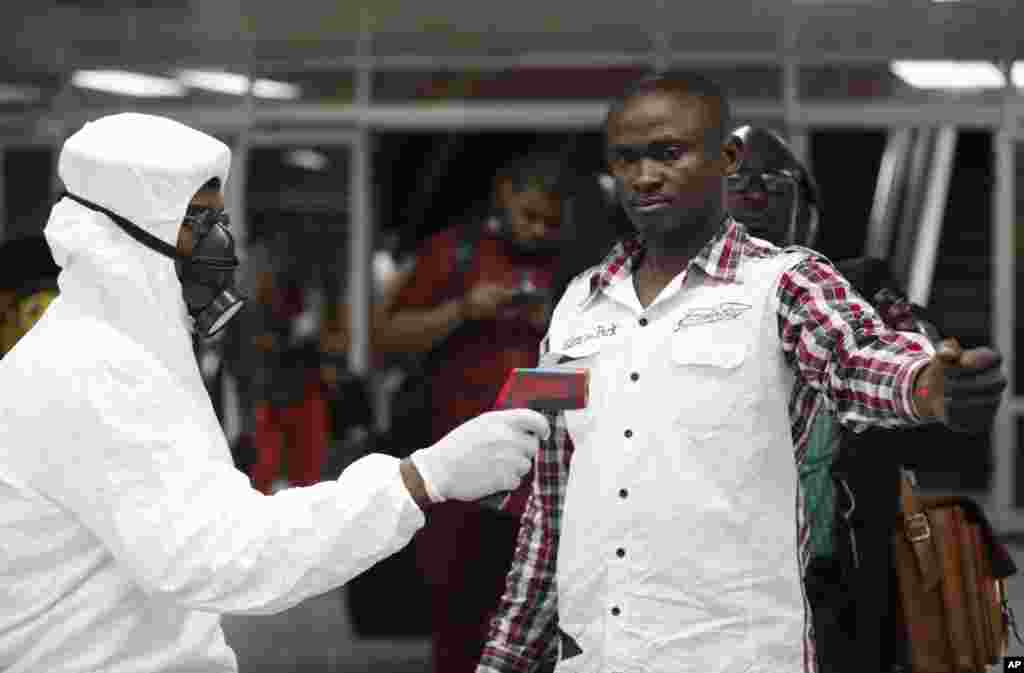
A Nigerian port health official uses a thermometer on a worker at the arrivals hall of Murtala Muhammed International Airport in Lagos, Nigeria, Aug. 6, 2014.
5/10 A Nigerian port health official uses a thermometer on a worker at the arrivals hall of Murtala Muhammed International Airport in Lagos, Nigeria, Aug. 6, 2014.
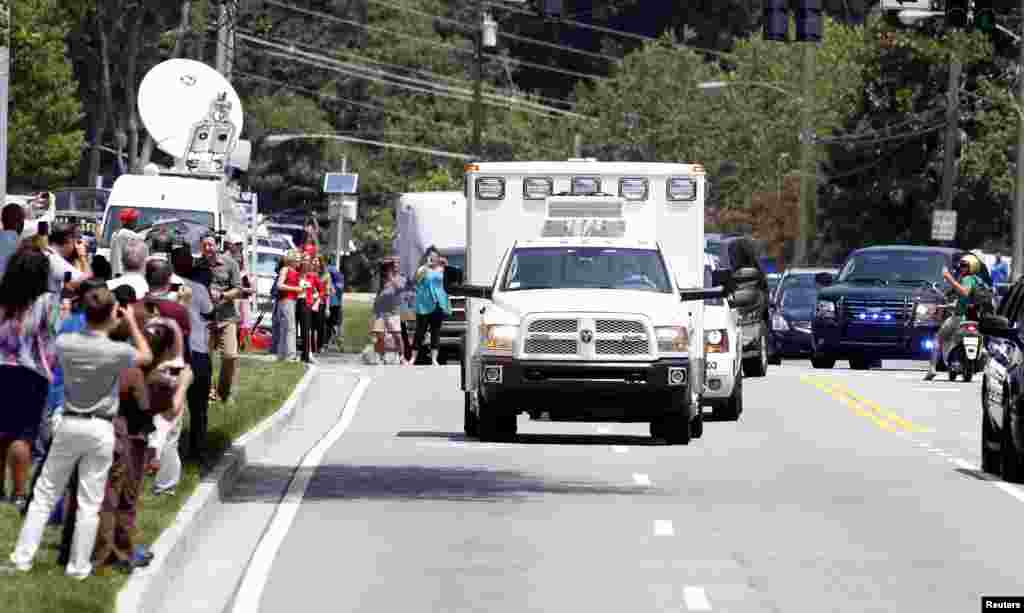
An ambulance carrying American missionary Nancy Writebol, 59, who is infected with Ebola in West Africa arrives past crowds of people taking pictures at Emory University Hospital in Atlanta, Georgia, Aug. 5, 2014.
6/10 An ambulance carrying American missionary Nancy Writebol, 59, who is infected with Ebola in West Africa arrives past crowds of people taking pictures at Emory University Hospital in Atlanta, Georgia, Aug. 5, 2014.
Nigeria health officials wait to screen passengers at the arrival hall of Murtala Muhammed International Airport in Lagos, Nigeria, Aug. 4, 2014.&nbsp;
7/10 Nigeria health officials wait to screen passengers at the arrival hall of Murtala Muhammed International Airport in Lagos, Nigeria, Aug. 4, 2014. 
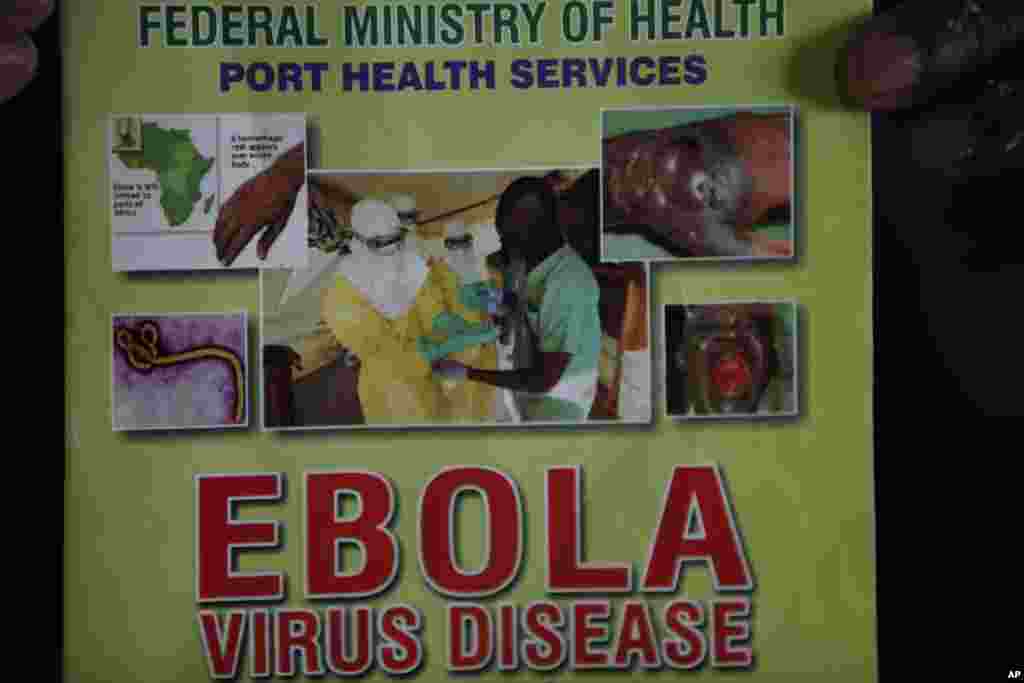
Nigeria health officials display a leaflet explaining the Ebola virus, at the arrival hall of Murtala Muhammed International Airport, in Lagos, Nigeria, Aug. 4, 2014.&nbsp;
8/10 Nigeria health officials display a leaflet explaining the Ebola virus, at the arrival hall of Murtala Muhammed International Airport, in Lagos, Nigeria, Aug. 4, 2014. 
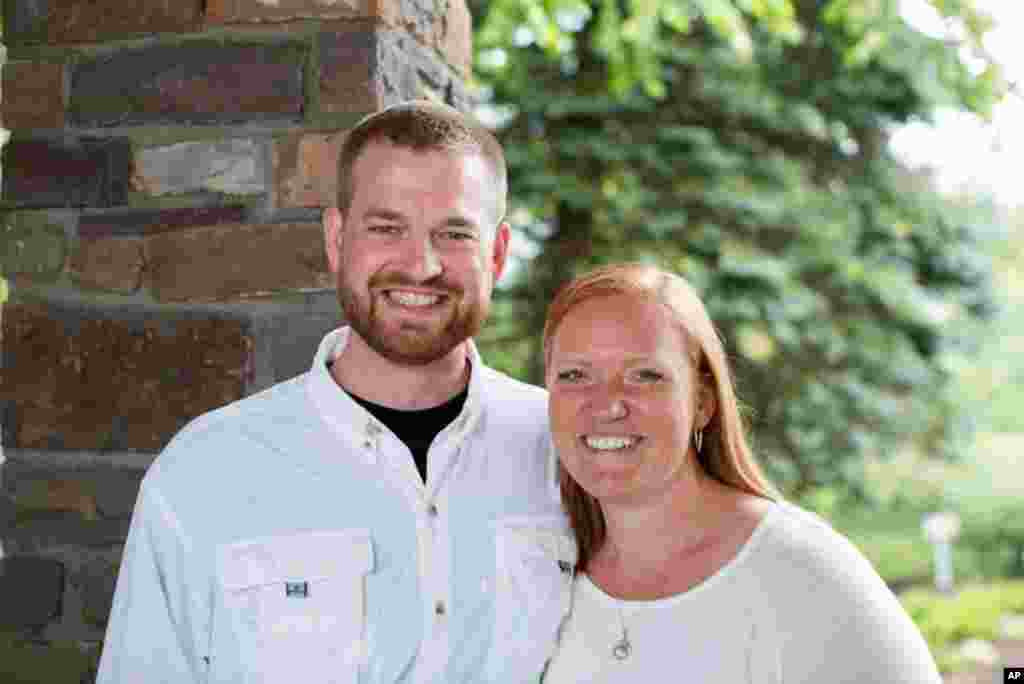
Dr. Kent Brantly and his wife, Amber, are seen in an undated photo provided by Samaritan&#39;s Purse. Brantly became the first person infected with Ebola to be brought to the United States from Africa, arriving at Emory University Hospital, in Atlanta, Aug. 2, 2014.&nbsp;
9/10 Dr. Kent Brantly and his wife, Amber, are seen in an undated photo provided by Samaritan's Purse. Brantly became the first person infected with Ebola to be brought to the United States from Africa, arriving at Emory University Hospital, in Atlanta, Aug. 2, 2014. 
People queue outside a bank as fear spreads that public buildings might be closed due to the spread of the deadly Ebola virus, Monrovia, Liberia, Aug. 4, 2014.&nbsp;
10/10 People queue outside a bank as fear spreads that public buildings might be closed due to the spread of the deadly Ebola virus, Monrovia, Liberia, Aug. 4, 2014. 
Previous slide
Next slide

On the internet and in markets across Nigeria, people are searching for a cure for the disease. Some individuals are trying to make a profit. Others, like the increasing number of bitter kola chewers, are just trying to keep safe.

Officials have warned internet scammers, faith healers and traditional doctors that it is a crime in Nigeria to tell people you have a cure for Ebola.

Promoting false cures discourages the public to seek out expert advice and report symptoms, which is key to containing the disease, says the minister.

“Everyone, just like when you have a football team, will make suggestions and if we don’t streamline a lot of these suggestions the unwary public will become so vulnerable,” says the minister of health.

Late last month, a Liberian-American, Patrick Sawyer, died of Ebola after arriving in Lagos from Liberia. On Monday, officials said one of Sawyer’s doctors, a woman, was also infected and eight health workers are showing symptoms.
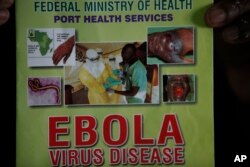
Nigeria health official display a leaflet explaining Ebola Virus Disease at the arrival hall of Murtala Muhammed International Airport in Lagos, Nigeria, Aug. 4, 2014.

In a scramble to prevent Ebola from spreading, the Nigerian government is building isolation wards, screening travelers, and engaging in a massive public education campaign to encourage people to keep themselves clean

Ebola is contagious but spreads through contact with an infected person's bodily fluids, not casual touching or through the air.

Minister of Information Labaran Maku says besides false cures, false information that exaggerates the threat of Ebola can also harm Nigeria.

“We must not engage in things that will create panic or interrupt the free flow of people moving in and out of the country,” says Maku.

Maku says health workers are reaching out to mosques and churches, encouraging clerics to spread appropriate caution.

And as the Nigerian public waits for the test results from the eight currently-isolated health workers, he says, there is still hope that Nigeria may avoid a widespread outbreak.

XS
SM
MD
LG