



News / Africa

Nigerian President Deploys Troops Ahead of Senate Election Saturday

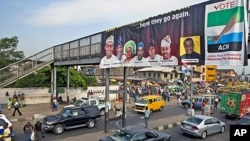
An election banner hangs on a pedestrian bridge in Mushin Neighborhood in Nigeria's commercial capital, Lagos, March 23, 2011
TEXT SIZE - +

Nigerian President Goodluck Jonathan has ordered a countrywide deployment of troops and other security personnel ahead of Senate elections Saturday. Supporters say the presence of security officials will calm fears of violence and boost public confidence, making voters feel it’s safe to take part. But critics say the soldiers, who are under the direct control of the president, may be used to intimidate the opposition.

The deployment of troops is not ideal, but it is in the national interest, said Innocent Chukwuma, executive director of the CLEEN Foundation, a voter advocacy group.

“It has become part of our preparation for elections,” he said.


Dates of Elections

  • National Assembly Elections
    2/4/2011 – 17/4/2011
  • Presidential Elections
    9/4/2011 – 10/4/2011
  • Government/State Assembly Elections
    16/4/2011 – 17/4/2011
  • Source: Nigeria Independent Electoral Commission

Because of the violent build-up to the elections in several states, Chukwuma said, the government has a duty to deploy troops to protect lives and property.

Given those clashes, he said, there are fears that there might be a breakdown of law and violence on Election Day. For that reason, he said, it is a “welcome development and a reassurance from INEC that they would not be seen in any polling booth.”

The opposition argues that since the president controls the security forces directly, a display of military muscle might intimidate its supporters.

Chuwkuma disagrees.

“I think it’s a valid fear, but then it should also be understood that practically every role player in the electoral process is controlled by the federal government,” he said.

View slide show on Nigeria elections

You May Like

Experts Weigh In on Challenges of Closing Guantanamo Prison

Former chief military prosecutor at Guantanamo delivers petition to White House with more than 370,000 signatures, demanding facility be closed down immediately More

Karzai to Discuss Enhancing Defense Ties with India

Afghanistan looking for more military aid as it prepares for withdrawal of NATO forces by next year More

India, China Pledge to Overcome Border Tensions

Indian prime minister and Chinese premier attempt to move past tense standoff in the Himalayas during Delhi talks More

Burmese President Opens US Visit with VOA Town Hall Meeting

Ahead of his meeting with President Obama Monday, Thein Sein answered questions on human rights and economic development in his country More

This forum has been closed.
Comments
     
There are no comments in this forum. Be first and add one

Featured Videos

Your JavaScript is turned off or you have an old version of Adobe's Flash Player. Get the latest Flash player.
Video

Video US Oil Surge Could Impact Mideast Geopolitics

The United States will account for a third of new oil supplies over the next five years, and will become energy self-sufficient in 20 years, according to a new report by the Paris-based International Energy Agency (IEA). Although U.S. oil imports from Arab Gulf countries increased last year, analysts predict the U.S. will lose its dependence on Middle East imports, which is expected to have a huge impact on international relations and the balance of power. VOA's Henry Ridgewell reports.