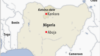



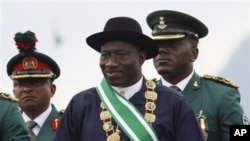
The inauguration of President Goodluck Jonathan in Nigeria Sunday marks the country's third civilian government since the end of military rule in 1999.
President Jonathan first came to power following the death last year of leader Umaru Musa Yar'adua. Ascending from the vice presidency, Jonathan vowed to continue the Yar'adua administration's commitment to electoral reform.
So having won his own four-year mandate in elections last month, President Jonathan says he understands well what that vote means for Nigerian democracy.
“Over 72 million eligible Nigerians endured all manner of inconveniences just to secure their voters' cards in order to exercise their right to choose those who will govern them. At the polls, we saw the most dramatic expression of the hunger for democracy, stories of courage and patriotism,” said Jonathan.
In his inaugural address, President Jonathan vowed to work with the legislative and judicial branches of government to strengthen the electoral process.
The executive director of Nigeria's Center for Democracy and Development, Jibo Ibrahim, says the three branches have had their difficulties since 1999 but have all risen to the occasion at critical times, especially the judiciary.
“They have made considerable contributions toward sustaining the political order in a context where elections have been very problematic, unstable, and characterized by fraud. So the judiciary has been able to step in to at least sustain some level of electoral justice,” said Ibrahim.
Ibrahim says lawmakers have worked hard to keep their distance from the presidency. “That is very important in a functional democracy. So I think the institutions all have their problems, but they have been able to sustain their roles over the last 12 years,” he added.
Hussein Abdu, Nigeria's country director for the anti-poverty group Action Aid, says President Jonathan must strengthen the institutions of democracy. He says much of the credit for April's vote went to electoral commissioner Attahiru Jega, not the institution of the commission itself.
“Yes, we did better than where we were coming from in these last elections. That is quite good. It is quite commendable. But what I hear people saying is about the role of the chair of the electoral commission, the person of Attahiru Jega and the role that he played," said Adu. "So we don't actually want individual-driven institutions. We want institutions that are strong enough that even if you bring the worst person, the institution will discipline that person to do the right thing.”
Yobe State Senator Ahmed Ibrahim Lawan says the experience of last month's nationwide vote should improve the next election.
“I think we can build on a fairly solid and sound foundation the way of electing our leaders and representatives. In 2015, by the grace of God, from our experience of 2011 elections we should be able to conduct even better and more transparent and credible elections than 2011. And everybody will have known by then - politicians, electors, and everyone - that you need to perform in office before you are returned,” he stated.
Electoral observers from the group of Commonwealth nations recommend that the electoral commission improve communications with poll workers. In their final report on the vote, the Commonwealth observers are calling for timely prosecution to end the culture of impunity for those who commit electoral offenses.