Nigerian HIV/AIDS Agency Seeks Anti-Discrimination Law
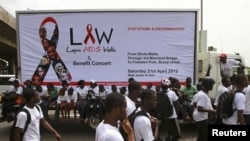
Campaigners walk through a road during a charity walk on HIV/AIDS at Ebute Mata district in Nigeria's commercial capital Lagos, April 21, 2012.
ABUJA, Nigeria — Nigeria’s National Agency for the Control of AIDS has sponsored a bill that would make it a crime to discriminate against people living with HIV/AIDS. Activists say if the law is passed it will protect patients from institutionalized discrimination, but won’t immediately end the stigma that endangers many lives and livelihoods.
Countries with Largest Number of People Living with HIV
Countries with Largest Number of People Living with HIV Infections
South Africa - 5,600,000
Nigeria - 3,300,000
India - 2,400,000
Kenya - 1,500,000
Mozambique - 1,400,000
Tanzania - 1,400,000
Zimbabwe - 1,200,000
Uganda - 1,200,000
United States - 1,200,000
Russia - 980,000
Source: CIA World Factbook, 2009 estimates
Nigerian activists say the most dangerous thing about HIV/AIDS stigma - the belief that someone is morally corrupted if they are HIV positive - is that it scares people away from testing centers. They say the vast majority of Nigerians don’t get tested for HIV largely because they are afraid of what will happen if they are positive.
Thaddeus Ugoh, the program officer for Human Rights Advocates for Sustainable Development, a Nigerian activist group, says in Nigeria, known HIV patients are in danger of losing jobs, educational opportunities or even their lives.
"It means that morally you are not okay," he said. "You are not fit anymore to live among normal humans. It means that you’re secluded, which is the basic reason why the test is being conducted - so that you will not be able to infect others, as they say."
Ugoh says village elders in his hometown agreed last year that if anyone was discovered to be HIV positive, the person and his or her family would be expelled from the area under the threat of being burnt alive if they returned.
Global AIDS Figures
Global AIDS Figures
People Living with HIV
Adults - 30.1 million
Children - 3.4 million
People newly infected with HIV in 2010 - 2.7 million
AIDS deaths in 2010 - 1.8 million
Source: WHO
This kind of extreme stigma, he says, is a result of deep-rooted cultural perceptions that can only be changed with time and education. Ugoh says a bill that protects HIV/AIDS patients from discrimination has been languishing in parliament for years. If passed, he says, the law could start to change those perceptions.
Kunle Adeniyi, the senior legal officer at the National Agency for the Control of AIDS in Abuja, says the bill will be updated to be re-presented to parliament after Nigerian delegates return from the United Nations AIDS conference in late July. He says rights groups are gaining momentum and he expects it to pass within a year, making Nigeria one of Africa's few countries with laws that specifically protect HIV/AIDS patients.
“We are hoping that when this bill is passed out of parliament and it’s signed into law by the president of the federal republic, any discrimination against people living with or affected by HIV/AIDS will be an offense," said Kunle Adeniyi.
He says crimes like firing someone known to be HIV positive, refusing them access to a school, house of worship or forcing someone to get tested could carry punishments from hundreds of thousands of dollars in fines to prison time.
Protestors demand free HIV/AIDS treatment for persons living with HIV in Abuja, Nigeria, December 5, 2005.
The bill also requires large public and private institutions to enact policies designed to protect people living with HIV/AIDS.
“If you have a workplace policy on HIV it automatically makes it your organizational policy - like your mantra - that you will not discriminate against people with HIV/AIDS. That, I find very pleasing,” said Kunle Adeniyi.
The Network of People Living With HIV/AIDS in Nigeria says 2.9 million people are known to be living with HIV in Nigeria, but 80 percent of Nigeria's more than 160 million people have not been tested. The CIA World Factbook says Nigeria has the 17th highest HIV/AIDS rate in the world.