Ningxia, China Muslims Hope Islamic Ties Profitable
YINCHUAN, Ningxia—Ningxia is a small region with big ambitions. A swath of land outside the capital Yinchuan is being cleared for a new central business district, which locals say is aimed at attracting thousands of Arab Muslims to live and work.
The China State Construction Engineering Corporation is erecting one of the district's centerpieces - the China-Arab Economic Forum meeting hall. The same company recently won the contract to build what will be one of the largest mosques in the world, in Algeria.
"I think the influence will be positive. There are always cultural differences, but it will be a big help to our lives, our food and our development," said one Yinchuan resident who hasn't met many Arabs, but he welcomes them.
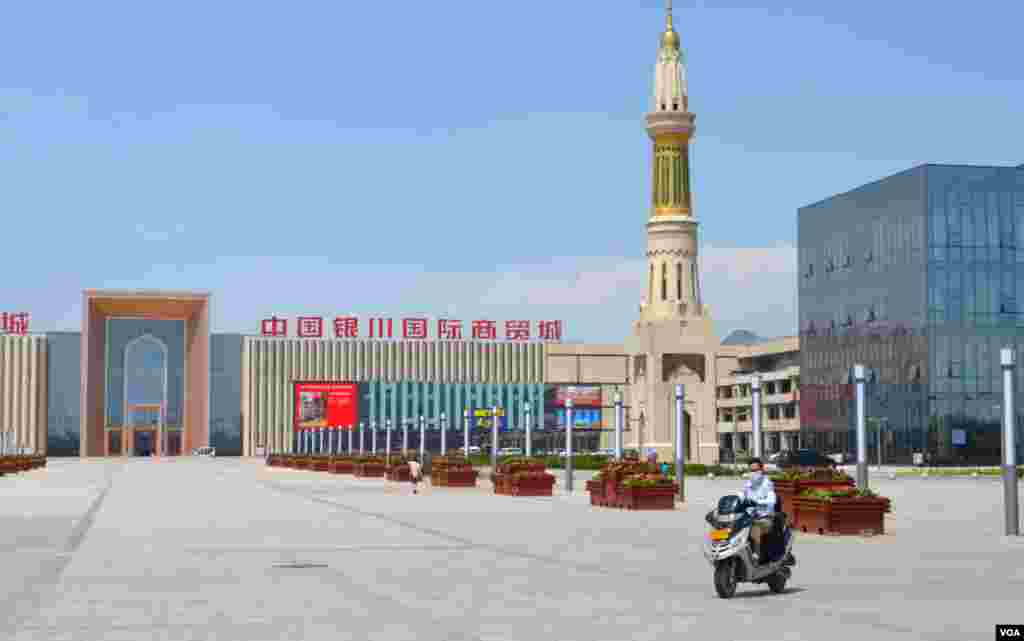
The recently-built China-Muslim International Trade Mall will host its third annual China-Arab country trade fair, later this year.
Ningxia Academy of Social Sciences scholar Ma Ping says the region's capital, Yinchuan, would like to become China's center of trade for Islamic products and halal food.
The Capital of the Ningxia Hui Muslim Region
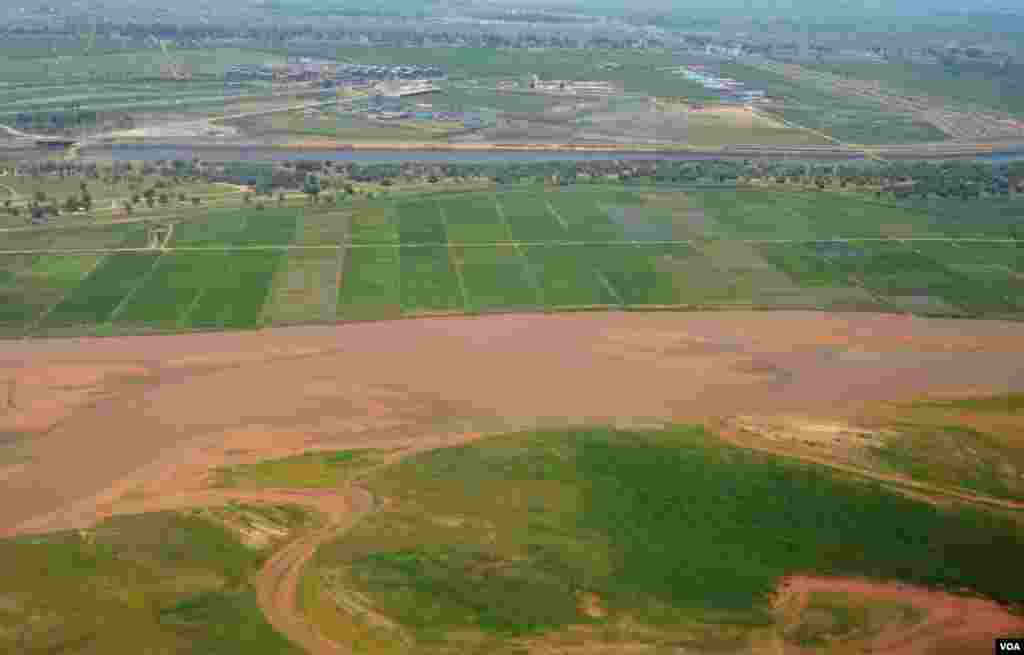
1/11In the midst of arid desert, the muddy brown Yellow River, China's second longest, is the essential lifeline that flows through the heart of Yinchuan, Ningxia. (Stephanie Ho/VOA)
Ningxia is one of China's poorest provincial-level regions, but the local government is hoping to take advantage of the area's predominant religion - Islam - to provide a much-needed economic boost.
Show moreShow less
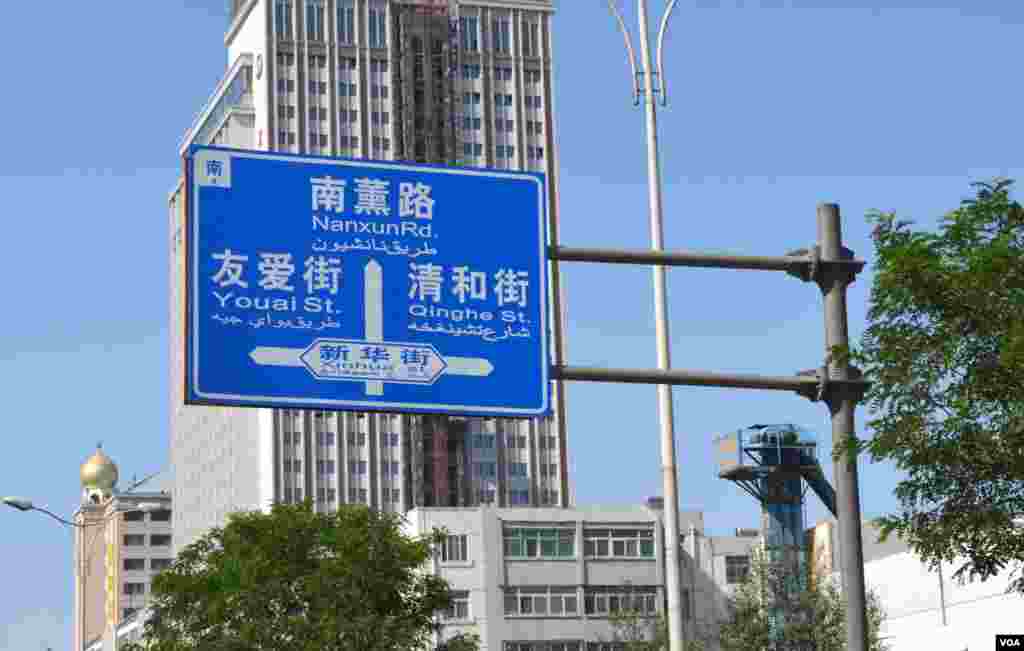
2/11Many of Yinchuan's road signs are trilingual – with Arabic script alongside Chinese characters and western romanization. (Stephanie Ho/VOA)
Ningxia is one of China's poorest provincial-level regions, but the local government is hoping to take advantage of the area's predominant religion - Islam - to provide a much-needed economic boost.
Show moreShow less
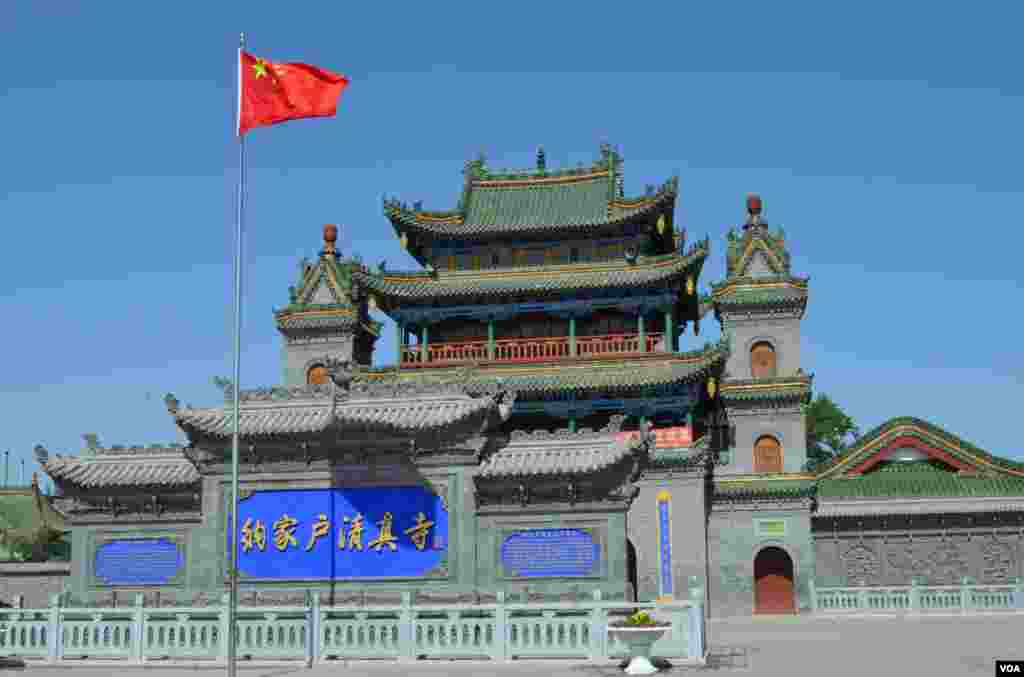
3/11Na Jia Hu has more than 500 years of history and is one of the oldest surviving mosques in China. (Stephanie Ho/VOA)
Ningxia is one of China's poorest provincial-level regions, but the local government is hoping to take advantage of the area's predominant religion - Islam - to provide a much-needed economic boost.
Show moreShow less
4/11Seventy-four year old villager Na remembers when Na Jia Hu was almost torn down during the Cultural Revolution, but was saved because elderly villagers resisted and the mosque was being used as a copper factory at the time. (Stephanie Ho/VOA)
Ningxia is one of China's poorest provincial-level regions, but the local government is hoping to take advantage of the area's predominant religion - Islam - to provide a much-needed economic boost.
Show moreShow less
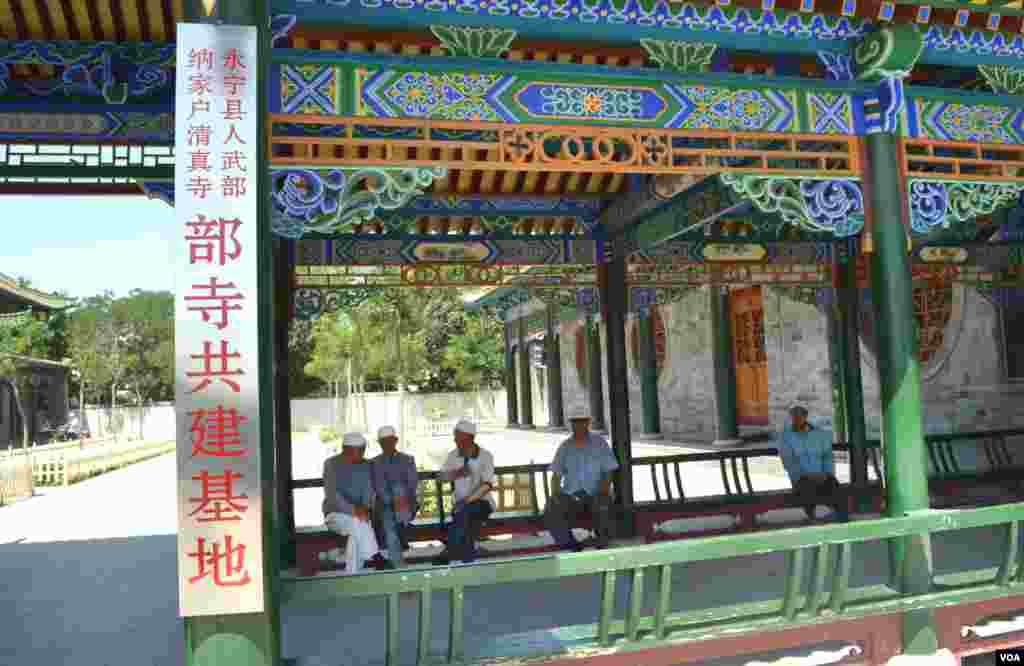
5/11Elderly Huis, who attend prayer services and chat with their neighbors, are regular visitors to the Na Jia Hu Mosque courtyard. (Stephanie Ho/VOA)
Ningxia is one of China's poorest provincial-level regions, but the local government is hoping to take advantage of the area's predominant religion - Islam - to provide a much-needed economic boost.
Show moreShow less
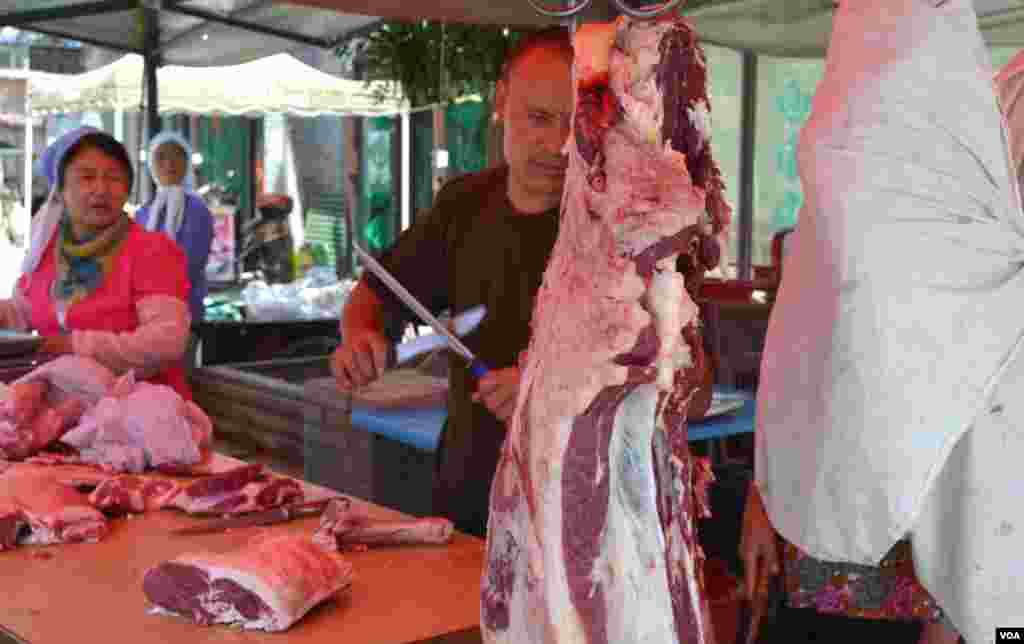
6/11Butchers cut halal meat at a stand near Na Jia Hu Mosque. In its bid to attract Muslim trade, Yinchuan has focused on the production and sale of halal food. (Stephanie Ho/VOA)
Ningxia is one of China's poorest provincial-level regions, but the local government is hoping to take advantage of the area's predominant religion - Islam - to provide a much-needed economic boost.
Show moreShow less
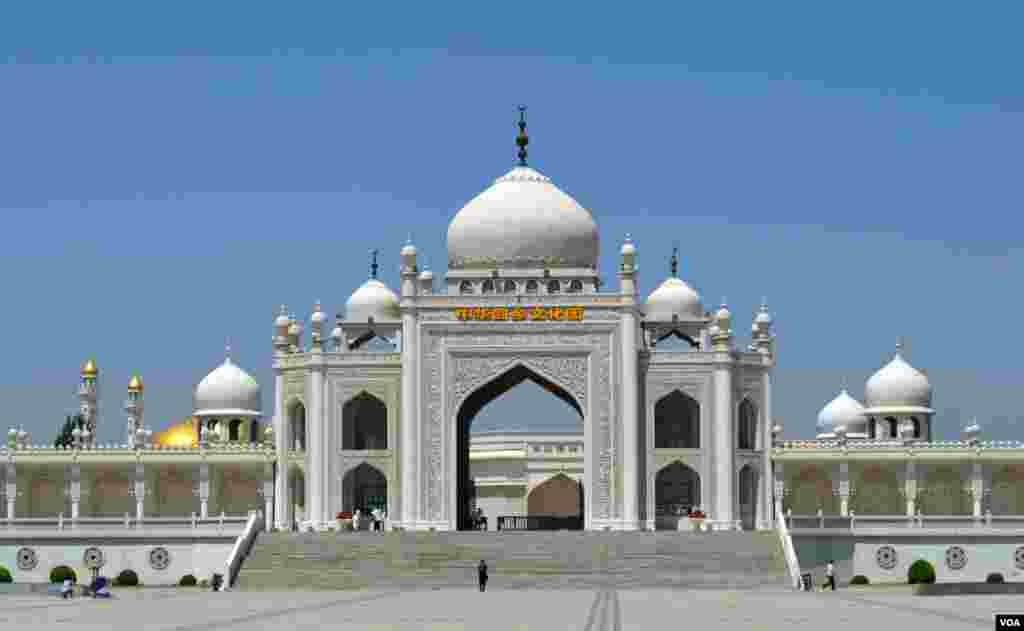
7/11The main entrance to the China Hui Nationality Culture Garden, on the outskirts of Yinchuan, resembles the Taj Mahal and was opened in 2005 to celebrate Hui Muslim cultural identity. (Stephanie Ho/VOA)
Ningxia is one of China's poorest provincial-level regions, but the local government is hoping to take advantage of the area's predominant religion - Islam - to provide a much-needed economic boost.
Show moreShow less
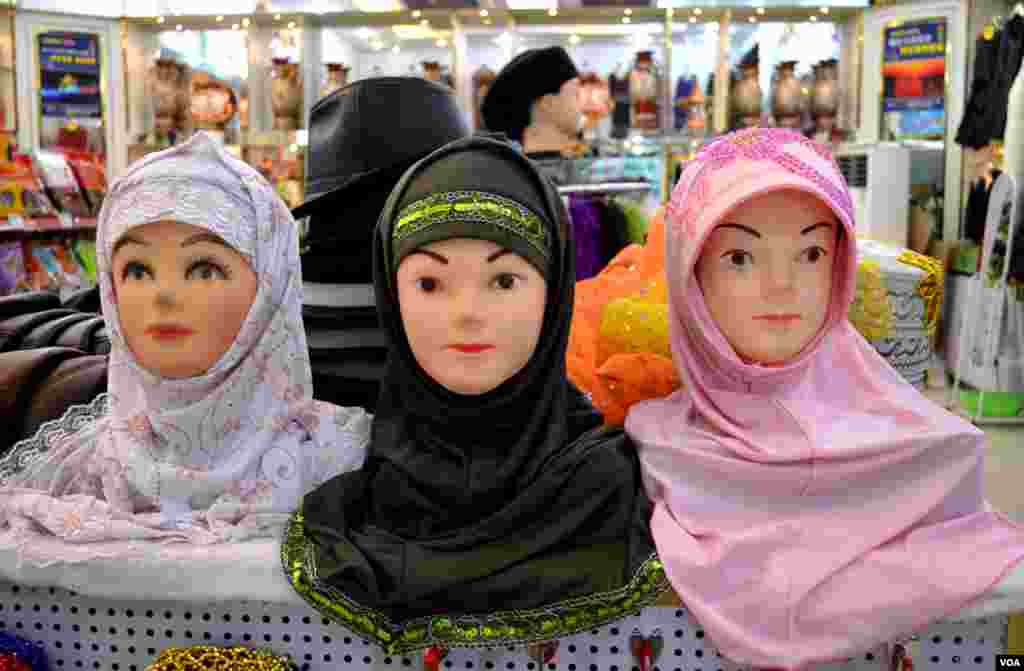
8/11The Hui Museum shop inside the garden displays a variety of women's headscarves. Hui women are subject to clothing rules that are less strict than other Muslim groups, and Hui Muslims allow women to become imams. (Stephanie Ho/VOA)
Ningxia is one of China's poorest provincial-level regions, but the local government is hoping to take advantage of the area's predominant religion - Islam - to provide a much-needed economic boost.
Show moreShow less
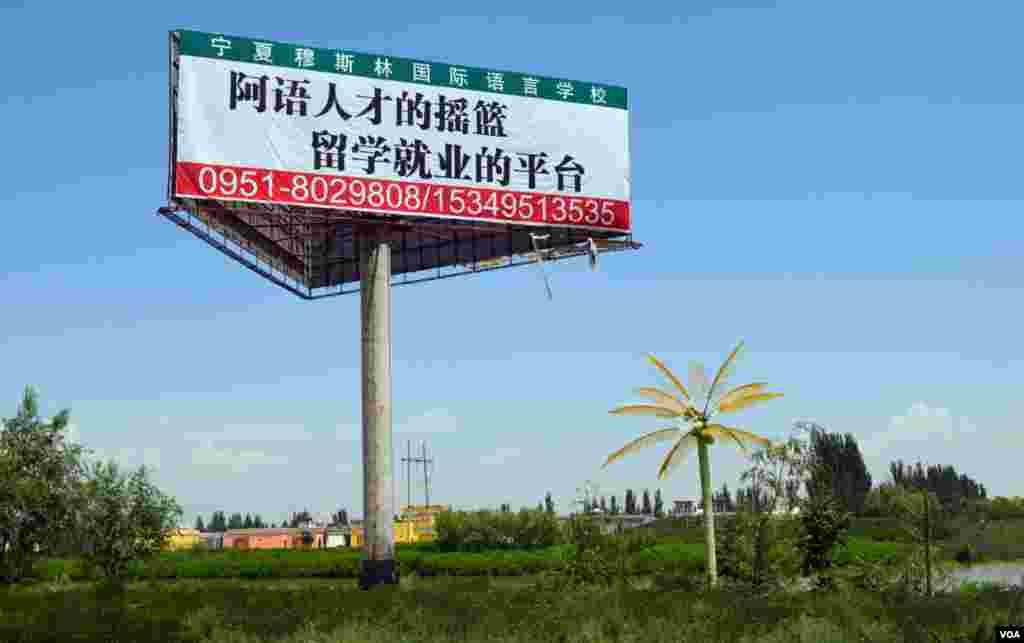
9/11 A roadside billboard advertises Arab language studies at a nearby school. An increasing number of Hui students choose to study Arabic as a way to help them find better jobs in business and trade after graduation. (Stephanie Ho/VOA)
Ningxia is one of China's poorest provincial-level regions, but the local government is hoping to take advantage of the area's predominant religion - Islam - to provide a much-needed economic boost.
Show moreShow less
10/11 A woman drives her motorbike through the almost empty square in front of the Yinchuan International Trade Mall, which is aimed at spurring development of the region's commerce in mostly Islam-related products. (Stephanie Ho/VOA)
Ningxia is one of China's poorest provincial-level regions, but the local government is hoping to take advantage of the area's predominant religion - Islam - to provide a much-needed economic boost.
Show moreShow less
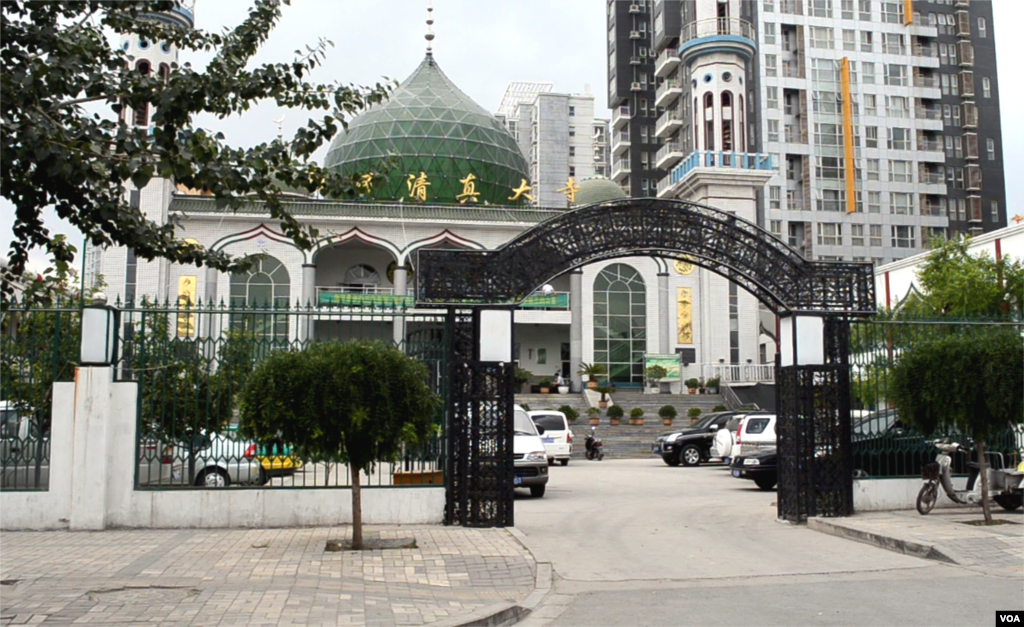
11/11Muslims make up more than a third of Ningxia's six million people. Xihuan Mosque in downtown Yinchuan is one of the the more than four thousand mosques in Ningxia. (Stephanie Ho/VOA)
Ningxia is one of China's poorest provincial-level regions, but the local government is hoping to take advantage of the area's predominant religion - Islam - to provide a much-needed economic boost.
Show moreShow less
Previous slide
Next slide
"Some of the products might be produced elsewhere, but then the trade is done here, which means that Arab merchants do not need to go to Beijing, Shanghai or Guangzhou to buy all that need, all that Muslim people eat drink and wear. They just come here," said Ma.
When there is no conference, Liu - who sells local foodstuffs and has been there for only four months - says business can be a little slow. "It's getting better, especially compared to the beginning," he said. "At first, no one knew much about this place and tourists didn't know to come here.
China's Hui Muslims are descended from Arab and Persian traders who came along the Silk Road, stayed and inter-married. Ningxia is China's only provincial-level Hui autonomous region and local authorities hope to take advantage of their Islamic roots to reach out to other world Muslims.
Qatar University international affairs professor Jackie Armijo says she has met many Huis in China who are pursuing commercial activities.
"Many of these graduates of these Islamic colleges, which of course include very intensive training in Arabic, are not becoming imams, but going off and getting jobs, basically for different businesses that Middle Easterners have started," Armijo noted.
In addition to the central business district, there are other major new projects to showcase the region's Islamic culture - including the China Hui Nationality Culture Garden and the World Muslim City, a stalled multi-billion dollar project that was to include investment from other Muslim countries.