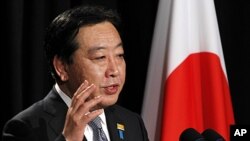



The decision by Japanese Prime Minister Yoshihiko Noda to enter talks on a Pacific free-trade pact is unlikely to win him many friends among the country’s farmers, who fear a deluge of cheap imports.
Noda’s endorsement of joining the Trans-Pacific Partnership is merely the first step in a longer process that still must overcome opposition at home as well as concerns from the nine other TPP member nations involved in the talks.
If realized, the pact would mark the region’s most ambitious attempt yet to liberalize trade among 21 APEC members, creating a market 40 percent bigger than the European Union.
But it could mean stiffer competition for some domestic industries, especially Japan’s farmers who could struggle to compete against cheaper imports.
U.S. officials have said that Washington’s fourth-biggest trading partner must demonstrate its commitment to open markets and address matters of concern, notably barriers to beef and other agricultural produce.
Japanese officials say Noda had made clear his determination to protect his country’s national interests, including those of farmers.
In comments broadcast by NHK, Noda said he recognized the need for a public debate at home.
Japan’s farmers are leading local opposition to the TPP. They argue that the elimination of tariffs on all imports would destroy their livelihoods. Farmers in Japan receive generous government subsidies and are protected by high tariffs on imports.
In Japan, news networks carried footage of the few demonstrators who voiced their concerns in Hawaii. This farmer from Hokkaido, Japan’s northernmost island, was among a few demonstrators who told the Japanese TV network TBS that dairy, rice and other farmers have all come together to show their opposition.
He says they are prepared to go anywhere in the world to make their voices heard
In addition to a loss of business for farmers, the country’s food self-sufficiency - the ratio of daily food consumption supplied by domestic production - now at about 40 percent, is expected to drop dramatically.
Because of the impact on farming and other interest groups, Noda could struggle to convince lawmakers in his Democratic Party of Japan that the TPP represents an economic opportunity rather than a threat.
However, there are signs the broader Japanese public is eager for lower consumer prices that would come with lowering trade barriers. A poll in the Asahi newspaper found that 46 percent of respondents would support Japan’s participation in the TPP, while 28 percent were opposed. Supporters say that membership of the pact would increase Japan’s GDP (gross domestic product) and lower consumer prices.
Noda Pledge to Join Trans-Pacific Partnership