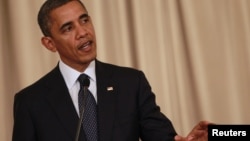
U.S. President Barack Obama says his upcoming trip to Burma does not represent an endorsement of the government, but is rather an acknowledgement of the political reform process underway in the country.
Obama said there has been a stated commitment to further political reform in Burma and that deserves encouragement.
"But I do not think anybody is under any illusion that Burma has arrived, that they are where they need to be," he said. "On the other hand if we waited to engage until they had achieved a perfect democracy, my suspicion is we would be waiting an awful long time."
He said the goal of his visit is to highlight the progress that has been made, and also to address the steps Burma needs to take in the future.
Obama spoke in Bangkok during a news conference with Thai Prime Minister Yingluck Shinawatra. Thailand is the first stop on an Asian visit that will take him to Burma and Cambodia in his first overseas trip since winning re-election nearly two weeks ago.
The trip underscores Obama's increased focus on Asia as he tries to fulfill his pledge to strengthen the U.S. economy during his second four-year term in office. The Obama administration has said American foreign policy and engagement will "pivot" toward Asia in the future.
When he arrives Monday in Burma, Obama will be the first U.S. president to visit the country, which has emerged from decades of tight military control. The Burmese government has recently begun making democratic reforms, but some human-rights groups have cautioned that it is not yet a fully free country.
President Obama is scheduled to meet with both Burmese President Thein Sein and Aung San Suu Kyi, the nation's leading democracy activist, who has only been free since 2010, after nearly two decades of detention or house arrest.
The U.S.-based rights group Human Rights Watch told VOA the president should have waited to travel to Burma until the country makes more progress in restoring basic freedoms.
Obama also is attending a meeting of regional leaders from ASEAN in Cambodia, another destination where he is expected to raise concerns about long-standing human-rights problems. The president is expected to urge Cambodian Prime Minister Hun Sen to hold free and fair elections and end land seizures.
Obama said there has been a stated commitment to further political reform in Burma and that deserves encouragement.
"But I do not think anybody is under any illusion that Burma has arrived, that they are where they need to be," he said. "On the other hand if we waited to engage until they had achieved a perfect democracy, my suspicion is we would be waiting an awful long time."
He said the goal of his visit is to highlight the progress that has been made, and also to address the steps Burma needs to take in the future.
Obama spoke in Bangkok during a news conference with Thai Prime Minister Yingluck Shinawatra. Thailand is the first stop on an Asian visit that will take him to Burma and Cambodia in his first overseas trip since winning re-election nearly two weeks ago.
The trip underscores Obama's increased focus on Asia as he tries to fulfill his pledge to strengthen the U.S. economy during his second four-year term in office. The Obama administration has said American foreign policy and engagement will "pivot" toward Asia in the future.
When he arrives Monday in Burma, Obama will be the first U.S. president to visit the country, which has emerged from decades of tight military control. The Burmese government has recently begun making democratic reforms, but some human-rights groups have cautioned that it is not yet a fully free country.
President Obama is scheduled to meet with both Burmese President Thein Sein and Aung San Suu Kyi, the nation's leading democracy activist, who has only been free since 2010, after nearly two decades of detention or house arrest.
The U.S.-based rights group Human Rights Watch told VOA the president should have waited to travel to Burma until the country makes more progress in restoring basic freedoms.
Obama also is attending a meeting of regional leaders from ASEAN in Cambodia, another destination where he is expected to raise concerns about long-standing human-rights problems. The president is expected to urge Cambodian Prime Minister Hun Sen to hold free and fair elections and end land seizures.