


President Barack Obama is calling on Egyptian President Hosni Mubarak to immediately begin the process of handing over power. He did not press Mubarak, however, to leave office now.
President Obama said the world is watching the events in Egypt, and a moment of turmoil should be turned into a moment of opportunity.
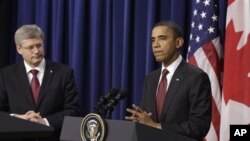
The president held a brief news conference with Canadian Prime Minister Stephen Harper after their meetings Friday at the White House. It was the first time since the Egyptian crisis began last week that he faced questions from reporters.
The president said he has talked with Mubarak twice this week. He said he has encouraged the Egyptian leader to put his country’s best interests first and leave office in an orderly, peaceful and democratic way.
Watch Carolyn Presutti's Companion TV Report
"The key question he should be asking himself is, "How do I leave a legacy behind in which Egypt is able to get through this transformative period?" and my hope is that he will end up making the right decision," Obama said.
White House officials have been talking with top Egyptian officials about forming a temporary government which could prepare the country for new elections.
The president stressed Friday, as he has in previous statements, that the solution to Egypt’s political uncertainty is up to Egyptians.
Obama also repeated the administration’s view that the situation must be resolved peacefully. He said attacks on journalists, human rights activists and peaceful protesters are unacceptable, but did not blame the Egyptian government for the violence.
"The issues at stake in Egypt will not be resolved through violence or suppression, and we are encouraged by the restraint that was shown Friday," said Obama. "We hope that it continues."
Canada’s Prime Minister Harper also spoke to reporters about the situation in Cairo. He agreed that change is inevitable. "I do not think there is any doubt from anyone who is watching this situation that transition is occurring and will occur in Egypt. The question is what kind of transition this will be and how it will lead. It is ultimately up to the Egyptian people to decide who will govern them," he said.
Mubarak, who is 82 years old, has been in power for almost 30 years. Conflicts in Cairo between Mubarak supporters and protesters demanding his ouster have resulted in hundreds of injuries and several deaths.