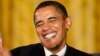




U.S. President Barack Obama visits Congress three straight days this week for talks with lawmakers — an unusual foray aimed at resolving the country's contentious debate over government spending, taxes and the national debt.
Obama, throughout his first four-year term, only rarely engaged in direct policy discussions with rank-and-file lawmakers, preferring instead to talk with congressional leaders or make his case with voters in campaign-style appearances throughout the country.
But last week he met with 12 Senate Republicans over an elaborate dinner at a Washington hotel, and lunched at the White House with a key Republican House political adversary, Wisconsin Congressman Paul Ryan. Some pundits have described it as a charm offensive as the president seeks to revitalize failed past efforts to reach a "grand bargain" on government finances.
On Tuesday, the president — a Democrat — is meeting with the majority Senate Democratic caucus, and following that up with talks Wednesday with House Republicans, and on Thursday with House Democrats and Senate Republicans.
White House spokesman Jay Carney said the president hopes a bipartisan agreement can be reached on reducing spending.
"Our focus now is on working with Congress in regular order on the budget process and through that process, hopefully produce a bipartisan-partisan agreement on deficit reduction," he said.
Reaching any agreement in Washington on government spending and funding has proved difficult, with the White House and Congress lurching from one deadline to the next.
The two major U.S. political parties have widely different views of the government's role, how it should be financed and to what extent.
Democrats have generally sought to maintain spending for costly health-care programs for the poor and older Americans, as well as government pensions for seniors, while Republicans have often sought to curtail funding for them. Obama has called for higher taxes on wealthier taxpayers, while Republicans have been adamant in their opposition.
At the end of last year, Obama and his political opponents reached a last-minute deal to raise taxes on the wealthiest taxpayers while keeping rates the same for most Americans.
But two weeks ago, the White House and Republicans failed to avert $85 billion in mandated spending cuts despite warnings from economists that the budget trims would curtail the country's sluggish economic advance. As a result, some government programs are now being curtailed, including an end — for now — of popular visitor tours at the White House.
The U.S., over decades, has accumulated more than $16 trillion in debt, with the amount continuing to grow yearly with recent annual trillion-dollar budget deficits.
Obama, throughout his first four-year term, only rarely engaged in direct policy discussions with rank-and-file lawmakers, preferring instead to talk with congressional leaders or make his case with voters in campaign-style appearances throughout the country.
But last week he met with 12 Senate Republicans over an elaborate dinner at a Washington hotel, and lunched at the White House with a key Republican House political adversary, Wisconsin Congressman Paul Ryan. Some pundits have described it as a charm offensive as the president seeks to revitalize failed past efforts to reach a "grand bargain" on government finances.
On Tuesday, the president — a Democrat — is meeting with the majority Senate Democratic caucus, and following that up with talks Wednesday with House Republicans, and on Thursday with House Democrats and Senate Republicans.
White House spokesman Jay Carney said the president hopes a bipartisan agreement can be reached on reducing spending.
"Our focus now is on working with Congress in regular order on the budget process and through that process, hopefully produce a bipartisan-partisan agreement on deficit reduction," he said.
Reaching any agreement in Washington on government spending and funding has proved difficult, with the White House and Congress lurching from one deadline to the next.
The two major U.S. political parties have widely different views of the government's role, how it should be financed and to what extent.
Democrats have generally sought to maintain spending for costly health-care programs for the poor and older Americans, as well as government pensions for seniors, while Republicans have often sought to curtail funding for them. Obama has called for higher taxes on wealthier taxpayers, while Republicans have been adamant in their opposition.
At the end of last year, Obama and his political opponents reached a last-minute deal to raise taxes on the wealthiest taxpayers while keeping rates the same for most Americans.
But two weeks ago, the White House and Republicans failed to avert $85 billion in mandated spending cuts despite warnings from economists that the budget trims would curtail the country's sluggish economic advance. As a result, some government programs are now being curtailed, including an end — for now — of popular visitor tours at the White House.
The U.S., over decades, has accumulated more than $16 trillion in debt, with the amount continuing to grow yearly with recent annual trillion-dollar budget deficits.