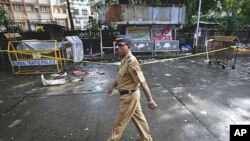



Investigators are examining forensic evidence and surveillance video, as they hunt for clues into the bomb blasts that hit Mumbai on Wednesday. The attack killed 17 people and wounded more than 130 others. As the criminal probe continues, Indian leaders are facing public anger and calls to make the country's financial capital more secure against the threat of terrorism.
Police pressed ahead with their investigation of the deadly string of bombings, but announced no new leads Friday. There have been no claims of responsibility since the series of blasts hit Mumbai two days ago.
After comforting hospitalized victims in person at area hospitals, Indian Prime Minister Manmohan Singh vowed a comprehensive response to the attack.
"We have to make collectively every effort," said Singh. "There has been remarkable coordination of effort between the centre and the state government. Now our task is to find out who the culprits are, and how we can work together to bring them to book."
State and national leaders are facing public anger at what many describe as another failure to protect crowded Mumbai areas from terrorism. In addition to deadly siege on the city in November 2008, terrorists have repeatedly targeted the city over the last two decades in bombings similar to those seen this week.
The chief minister of India's Maharashtra state, of which Mumbai is the capital, says the government is looking seriously at communication failures that were exposed following this week's blasts.
Prithviraj Chavan told reporters on Friday that he could not get in touch with subordinates for 15 minutes after the explosions, while mobile networks were overwhelmed with other traffic. The chief minister says the state is now considering a separate official network, possibly including reserved satellite phone lines.
Indian Cabinet Minister Praful Patel says authorities must find ways to better protect Mumbai's dense population, particularly because the country's economic hub is an attractive target for those who want to impede India's growth.
"We cannot look at it as a permanent disability," said Patel. "We will have to find ways and means to stop these terror attacks."
Pakistan, which India blames for Mumbai's last terror attack in 2008 has denied any involvement in Wednesday's bombings. Indian authorities are currently pursuing all leads including the possibility that home-grown terrorist groups or the city's criminal gangs were involved.
Officials: Blasts Expose Mumbai's Vulnerability to Terrorism
- By Kurt Achin