



News / Middle East

Officials Report Low Turnout in Bahrain, UAE Elections

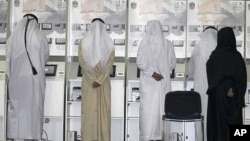
Emiratis cast their votes at a voting station in Dubai, ahead of the Federal National Council elections, September 24, 2011.
TEXT SIZE - +

Turnout was low for elections Saturday in the Gulf nations of Bahrain and the United Arab Emirates.

In Bahrain, the Shi'ite opposition boycotted parliamentary elections to fill 18 seats vacated in February, when Shi'ite lawmakers in the Wefaq party quit to protest the government's bloody crackdown on pro-democracy demonstrators.

Candidates for four of the 18 seats ran unopposed.

Witnesses in Bahrain said Saturday's voter turnout was very light, but state media quoted the prime minister, Prince Khalifa bin Salman al-Khalifa, as saying a "massive" turnout has revealed the willingness of citizens to be partners in building democracy and national unity.

First results are expected by early Sunday.

In the UAE, voters hand picked by the Emirates' rulers cast ballots to elect half of the members of a National Advisory Council.  The balloting was only the second of its kind in the country's history as the seven emirates gradually introduce representation.

The council has no legislative powers and can only make recommendations to the ruling body.  

Some information for this report was provided by AP, AFP and Reuters.


Follow our Middle East reports on Twitter
and discuss them on our Facebook page.

You May Like

Experts Weigh In on Challenges of Closing Guantanamo Prison

Former chief military prosecutor at Guantanamo delivers petition to White House with more than 370,000 signatures, demanding facility be closed down immediately More

Karzai to Discuss Enhancing Defense Ties with India

Afghanistan looking for more military aid as it prepares for withdrawal of NATO forces by next year More

India, China Pledge to Overcome Border Tensions

Indian prime minister and Chinese premier attempt to move past tense standoff in the Himalayas during Delhi talks More

Burmese President Opens US Visit with VOA Town Hall Meeting

Ahead of his meeting with President Obama Monday, Thein Sein answered questions on human rights and economic development in his country More

This forum has been closed.
Comments
     
There are no comments in this forum. Be first and add one

Featured Videos

Your JavaScript is turned off or you have an old version of Adobe's Flash Player. Get the latest Flash player.
Video

Video US Oil Surge Could Impact Mideast Geopolitics

The United States will account for a third of new oil supplies over the next five years, and will become energy self-sufficient in 20 years, according to a new report by the Paris-based International Energy Agency (IEA). Although U.S. oil imports from Arab Gulf countries increased last year, analysts predict the U.S. will lose its dependence on Middle East imports, which is expected to have a huge impact on international relations and the balance of power. VOA's Henry Ridgewell reports.