



News / Middle East

Officials: Yemen's Saleh Leaves Saudi Hospital, Remains in Riyadh

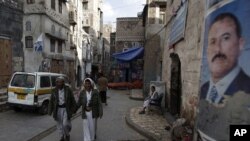
People walk along a street where posters hang of Yemen's President Ali Abdullah Saleh in the old city of Sanaa, Yemen, August 7, 2011
TEXT SIZE - +

Saudi and Yemeni officials say Yemeni President Ali Abdullah Saleh has left a hospital in Riyadh, where he had been been treated since suffering severe burns in a June 3 bomb attack on his compound in Sana'a.

The officials say Saleh was discharged from the hospital late Saturday and moved to a Saudi government residence for further recuperation. There was no word on when he will return to Yemen.

Saleh has refused to step down despite six months of nationwide opposition protests against his 33-year autocratic rule. His deputy Abed Rabbo Mansour Hadi has run the country in his absence.

The United States has urged Saleh to agree to a plan drafted by the Gulf Cooperation Council, under which he would hand power to a deputy within 30 days in return for immunity from prosecution. The Yemeni president has repeatedly refused to sign the plan.

In the June 3 attack, a bomb went off inside a mosque in Saleh's presidential palace, while he and other senior officials were praying. The blast killed 11 people and seriously wounded a number of the officials.

Some information for this report was provided by AP, AFP and Reuters.

Follow our Middle East reports on Twitter
and discuss them on our Facebook page.

You May Like

Experts Weigh In on Challenges of Closing Guantanamo Prison

A former chief military prosecutor at Guantanamo has delivered a petition to the White House with more than 370,000 signatures, demanding the facility be closed down immediately More

Karzai to Discuss Enhancing Defense Ties with India

Afghanistan looking for more military aid as it prepares for withdrawal of NATO forces by next year More

India, China Pledge to Overcome Border Tensions

Indian prime minister and Chinese premier attempt to move past tense standoff in the Himalayas during Delhi talks More

Burmese President Opens US Visit with VOA Town Hall Meeting

Ahead of his meeting with President Obama Monday, Thein Sein answered questions on human rights and economic development in his country More

This forum has been closed.
Comments
     
There are no comments in this forum. Be first and add one

Featured Videos

Your JavaScript is turned off or you have an old version of Adobe's Flash Player. Get the latest Flash player.
Video

Video US Oil Surge Could Impact Mideast Geopolitics

The United States will account for a third of new oil supplies over the next five years, and will become energy self-sufficient in 20 years, according to a new report by the Paris-based International Energy Agency (IEA). Although U.S. oil imports from Arab Gulf countries increased last year, analysts predict the U.S. will lose its dependence on Middle East imports, which is expected to have a huge impact on international relations and the balance of power. VOA's Henry Ridgewell reports.