News / Science & Technology

'1,000 Genomes Project' Paints Detailed Picture of Human Variation

This undated handout image provided by the Smithsonian shows an artist’s depiction of the first major exhibit being developed at the Smithsonian’s National Museum of Natural History to explore the human genome.This undated handout image provided by the Smithsonian shows an artist’s depiction of the first major exhibit being developed at the Smithsonian’s National Museum of Natural History to explore the human genome.
x
This undated handout image provided by the Smithsonian shows an artist’s depiction of the first major exhibit being developed at the Smithsonian’s National Museum of Natural History to explore the human genome.
TEXT SIZE - +
VOA News
Results of a project that has mapped the genetic material, or genomes, of 1,092 individuals from 14 countries will help researchers interpret genetic changes in people with disease. The first phase of the so-called '1,000 Genomes Project,' published in the journal Nature, profiles the rare and common genetic variations in the human species.

Scientists believe that rare variants in human DNA - found in just one of every 100 people or fewer - are the major contributors to common complex diseases such as cancer, heart ailments and diabetes. The multinational team of researchers divided the sample populations into four ancestry groups - European, African, East Asian and the Americas - and found that these rare gene variants tend to be restricted to specific geographic regions.

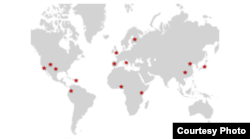
Stars mark the 14 populations throughout the world that donated DNA for this study. (Credit: Catherine Kolf)Stars mark the 14 populations throughout the world that donated DNA for this study. (Credit: Catherine Kolf)
Data from the study, which is available on a public database, already is being used to screen cancer genomes for mutations that might suggest new therapy approaches, and to speed diagnoses of diseases. The next phase of the project will include as many as 3,000 individuals.

Population groups whose DNA was sampled in the project include the Yoruba in Ibadan, Nigeria; the Luhya in Webuye, Kenya; the Han Chinese in Beijing and the Southern Han Chinese; people with African ancestry in the southwestern U.S.; the Colombians in Medellin; and the Iberian populations in Spain.

You May Like

Experts Weigh In on Challenges of Closing Guantanamo Prison

Former chief military prosecutor at Guantanamo delivers petition to White House with more than 370,000 signatures, demanding facility be closed down immediately More

Karzai to Discuss Enhancing Defense Ties with India

Afghanistan looking for more military aid as it prepares for withdrawal of NATO forces by next year More

India, China Pledge to Overcome Border Tensions

Indian prime minister and Chinese premier attempt to move past tense standoff in the Himalayas during Delhi talks More

Burmese President Opens US Visit with VOA Town Hall Meeting

Ahead of his meeting with President Obama Monday, Thein Sein answered questions on human rights and economic development in his country More

This forum has been closed.
Comments
     
There are no comments in this forum. Be first and add one

Featured Videos

Your JavaScript is turned off or you have an old version of Adobe's Flash Player. Get the latest Flash player.
Video

Video US Oil Surge Could Impact Mideast Geopolitics

The United States will account for a third of new oil supplies over the next five years, and will become energy self-sufficient in 20 years, according to a new report by the Paris-based International Energy Agency (IEA). Although U.S. oil imports from Arab Gulf countries increased last year, analysts predict the U.S. will lose its dependence on Middle East imports, which is expected to have a huge impact on international relations and the balance of power. VOA's Henry Ridgewell reports.