



An online blackout in protest of U.S. anti-piracy proposals has whittled away support for the bills, which are designed to crack down on sales of pirated U.S. products overseas.
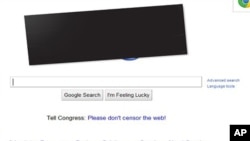
Online encyclopedia Wikipedia blacked out its English language website for 24 hours Wednesday, along with the popular blog, Boing Boing. Social news website Reddit also went dark for part of the day. And popular search engine Google joined other websites that, instead of going dark, posted editorial comments. Google replaced its normally colorful and interactive logo with a black censor bar and directed users to a petition against the legislation.
The blackouts were aimed at The Stop Online Piracy Act (SOPA) currently before the House of Representatives, and the Protect IP Act (PIPA) under consideration in the Senate.
For now, the bills are pitting the entertainment industry, which sees online pirates increasingly eating away at profits, against technology companies that see the bills as a burden and threat to future growth.
The blackout has caused some U.S. lawmakers to withdraw support for the bills, including Republican Senator Marco Rubio of Florida.
Rubio announced his change of heart on Facebook Wednesday, urging fellow lawmakers to "take more time to address the concerns raised by all sides, and come up with new legislation that addresses Internet piracy while protecting free and open access to the Internet."
Republican Senator John Cornyn of Texas also withdrew his support for the legislation, calling for a more balanced approach.
Meanwhile, the speaker of the House of Representatives, Republican John Boehner of Ohio admitted Wednesday that there was now a lack of consensus on the bills.
Last week, the White House acknowledged online piracy by foreign websites is a serious problem that requires a serious legislative response. But the statement said, "we will not support legislation that reduces freedom of expression, increases cybersecurity risk or undermines the dynamic, innovative global Internet."
The White House also said it will continue to work with Congress on a bipartisan basis on legislation to provide new tools needed in the global fight against piracy and counterfeiting, while defending free expression, privacy, security and innovation.
Some information for this report was provided by AP, AFP and Reuters.