


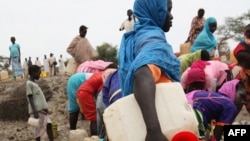
NAIROBI - Refugees at camps in South Sudan are suffering from dehydration, diarrhea and other health complications due to a lack of drinking water. The coming rainy season should be a relief, international aid agencies say the rains actually could make the situation worse.
Escaping danger
The United Nations refugee agency says 35,000 refugees have arrived in South Sudan's Unity State in the last month. Mostly from Blue Nile state in Sudan, many have walked for days to escape fighting between Sudanese armed forces and a rebel group aligned with South Sudan - the SPLM-North.
Humanitarian agencies are scrambling to provide housing, food and medical assistance for the new arrivals before the rainy season begins in the coming weeks.
High demand for clean water
The humanitarian coordinator for the aid agency Oxfam in South Sudan, Pauline Ballaman, says one of the biggest challenges has been supplying water. “What we have seen in the last month of May are additional new arrivals and their health conditions are very, very poor and in fact some people, when they got to the transit site in Hofra, the medical services there have seen people dying from dehydration and from lack of water,” he said.
Conditions are especially dire at the Jamam refugee camp in Upper Nile state, home to more than 31,000 refugees. Workers there are struggling to find new water sources as existing boreholes and wells are tapped out.
Water rationing
Ballaman says they have been able to provide about seven liters of water per person per day, which is less than half the amount aid agencies recommend for basic cooking, drinking and hygiene.
While the upcoming rainy season may seem like a blessing, Ballaman says the rain will likely do more harm than good. “The other challenge that we are facing is that most of this [water] is being taken to the camps through water trucking," he stated. "And once it starts to rain, there may be more rainwater available, but the trucks will not be able to move around so easily.”
Untreated rainwater, spread of disease
Ballaman also notes collected rainwater still needs to be treated to stop the spread of waterborne diseases.
UNHCR moved some 5,000 refugees to another camp in May to help relieve the pressure on water supplies in Jamam. But that camp, called Yusuf Batil, has also experienced water shortages, and some of the refugees have been relocated to temporary transit sites to wait for another alternative.
Escaping danger
The United Nations refugee agency says 35,000 refugees have arrived in South Sudan's Unity State in the last month. Mostly from Blue Nile state in Sudan, many have walked for days to escape fighting between Sudanese armed forces and a rebel group aligned with South Sudan - the SPLM-North.
Humanitarian agencies are scrambling to provide housing, food and medical assistance for the new arrivals before the rainy season begins in the coming weeks.
High demand for clean water
The humanitarian coordinator for the aid agency Oxfam in South Sudan, Pauline Ballaman, says one of the biggest challenges has been supplying water. “What we have seen in the last month of May are additional new arrivals and their health conditions are very, very poor and in fact some people, when they got to the transit site in Hofra, the medical services there have seen people dying from dehydration and from lack of water,” he said.
Conditions are especially dire at the Jamam refugee camp in Upper Nile state, home to more than 31,000 refugees. Workers there are struggling to find new water sources as existing boreholes and wells are tapped out.
Water rationing
Ballaman says they have been able to provide about seven liters of water per person per day, which is less than half the amount aid agencies recommend for basic cooking, drinking and hygiene.
While the upcoming rainy season may seem like a blessing, Ballaman says the rain will likely do more harm than good. “The other challenge that we are facing is that most of this [water] is being taken to the camps through water trucking," he stated. "And once it starts to rain, there may be more rainwater available, but the trucks will not be able to move around so easily.”
Untreated rainwater, spread of disease
Ballaman also notes collected rainwater still needs to be treated to stop the spread of waterborne diseases.
UNHCR moved some 5,000 refugees to another camp in May to help relieve the pressure on water supplies in Jamam. But that camp, called Yusuf Batil, has also experienced water shortages, and some of the refugees have been relocated to temporary transit sites to wait for another alternative.