


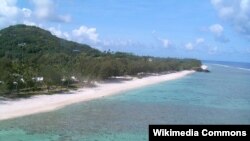
RAROTONGA, Cook Island — In the Cook Islands the annual Pacific Islands Forum is about to get underway with climate change, trade and regional security expected to top the agenda as major powers vie for influence over a range of issues.
Forum
The Forum brings together 16 isolated states from the South Pacific. A further 41 countries are sending delegations, including China, which has sought to expand its role in the region, where Taiwan has diplomatic recognition from a handful of countries.
The Russians have also had mixed success here in winning support. And in the past year, Washington has signaled a renewed emphasis on the Asia-Pacific region, deepening economic and security ties.
Highlighting the growing importance of the forum is the much anticipated arrival of U.S. Secretary of State Hillary Clinton later in the week.
Clinton’s office has yet to confirm whether she will head the United States delegation but preparations are in place for what locals say would be the most important diplomatic visit since Britain’s Queen Elizabeth came to the Cook Islands in 1974.
Climate change, boundary agreements
Derek Fox, spokesman for the Forum, says two upcoming votes for non-permanent seats on the UN Security Council will add another layer to lobbying among delegates.
“Chinese have a big interest in the Pacific and that’s probably why the Americans are starting to show an interest again now. And there are other agencies like the UN and the World Bank and the Asian Development Bank and countries quite distant from here who are showing an interest," said Fox. "There’s an Israeli group coming and there is a Taiwanese delegation here.”
Fox says other issues include climate change and management of the Pacific Ocean, with announcements expected on a new marine park, boundary agreements and foreign aid packages.
For countries like Tuvalu, where the highest point is just 4.6 meters above sea level, aid for coping with climate change is fundamental. Many here believe climate change has also contributed to shifts in tidal patterns that have resulted in erosion of the islands.
Kora Kora, is a local politician and former Mayor of Manahiki, one of the small Cook Islands that sits just four meters above sea level and lies about 1,000 kilometers north of Rarotonga. He says climate change is the biggest single everyday issue for the people of the Cook Islands and has resulted in a significant shift in migration patterns.
“We’ve lost most of our little islands that is in our lagoon, there’s no longer any soil or gravel on the top, now it’s all submerged under water. Since 1997 when we had a big cyclone now our population back then was round 580 and up to now it’s down to 260 people on the island, so yes indeed it’s a big issue to talk about climate change,” stated Kora.
Pacific Islanders have complained for years that their interests, particularly in regards to climate change, have been overlooked by much bigger regional powers. But many believe that the future could be different, with the so-called U.S. “pivot” towards the region, coupled with China’s growing ability to extend its diplomatic reach into the South Pacific.
Forum
The Forum brings together 16 isolated states from the South Pacific. A further 41 countries are sending delegations, including China, which has sought to expand its role in the region, where Taiwan has diplomatic recognition from a handful of countries.
The Russians have also had mixed success here in winning support. And in the past year, Washington has signaled a renewed emphasis on the Asia-Pacific region, deepening economic and security ties.
Highlighting the growing importance of the forum is the much anticipated arrival of U.S. Secretary of State Hillary Clinton later in the week.
Clinton’s office has yet to confirm whether she will head the United States delegation but preparations are in place for what locals say would be the most important diplomatic visit since Britain’s Queen Elizabeth came to the Cook Islands in 1974.
Climate change, boundary agreements
Derek Fox, spokesman for the Forum, says two upcoming votes for non-permanent seats on the UN Security Council will add another layer to lobbying among delegates.
“Chinese have a big interest in the Pacific and that’s probably why the Americans are starting to show an interest again now. And there are other agencies like the UN and the World Bank and the Asian Development Bank and countries quite distant from here who are showing an interest," said Fox. "There’s an Israeli group coming and there is a Taiwanese delegation here.”
Fox says other issues include climate change and management of the Pacific Ocean, with announcements expected on a new marine park, boundary agreements and foreign aid packages.
For countries like Tuvalu, where the highest point is just 4.6 meters above sea level, aid for coping with climate change is fundamental. Many here believe climate change has also contributed to shifts in tidal patterns that have resulted in erosion of the islands.
Kora Kora, is a local politician and former Mayor of Manahiki, one of the small Cook Islands that sits just four meters above sea level and lies about 1,000 kilometers north of Rarotonga. He says climate change is the biggest single everyday issue for the people of the Cook Islands and has resulted in a significant shift in migration patterns.
“We’ve lost most of our little islands that is in our lagoon, there’s no longer any soil or gravel on the top, now it’s all submerged under water. Since 1997 when we had a big cyclone now our population back then was round 580 and up to now it’s down to 260 people on the island, so yes indeed it’s a big issue to talk about climate change,” stated Kora.
Pacific Islanders have complained for years that their interests, particularly in regards to climate change, have been overlooked by much bigger regional powers. But many believe that the future could be different, with the so-called U.S. “pivot” towards the region, coupled with China’s growing ability to extend its diplomatic reach into the South Pacific.