


As the two-day nuclear summit ends Tuesday in Washington, foreign leaders are focusing on how to keep terrorists from acquiring nuclear materials.
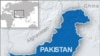
Since Pakistan detonated its first nuclear device in 1998, parts of the international community have voiced concern over whether the country can adequately protect its nuclear assets from the wide range of terrorist groups believed to reside within its borders.
Pakistani Prime Minister Yousuf Raza Gilani specifically addressed this issue in front of leaders from nearly 50 countries attending Washington's nuclear summit.
He said that as a nuclear weapon state, Pakistan attaches the highest importance to the security of nuclear materials and facilities. For this purpose, he said Pakistan has put in place multi-layered mechanisms and processes.
Retired Pakistani lieutenant general Talat Masood, an expert on his country's atomic program and policy, tells VOA that these mechanisms include Pakistan working with the international community to ensure the protection of its nuclear assets.
He also praises Pakistani officials for going beyond military measures for protection by creating a parliamentary committee to closely watch nuclear policy and its implementation.
"They brought in good legislation and good export controls, which were lacking in the past," he said.
Analysts say these controls exist largely to prevent another A.Q. Khan incident from taking place.
Abdul Qadeer Khan is the founder of Pakistan's nuclear weapons program. Up until 2009, he spent five years under house arrest for selling nuclear technology to Iran, Libya and North Korea. Pakistan denies any prior knowledge of the transfer, but Khan remains a national hero.
Masood says Pakistan utilizes a verification process to analyze the background and training of those involved in the nuclear program.
"What Pakistan has done is it realizes that you cannot have anyone who is in any way unreliable in the nuclear sector," he added. "So what they call 'the reliability factor' acquires huge importance."
He says psychologists, military personnel and civilian agents are part of this process to make sure workers do not have foreign ties or are susceptible to Pakistan's religious extremists or terrorist groups.
But Abdul Hameed Nayyar, a Pakistani physicist, says that due to the highly secretive nature of his country's nuclear program, he takes little comfort in descriptions of its security measures.
"Yes, we have been told that these mechanisms have been put into place, but we absolutely have no means to know if it is indeed true," said Nayyar.
Nayyar, who is a well-known advocate of nuclear disarmament here in Pakistan, says he does appreciate that U.S. officials say they believe his country's nuclear materials are adequately protected.
But he tells VOA that the memory of the Pakistani Taliban's takeover early last year of portions of the country's northwest is still too fresh in his mind to completely alleviate fears that nuclear materials may fall in the wrong hands.
"If some forces like the Taliban can go around and conquer a large part of the country, we are very scared it could happen again," added Nayyar. "And if this extends to an area where there are either installations or storages for nuclear material or nuclear weapons, then we certainly would be in trouble."
Taliban militants advanced within 100 kilometers of the capital Islamabad before Pakistani forces turned them back. This led to concern in the international community about the security of Pakistan's nuclear materials. Since then however, the military has calmed international fears by targeting Taliban militants in their strongholds along the Afghan border.
International agencies estimate Pakistan has anywhere from 70 to 90 nuclear warheads, although Nayyar says this number could be as high as 120.
Despite recent U.S. and Russian pledges to lower their number of nuclear weapons, analysts say they believe Pakistan will increase its arsenal in an effort to keep it on par with its rival and fellow nuclear power India. Both South Asian countries have refused to sign the nuclear International Non-Proliferation Treaty.